 Save
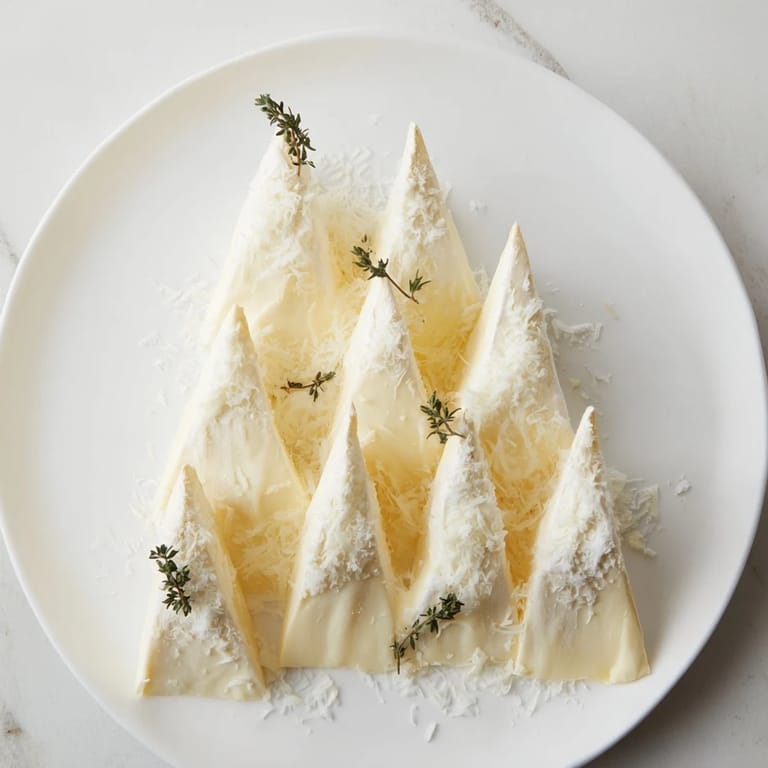
Save There's something almost architectural about arranging cheese on a platter, and I discovered this the night I was asked to bring something elegant but entirely stress-free to a winter gathering. I'd spent the afternoon looking at my board of chilled Brie, turning it over in my hands, when the shape caught my eye—pointed, geometric, almost like it was meant to be stacked. Within minutes, the wedges were standing like tiny peaks, their tops catching the light, and suddenly the whole thing felt less like an appetizer and more like a small edible landscape.
I served this at a dinner party on the coldest evening of December, and someone actually gasped when they walked in—not because of the food, but because the platter looked like a real mountain range sitting there. The thyme sprigs became little pine trees, and by the end of the night, I'd made it twice more because people kept asking what it was and how I made something that looked so deliberate. That's when I realized this dish was as much about the presentation creating a moment as it was about the actual eating.
Ingredients
- Brie cheese, well chilled (400 g): The star here is its creamy interior and mild flavor—chilling it is non-negotiable because warm Brie crumbles rather than cuts cleanly into those perfect wedges.
- Parmesan cheese, finely grated (40 g): This is your snow, and grating it yourself rather than using pre-grated gives you better control over the texture and a more elegant finish.
- Fresh thyme sprigs (optional): These add color and a subtle herbal note, but honestly, the dish stands beautifully without them if you prefer simplicity.
Tired of Takeout? 🥡
Get 10 meals you can make faster than delivery arrives. Seriously.
One email. No spam. Unsubscribe anytime.
Instructions
- Chill your Brie properly:
- Take the Brie out of the refrigerator 30 minutes before cutting—it needs to be cold enough to hold its shape but not so frozen that it shatters. A sharp knife helps enormously here; a dull one will drag and tear.
- Cut into triangular wedges:
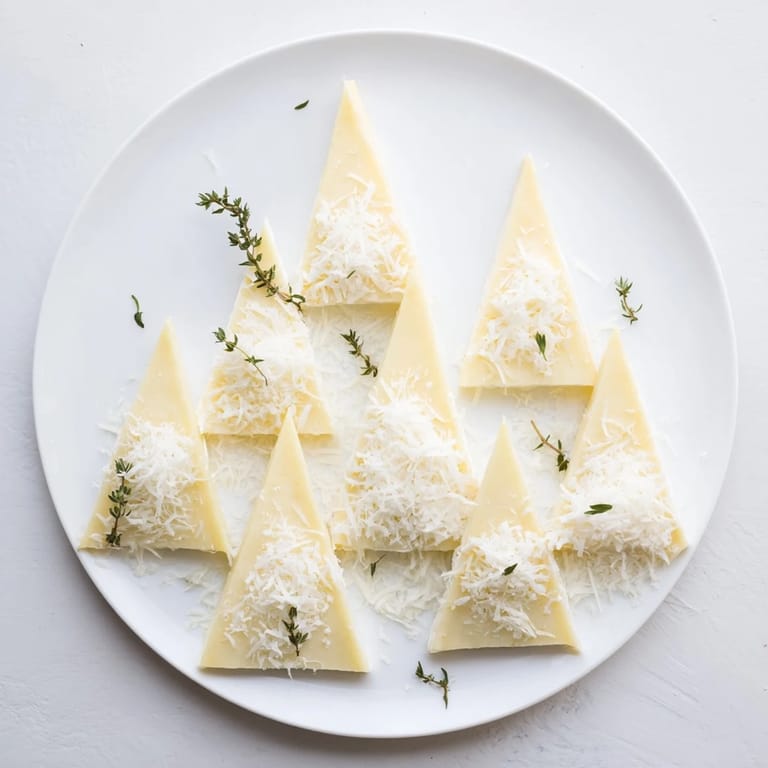
- Slice the Brie in half, then cut each half into eight equal triangular pieces, each about 25 grams. Stand back and look at them; they should look like little mountains waiting to be peaked.
- Arrange the range:
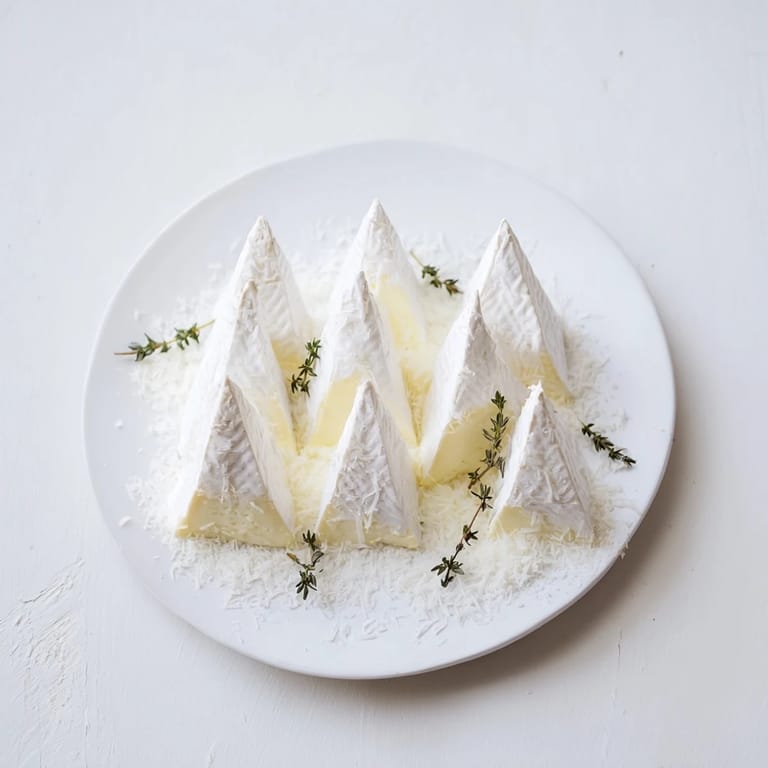
- Place the wedges upright on your serving platter with the pointed ends facing up, clustered together so they lean slightly into each other like an actual range. The arrangement is the whole point here, so take a moment to get it right.
- Snow the peaks:
- Using a small sieve or fine grater held above the platter, dust the Parmesan generously over the tops of each wedge. The goal is visible coverage that looks intentional, like fresh snow has just settled.
- Add greenery and serve:
- Tuck a few thyme sprigs around the base if you have them, then place your platter on the table with crackers or baguette slices alongside. Serve immediately so the Brie stays in its best form.
 Pin it
 The first time someone broke off a piece with their cracker and tasted it, they closed their eyes for a second, and I realized that simple elegance is sometimes just about letting good ingredients do what they do best. That moment changed how I think about entertaining—it's not about complexity, it's about intention and presentation.
When to Toast the Parmesan
One evening, I decided to toast the grated Parmesan in a dry skillet before dusting it, and the whole character of the dish shifted. The Parmesan became nuttier, slightly deeper, with a faint crisp texture that added another layer of flavor and visual interest. It's optional, but if you want to take this from lovely to memorable, the toasting step is your secret.
Cheese Variations Worth Trying
Brie is the obvious choice, but this concept adapts beautifully to other cheeses if you want to experiment. Camembert offers a slightly earthier flavor, while triple-cream options make the whole thing richer and more indulgent. I've even tried it with a soft goat cheese for a tangier edge, though you'll need to adjust your cutting technique slightly since goat cheese crumbles more easily.
Pairing and Serving Thoughts
This dish lives best alongside wine—a chilled Chardonnay or sparkling wine is ideal, as the acidity cuts through the richness of the cheese beautifully. I've also discovered that the simplest crackers work best here, because fancy crackers sometimes compete for attention when the cheese should be the star.
- Serve this at the beginning of a meal, not the end, because the Brie is best at its creamiest.
- If you're making this ahead, assemble everything except the Parmesan dust, then finish it just before your guests arrive.
- A small cheese knife placed nearby makes it easy for people to serve themselves without the wedges toppling over.
 Pin it
 This is the kind of dish that turns a casual gathering into something people remember, not because it was complicated, but because it felt thoughtful. Keep it in your back pocket for moments when you want to impress without stress.
Frequently Asked Questions
- → How do you achieve clean cuts on Brie wedges?
Ensure the Brie is well chilled before slicing into triangles with a sharp knife for neat, clean edges.
- → Can the Parmesan be prepared differently?
For extra flavor, lightly toast the Parmesan in a dry pan, then let it cool before dusting over the Brie.
- → Are there alternative cheese options?
Camembert or triple-cream cheese can be used as richer substitutes for Brie in this presentation.
- → What garnishes complement this dish?
Fresh thyme sprigs add a touch of greenery and aroma, enhancing the overall presentation and flavor.
- → What beverages pair best with this dish?
Chilled Chardonnay or sparkling wine complement the creamy textures and subtle flavors beautifully.