 Save
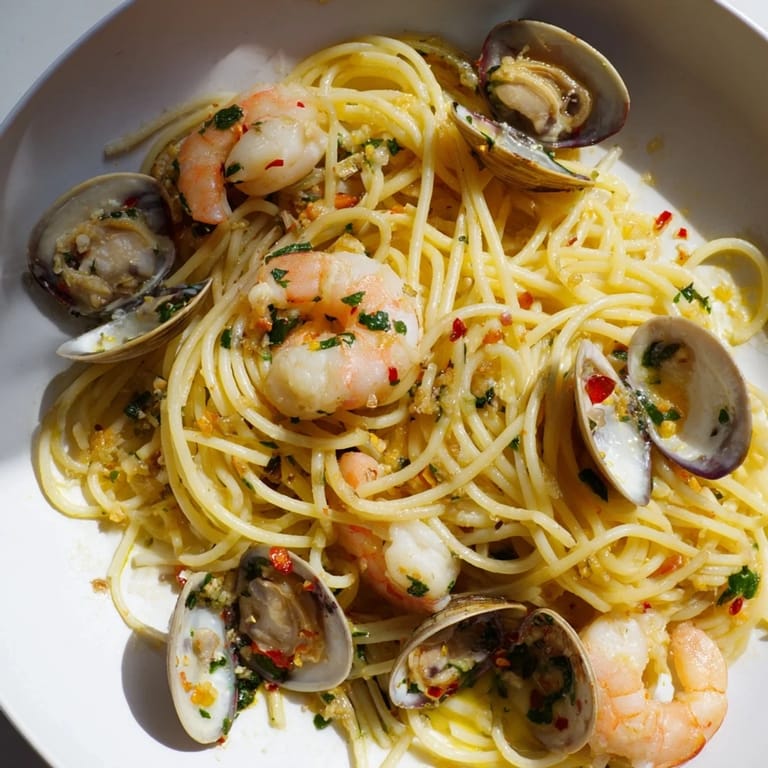
Save There's a particular magic that happens when you're standing at a crowded Roman trattoria, fork twirling spaghetti aglio e olio, and you notice how the simplest ingredients transform into something unforgettable. That evening, watching the chef work with just garlic, oil, and pasta sparked something—what if we added the sea to this? Years later, when I finally attempted seafood aglio e olio in my own kitchen, the aroma of garlic turning golden in olive oil while shrimp blushed pink nearby felt like I'd cracked open a delicious secret.
I made this for my sister on a Thursday night when she called saying she'd had the worst day at work, and honestly, watching her face when she tasted it—that moment when you forget to be tired because the food is that good—reminded me why I love cooking. The kitchen smelled like a coastal Italian village, and for those twenty minutes of prep and cooking, we weren't in a cramped apartment; we were somewhere warmer.
Ingredients
- Large shrimp (250 g): Peeled and deveined means less work, but if you're using frozen, give yourself an extra five minutes to thaw them gently under cold water.
- Fresh clams (500 g): The briny bivalves are the backbone here; scrub them hard under cold running water to dislodge any sand, and discard any that won't close when tapped.
- Spaghetti (400 g): Long, thin strands are essential because they catch the garlicky oil like a net; this isn't the time to improvise with penne.
- Extra virgin olive oil (6 tbsp): This is where quality matters—cheap oil tastes tinny, but good oil becomes the sauce itself.
- Garlic cloves (5), thinly sliced: Sliced, not minced, so you get those lovely golden chips that stay intact rather than disappearing into paste.
- Red chili flakes (1/2–1 tsp): Start conservative; you can always add heat, but you can't take it back.
- Dry white wine (1/2 cup): It cuts through the richness and gives the clams something to steam in—skip it and you lose half the flavor.
- Lemon (1), zested and juiced: The zest adds brightness that prevents the dish from feeling heavy, and the juice wakes up the seafood.
- Fresh flat-leaf parsley (1/4 cup): Not curly parsley; flat-leaf has cleaner flavor and doesn't disappear into the pasta.
- Salt and black pepper: Season gradually; the clams and shrimp bring their own saltiness.
Tired of Takeout? 🥡
Get 10 meals you can make faster than delivery arrives. Seriously.
One email. No spam. Unsubscribe anytime.
Instructions
- Start your pasta:
- Fill a large pot with water, salt it generously so it tastes like the sea, and let it come to a rolling boil. This takes longer than you think, so don't rush it.
- Cook the spaghetti:
- Follow the package time but fish out a strand at minute nine to taste—al dente means you still feel a tiny resistance between your teeth, not soft. Once it's perfect, reserve about half a cup of that starchy water before draining; it's liquid gold for creating sauce.
- Build your garlic oil:
- In a large skillet over medium heat, pour in the olive oil and let it warm until it shimmers. Add your sliced garlic and chili flakes, then listen for the gentle sizzle and watch for that pale golden color—about one minute.
- The garlic moment:
- Here's where patience saves you: pull the skillet off heat if the garlic starts browning too fast, because burned garlic tastes bitter and ruins everything. You want fragrant, golden chips, not blackened bits.
- Add the shrimp:
- Return to medium heat and add your shrimp, letting them cook for about two minutes until the outside turns pink and opaque. They'll finish cooking later, so don't overdo it here.
- Sear and set aside:
- Transfer the shrimp to a clean plate; they've done their job and will be back soon.
- Clams and wine:
- Pour in the white wine, then add your scrubbed clams and cover the skillet. Shake the pan every thirty seconds or so to encourage them to open, which should happen in three to five minutes. Any clams that refuse to open after five minutes don't want to be eaten—discard them.
- Bring it together:
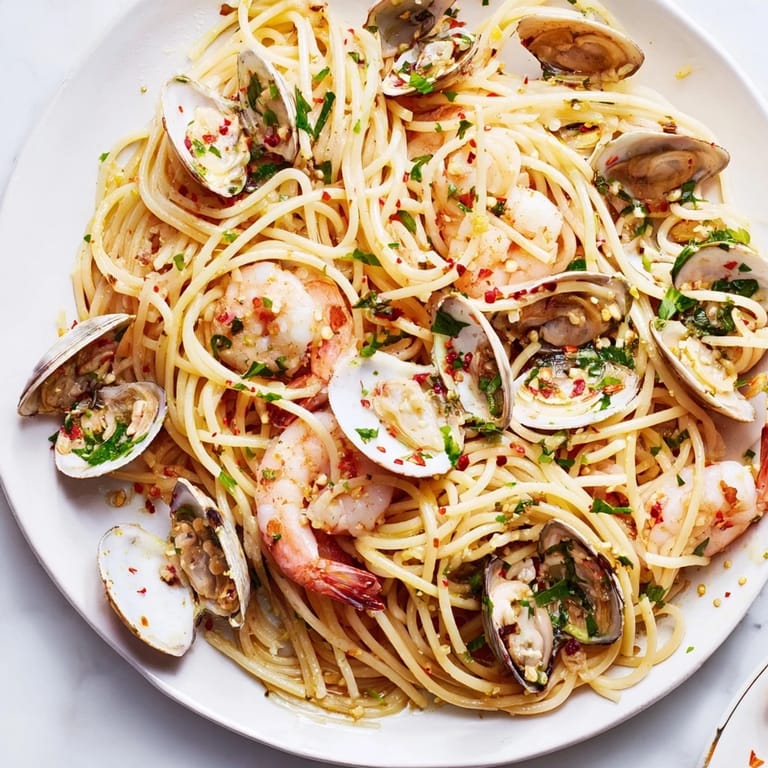
- Return the shrimp to the skillet, add your hot drained pasta, then scatter over the lemon zest, lemon juice, and most of the parsley. Toss everything gently but thoroughly, adding splashes of that reserved pasta water until you've got a silky, light sauce coating every strand.
- Taste and adjust:
- Grind in black pepper and taste before adding salt, remembering that both the seafood and that pasta water brought saltiness already.
 Pin it
 The first time my friend Marco tasted this, he closed his eyes and said it reminded him of eating at his grandmother's house by the water, and I realized that food has this quiet power to unlock memories you didn't even know were waiting. That's when I understood that this dish is more than technique and timing; it's an invitation to sit down and be present.
Timing and Rhythm
The beauty of aglio e olio is that every component cooks on its own schedule, and you're just the conductor making sure they arrive at the plate at the same moment. Start your pasta water first—it's the slowest thing. While that comes to a boil, prep your garlic, shrimp, and clams so there's no scrambling once the heat is on. Once everything is moving, it's actually faster than you'd think, which means dinner is on the table before anyone gets too hungry and grumpy.
Building Flavor in Layers
This recipe doesn't rely on heavy cream or complex sauces; instead, it layers flavor through technique. The garlic and chili steep in the olive oil, creating an infused base. The seafood releases its briny liquid, which becomes part of the sauce. The pasta water adds starch that emulsifies it all into something greater than its parts. It's a lesson in cooking that patience and proper sequencing matter more than a long ingredient list, and every step has a reason.
Making It Your Own
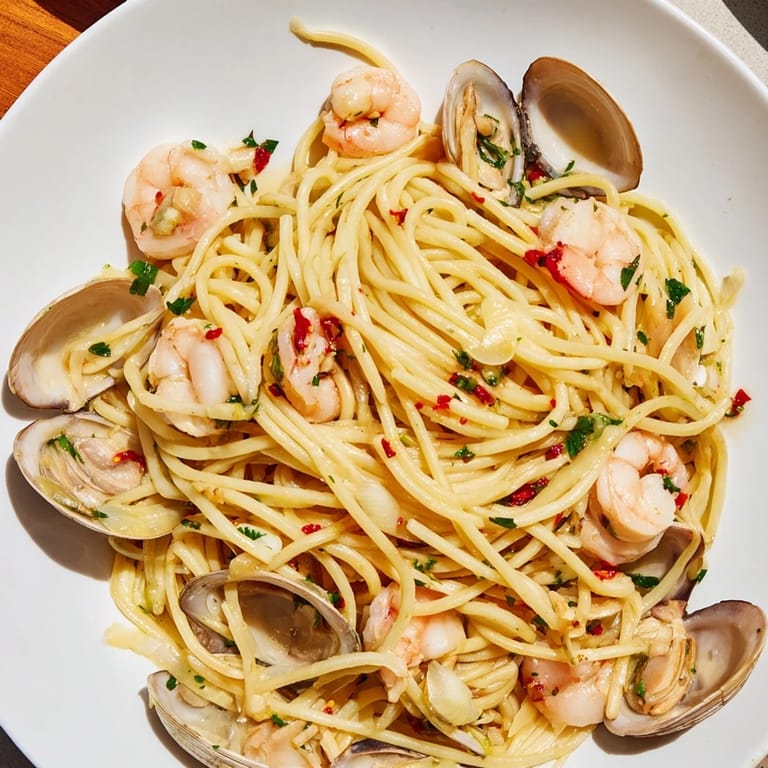
While the classic version is perfect as written, this dish welcomes gentle improvisation based on what your fishmonger has that day or what you're craving. I've made it with mussels when clams weren't looking fresh, added thin slices of squid for a chewier texture, and even stirred in a handful of baby spinach at the end without anyone complaining. The core technique stays the same—garlic, oil, seafood, pasta, lemon—and that's what makes it reliable and forgiving.
- If you can't find fresh clams, frozen ones work, though they'll cook faster and release more liquid, so adjust your wine amount accordingly.
- Red chili flakes are traditional, but fresh sliced chili peppers give a different kind of heat that some prefer.
- A splash of good brandy or cognac instead of wine creates a richer, slightly different flavor—save it for when you're feeling adventurous.
 Pin it
 There's something deeply satisfying about cooking a dish that requires presence and attention but rewards you with restaurant-quality food in your own kitchen. This seafood aglio e olio has become my go-to when I want to feel like I've done something special, without the stress.
Frequently Asked Questions
- → Can I use different seafood in this pasta?
Yes, mussels or calamari can be used as substitutes or additions to the shrimp and clams to vary the seafood mix.
- → How can I make the sauce silky and flavorful?
Reserve some pasta cooking water and add it gradually while tossing the pasta to create a smooth, well-coated sauce.
- → What wine pairs best with this pasta?
A crisp Italian white wine like Pinot Grigio enhances the flavors without overpowering the seafood.
- → How do I ensure the garlic doesn’t burn?
Sauté the sliced garlic in olive oil over medium heat just until golden and fragrant, about one minute, stirring constantly.
- → Can gluten-free pasta be used?
Yes, substituting gluten-free pasta allows this dish to accommodate gluten sensitivities without changing the flavor profile.