 Save
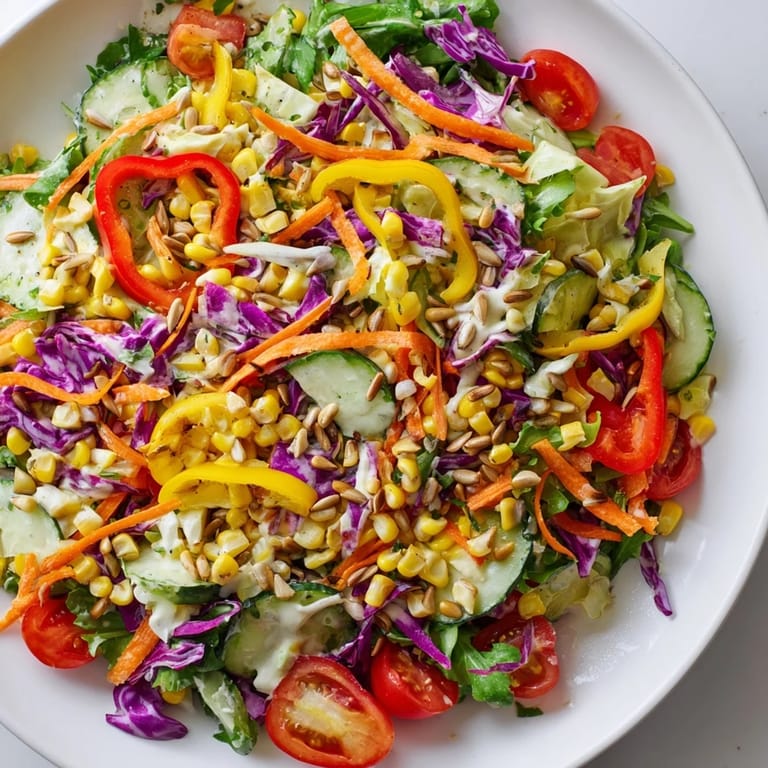
Save There was this moment at a farmer's market in late spring when I couldn't decide between all the brilliant bell peppers—red, yellow, orange, each one practically glowing under the morning sun. Instead of choosing one, I grabbed a handful and thought, what if I built a whole salad around the colors? That afternoon, standing in my kitchen with this rainbow of vegetables spread across the cutting board, I realized I'd stumbled onto something genuinely simple and deeply satisfying. The tahini dressing came together almost by accident, a creamy counterpoint to all that crisp freshness. Now it's the salad I make when I want to feel like I'm eating sunshine.
I made this for a potluck last summer where everyone brought beige casseroles and mayonnaise-heavy sides. When I set down this bowl of reds and yellows and purples, something shifted in the room—suddenly people were actually excited about eating vegetables. My friend Maya went back for thirds and asked for the recipe, which I'd never seen her do with salad before. That moment taught me that presentation and vibrancy matter, but only because they reflect something real: when food looks this good, it tastes better.
Ingredients
- Red bell pepper: One cup sliced thin—the papery skin catches the dressing beautifully and adds a gentle sweetness that rounds out the whole bowl.
- Yellow bell pepper: Another cup, same treatment—these are slightly milder than red, so they don't overpower the softer greens.
- Carrot: One cup julienned into delicate matchsticks that hold the dressing like tiny edible vessels.
- Purple cabbage: Shredded fine, about a cup—this one's tough enough to stay crisp for days and adds an earthy note.
- Cucumber: One cup sliced, preferably on the bias so each piece catches light and dressing evenly.
- Cherry tomatoes: Halved, about a cup—these burst slightly when you toss the salad, releasing their sweetness into everything around them.
- Sweet corn: A half cup, cooked or canned and drained—adds a subtle sweetness and gives your teeth something to sink into.
- Red onion: A quarter cup thinly sliced, just enough to add a sharp whisper without overwhelming the other flavors.
- Mixed salad greens: Two cups of whatever you like—arugula, spinach, romaine—they're the foundation that everything else sits on.
- Tahini: A quarter cup, the backbone of your dressing; buy the best you can find because you'll taste the difference immediately.
- Lemon juice: Two tablespoons freshly squeezed, never bottled—the brightness here is essential, almost a flavor on its own.
- Maple syrup or honey: One tablespoon; this isn't about making it sweet, it's about softening the tahini and helping all the flavors find each other.
- Olive oil: One tablespoon to add body and richness to the dressing.
- Garlic: One clove minced fine so it dissolves almost invisibly into the tahini, adding depth you can't quite name.
- Water: Two to three tablespoons, added gradually so you get the dressing exactly as thick or thin as you want it.
- Salt and pepper: Half a teaspoon salt and a quarter teaspoon pepper—season to your taste, not mine.
- Sunflower seeds: Two tablespoons toasted, optional but they add a nutty crunch that makes people pause mid-bite.
- Fresh herbs: Two tablespoons chopped parsley, cilantro, or mint—whichever one makes you happy when you smell it.
Tired of Takeout? 🥡
Get 10 meals you can make faster than delivery arrives. Seriously.
One email. No spam. Unsubscribe anytime.
Instructions
- Get everything prepped:
- Wash and dry all your vegetables, then slice and chop according to the ingredient list. Lay them out on your cutting board in the order you'll use them—this takes a little time but makes assembly feel effortless. Your salad bowl should be waiting, clean and dry.
- Build your tahini foundation:
- In a small bowl, whisk together the tahini, lemon juice, maple syrup, olive oil, and minced garlic until it starts to come together. It'll look broken at first, almost grainy, but keep whisking—the acid from the lemon juice is doing the work of emulsifying everything.
- Thin it to the right consistency:
- Add water one tablespoon at a time, whisking between each addition, until the dressing flows like heavy cream. You want it to coat the vegetables without pooling at the bottom of the bowl.
- Season and taste:
- Stir in the salt and pepper, then taste it. It should make your mouth water a little, bright and savory and slightly rich all at once.
- Layer your vegetables:
- Pour your salad greens into the large bowl, then add all the sliced vegetables in no particular order—the more casual, the better. This is where you can actually have fun with it.
- Dress and toss gently:
- Pour the tahini dressing over everything and toss with two forks or your hands (clean hands work best), making sure every piece gets coated. Don't be rough about it; you want the vegetables to hold their shape.
- Finish and serve:
- Top with toasted sunflower seeds and fresh herbs if you're using them, then serve right away or chill for 10 to 15 minutes if you like your salad extra crisp. Either way, it's ready to eat.
 Pin it
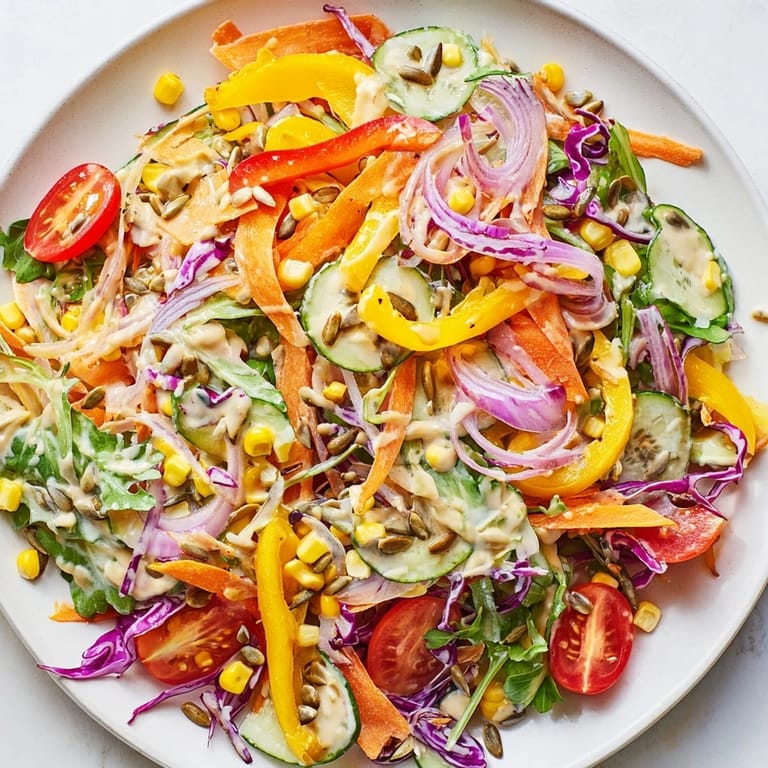
 My sister called me crying once—just having a day—and when she came over to vent, I made this salad without asking if she wanted lunch. We sat on the back step with our bowls, and somewhere between the second and third bite, she stopped mid-sentence and smiled. She didn't say anything profound, but there was something about the colors and the crunch and the ease of it that seemed to reset something in her. Food doesn't have to fix everything, but sometimes it reminds you that things can be simple and good at the same time.
Why This Works as a Meal
This salad walks a beautiful line between light and substantial. The raw vegetables give you fiber and vitamins without any heaviness, while the tahini dressing adds just enough protein and fat to make you feel satisfied, not starved an hour later. I've served it as a side dish to grilled chicken and fish, but I've also eaten it as my whole dinner when I'm too tired to cook anything complicated. It's flexible in that way—it knows how to fit into whatever your day looks like.
Playing with Seasons and Variations
The recipe as written is essentially a late spring or early summer salad, but you can absolutely shift it with the seasons. In winter, swap the cherry tomatoes for roasted beets or add some pomegranate arils; in fall, toss in shredded apple or pumpkin seeds; year-round, feel free to add chickpeas, crumbled tofu, or edamame if you want more protein without thinking about it. The tahini dressing is so forgiving that it pairs well with almost anything colorful you can fit on a cutting board.
The Dressing That Changes Everything
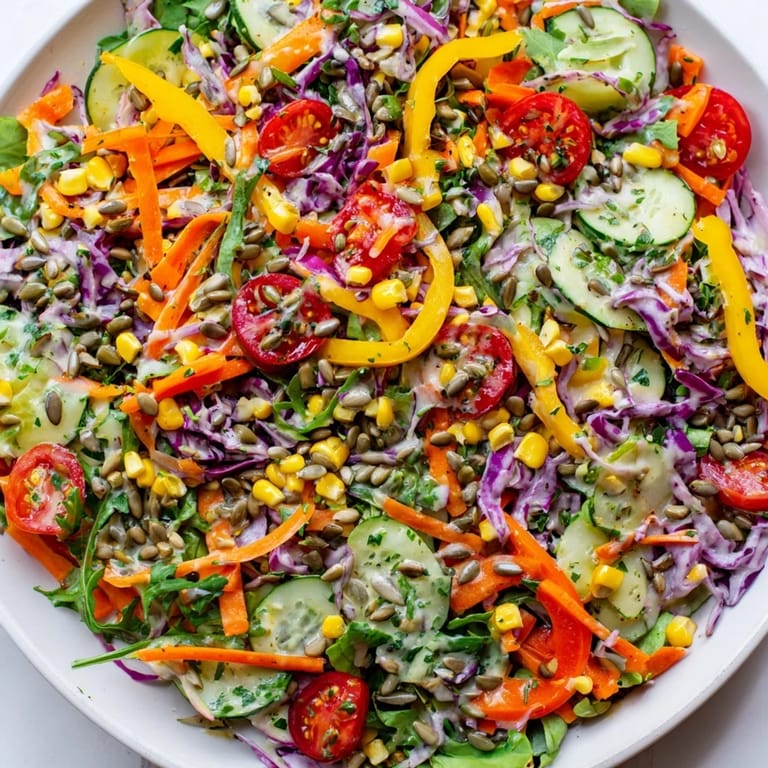
The real magic here is the tahini dressing, which is why I've spent so much time talking about it. Tahini can seem intimidating—it's this thick, slightly bitter paste that doesn't immediately seem like it wants to become a dressing. But once you understand that lemon juice is the emulsifier and water is the thinner, it becomes second nature. I've made this dressing at least a hundred times now, sometimes thinner for drizzling over grain bowls, sometimes thicker for dipping vegetables. The base never changes, but it adapts to whatever you need.
- Make a double batch of dressing and keep it in a jar in the fridge; it lasts about five days and makes Monday salads feel intentional instead of obligatory.
- If you're feeding someone who's never had tahini before, this is the gateway—it's creamy and approachable and doesn't taste like you're making them eat health food.
- Leftover dressing is brilliant drizzled over roasted vegetables or as a dip for warm pita bread on a cold afternoon.
 Pin it
 This salad has become one of those recipes I make without thinking about it, the way some people make pasta or soup. It's proof that the simplest dishes—ones that ask you to honor the vegetables rather than mask them—are often the ones that stick around longest.
Frequently Asked Questions
- → What vegetables are included in the salad?
Red and yellow bell peppers, carrot, purple cabbage, cucumber, cherry tomatoes, sweet corn, red onion, and mixed greens create a colorful vegetable medley.
- → How is the tahini dressing prepared?
Combine tahini, lemon juice, maple syrup or honey, olive oil, minced garlic, salt, and pepper. Gradually add water to achieve a smooth, pourable consistency.
- → Can I customize the vegetables in this salad?
Yes, you can swap vegetables based on seasonality or preference to keep the salad fresh and exciting.
- → What toppings enhance the salad’s texture and flavor?
Toasted sunflower seeds and chopped fresh herbs like parsley, cilantro, or mint add crunch and aromatic notes.
- → Is this salad suitable for special diets?
It’s vegan and gluten-free if maple syrup is used instead of honey, and it contains sesame from the tahini dressing.