 Save
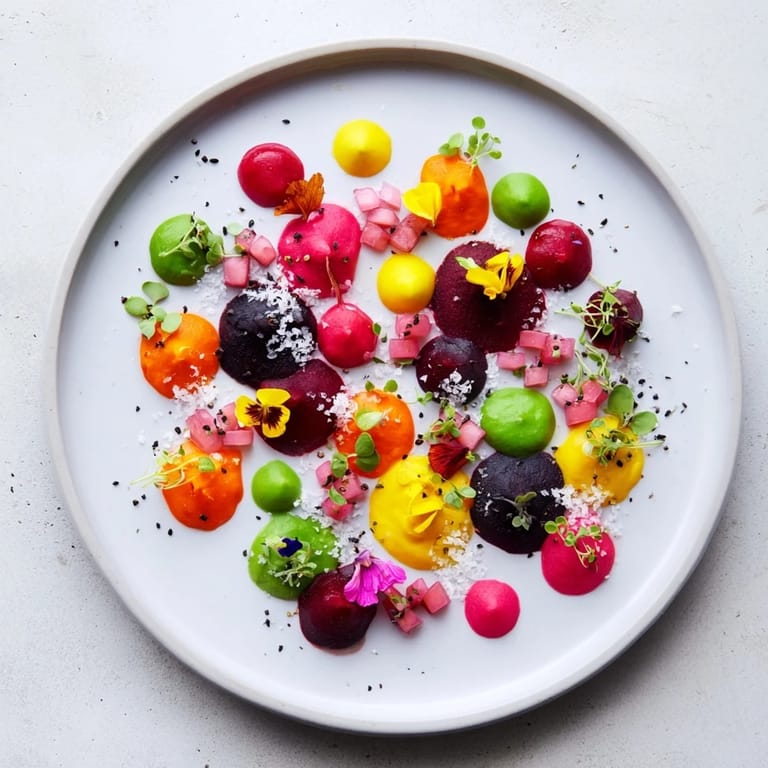
Save I discovered this dish while watching a documentary about Pointillist painters—Monet and Seurat creating entire worlds with tiny dots of color. It sparked something in me: what if a plate could be a canvas? I started experimenting in my kitchen, layering vegetable purees and sauces with the same intentional placement those artists used. The first time I plated it for friends, someone said, "This is almost too beautiful to eat." Almost. Within seconds, forks were gathering dots and mounds in delightful combinations, and I realized the magic wasn't just visual—it was in the freedom to create your own flavor journey with every bite.
I remember plating this for my partner's birthday dinner, and watching their face as they realized they got to play with their food like we never were allowed to as children. We sat there for twenty minutes, each forkful deliberate and playful, combining colors and textures in ways the other person hadn't thought of yet. That's when I understood—this dish isn't about perfection or technique. It's about giving people permission to be creative and joyful at the table.
Ingredients
- Beetroot puree (80 g): Gives you that deep magenta that makes the whole plate sing. Cook it until fork-tender, then blend smooth with just a whisper of olive oil. The earthiness is grounding against the brighter colors.
- Carrot puree (80 g): A warm, natural orange that sits between the reds and yellows. Roasting brings out sweetness that the beets don't have, so they balance each other beautifully.
- Green pea puree (80 g): Fresh and bright, this one's a little softer than the others, so blend it gently and don't overwork it or it turns gray instead of vibrant green.
- Yellow bell pepper puree (80 g): The sunniest voice on your plate. Roast it first to add depth—raw just tastes sweet and one-dimensional.
- Greek yogurt (60 g): A creamy white base that lets all the colors pop. It's tangy enough to stand up to the vegetables without being aggressive.
- Crème fraîche (40 g): Richer than yogurt, with a subtle richness. If you can't find it, sour cream works in a pinch, though the flavor shifts slightly.
- Basil pesto (1 tbsp): Herbal and green, this adds a flavor dimension that pure purees can't reach. Make it fresh if you can—jarred is fine, but homemade changes everything.
- Red pepper coulis (1 tbsp): A glossy red sauce with a bit of tang. This is where you get complexity without bitterness.
- Balsamic reduction (1 tbsp): Deep, dark, sweet-tart. A little goes a long way. If you buy it ready-made, taste it first—some brands are overly syrupy.
- Pickled red onions (20 g, finely diced): The surprise crunch and sharp bite that makes people pause and ask, "What is that?" Pickle them yourself if you have time—they're sharper and fresher than store-bought.
- Microgreens: Delicate and peppery. They add height and sophistication without being pretentious about it.
- Toasted black sesame seeds (1 tbsp): Nutty and dark, they create visual contrast and a subtle crunch. Toast them yourself in a dry pan for two minutes—it wakes up their flavor.
- Pomegranate seeds: Jewel-like pops of tartness and juice. They burst with color and flavor, and they demand to be noticed.
- Edible flower petals (optional): These are purely for beauty, but they matter. Pansies, violas, nasturtiums—whatever you can find. Just make sure they're untreated.
- Sea salt flakes: The finishing touch. Fleur de sel or Maldon salt has crystals that catch the light and add a final layer of texture.
Tired of Takeout? 🥡
Get 10 meals you can make faster than delivery arrives. Seriously.
One email. No spam. Unsubscribe anytime.
Instructions
- Prep your canvas—make the purees:
- Cook each vegetable until completely tender (about 15 minutes for beets and carrots, 8 for peas, 12 for peppers). Let them cool slightly, then blitz each one separately with a pinch of salt and a few drops of olive oil until absolutely smooth. No lumps—you want them flowing like silk from your piping bag. Taste as you go. Transfer each to its own piping bag or squeeze bottle, keeping them separate so the colors stay true.
- Gather your whites:
- Put the Greek yogurt and crème fraîche into their own piping bags. Spoon the pesto, coulis, and balsamic into squeeze bottles. These are your accent players, so keep them organized and within arm's reach.
- Build your composition—dot the plate:
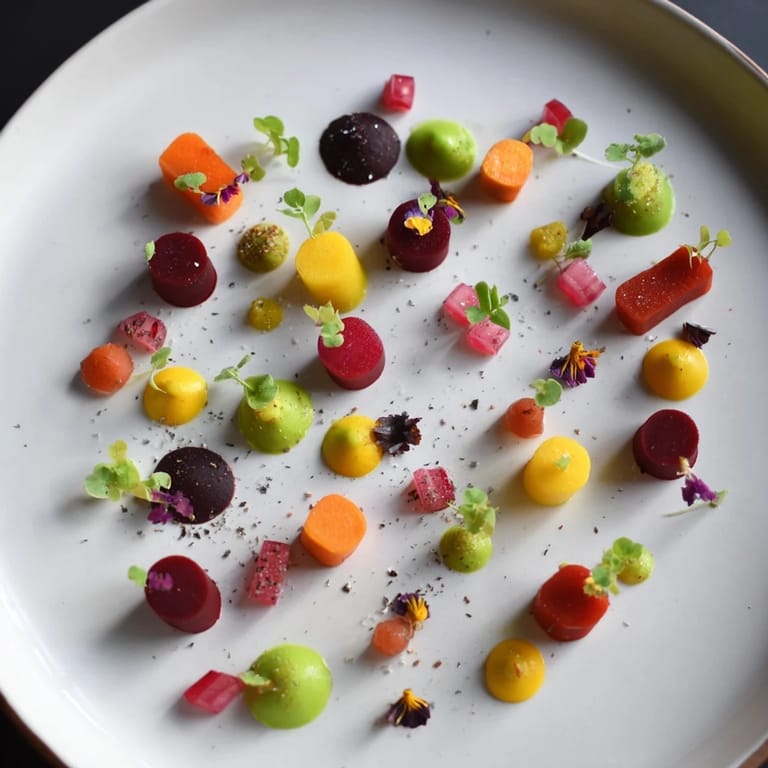
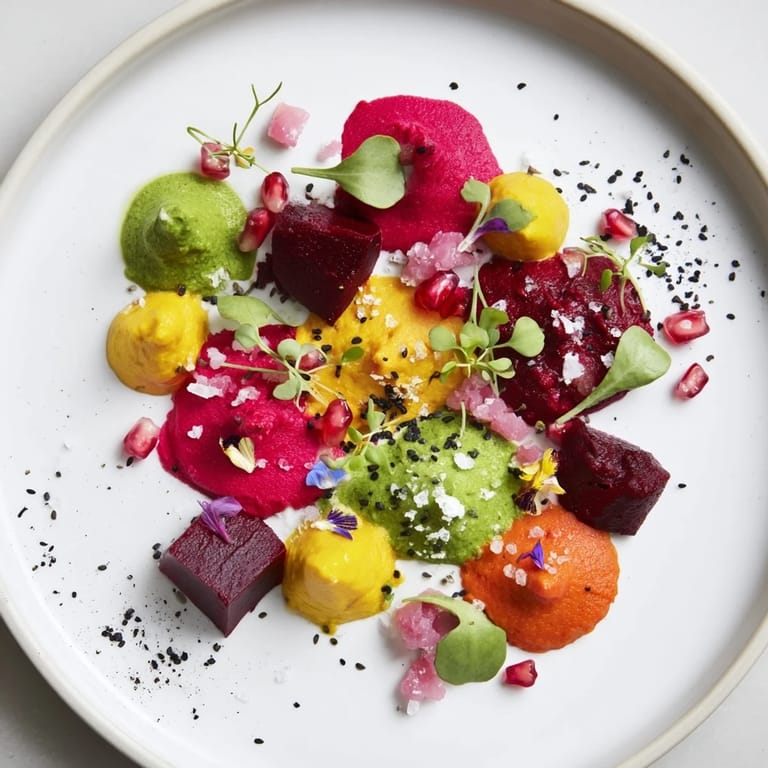
- Take a clean, white plate (seriously, white matters here). Start with one puree and pipe small dots across the surface, varying the size slightly—some the size of a fingertip, others smaller. No pattern, no grid. Think of Monet letting dots fall as they will. Then move to the next puree and repeat, leaving space between colors so they don't blur together. Fill maybe 60% of the plate this way, leaving some breathing room.
- Add dimension with creams:
- Pipe tiny mounds of yogurt and crème fraîche in the negative spaces. These white dollops are crucial—they frame everything and let the colors rest your eye.
- Weave in the sauces:
- Drizzle thin lines of pesto, coulis, and balsamic between the elements. Don't be timid, but don't cover everything either. You're adding flavor and visual depth, not redecorating.
- Crown it with texture and surprise:
- Scatter the diced pickled onions, microgreens, sesame seeds, and pomegranate seeds across the composition. Use your tweezers if you have them—it slows you down and makes you intentional. Finish with a whisper of sea salt and fresh pepper.
- Serve immediately:
- The moment it's plated, it's ready. Don't let it sit. The colors fade slightly as things sit, and the crispness of the microgreens and seeds matters. Bring it to the table while it's still a statement.
 Pin it
 The real turning point came when I stopped thinking of this as a recipe and started thinking of it as an invitation. Not an invitation to eat something fancy, but an invitation to play, to notice flavors and textures individually, to be creative. That shift changed how I cooked it and how people experienced it. Suddenly it wasn't about impressing anyone with technique—it was about the joy of a plate that felt personal to everyone who ate from it.
Playing with Color and Flavor Combinations
This is where intuition becomes your best tool. Beetroot and balsamic are old friends—earthy and deep together. Carrot and pesto light each other up—warm and herbaceous. Pea puree with a touch of crème fraîche is almost sweet, almost savory, perfectly neutral. The bell pepper is the optimist on the plate, brightening everything it touches. As you eat, you're learning these relationships. Your palate becomes the guide. Some people will go for bold contrasts—beet and pea on the same fork. Others will explore the subtle shifts between carrots and peppers. Both are right.
Preparing Ahead (Without Losing the Magic)
You can prep the purees up to two days ahead. Store them in airtight containers or those piping bags in the refrigerator. The flavor actually deepens slightly. The sauces can also be ready to go. What you cannot do ahead is the plating itself—that's the moment where you're both chef and artist, and it needs your full attention and both hands free. But knowing your components are ready gives you the mental space to actually enjoy the creative part.
Making It Your Own
This recipe is a framework, not a cage. The moment you understand how it works—purees for body, creams for contrast, sauces for complexity, garnish for surprise—you can remix it endlessly. Try purple sweet potato puree. Try avocado (pipe it gently, it's delicate). Add a touch of wasabi to your yogurt. Use different herbs in place of basil. Swap pomegranate for currants. The structure stays the same, but the painting is entirely yours.
- Vegan? Swap Greek yogurt for silken tofu or cashew cream, skip the crème fraîche, and suddenly this is plant-forward and still stunning
- Want it spicy? A tiny dot of sriracha oil or hot sauce among the purees adds excitement without overwhelming
- Serve with crispy crackers, toasted bread, or just as an appetizer—it's substantial enough to stand alone because those purees are packed with vegetables
 Pin it
 Every time I make this dish, I'm reminded that cooking is sometimes about nourishment, sometimes about technique, but the moments that matter most are when food becomes an experience you share. This plate does that—it slows people down, makes them notice, makes them smile. That's worth the extra thirty minutes of prep.
Frequently Asked Questions
- → How are the vegetable purees prepared?
Each vegetable is cooked and blended separately with a pinch of salt and olive oil until smooth, then placed into piping bags for precise plating.
- → What techniques enhance the visual appeal?
Purees, sauces, and creams are piped in scattered dots and mounds with varied sizes and colors, creating a Pointillism-inspired artistic effect on the plate.
- → Can this dish be adapted for vegan diets?
Yes, substitute dairy-based yogurt and crème fraîche with plant-based alternatives to maintain flavor and texture.
- → What garnishes add texture and color?
Pickled red onions, microgreens, toasted sesame seeds, pomegranate seeds, and edible flower petals are sprinkled over the plated dots for enhanced texture and vibrancy.
- → What is the ideal serving suggestion?
Serve immediately to preserve the fresh appearance, ideally accompanied by crisp crackers or sourdough as a shareable starter.
- → Are there recommended wine pairings?
A crisp Sauvignon Blanc complements the fresh and vibrant flavors of this dish beautifully.