 Save
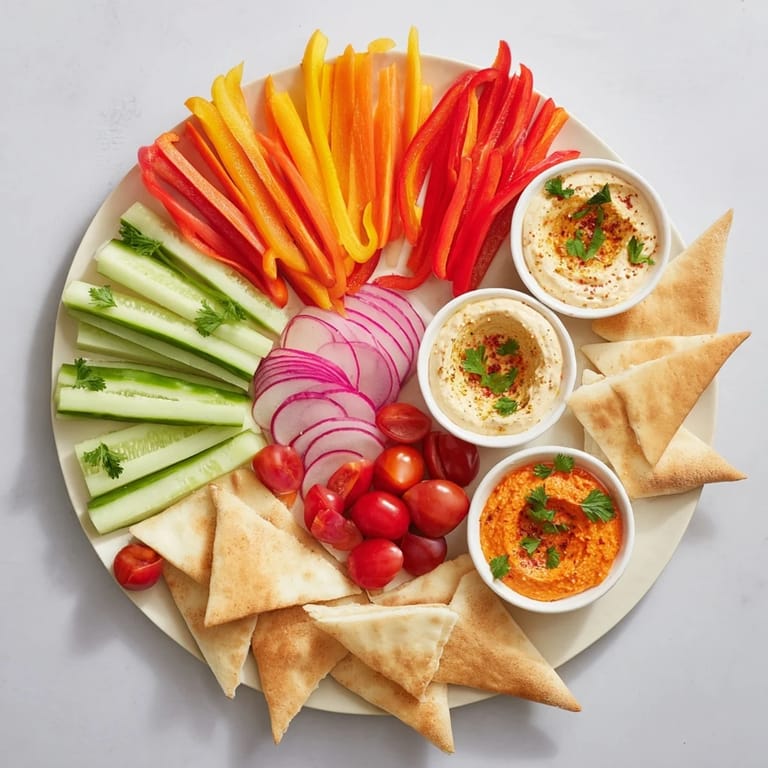
Save My sister called me the night before her engagement party in a panic: she needed something impressive but didn't have time for complicated cooking. That's when I remembered a platter I'd seen at a Moroccan restaurant in our neighborhood, the kind that arrives at your table like edible architecture. I realized I could recreate that magic at home, transforming simple vegetables and store-bought dips into something that looked like I'd spent hours in the kitchen when really, I'd just learned the secret: arrangement is everything.
I'll never forget watching my sister's guests actually gasp when we unveiled the platter at her engagement party. One of her colleagues kept saying, "You made this?" in disbelief, and the best part was watching my sister's face light up as she realized this wasn't just food—it was proof that she'd thrown a party people would remember. The tent-shaped arrangement turned out to be the icebreaker everyone needed, with conversations starting over which dip paired best with which vegetable.
Ingredients
- Cucumber: Slice it lengthwise so you get those gorgeous flat strips that catch the light and add architectural lines to your arrangement.
- Red and yellow bell peppers: These are your color anchors, so choose ones that are truly vibrant because they're the first thing people's eyes land on.
- Carrots: Cut into sticks rather than rounds so they stand upright in the canopy and feel like part of the structure you're building.
- Cherry tomatoes: Halve them to show off the gorgeous interior, and they nestle perfectly into the gaps between other vegetables.
- Red onion: Paper-thin slices have a sweet bite that balances the richness of the dips without overwhelming anyone.
- Radishes: Their peppery snap and natural pink color add an unexpected pop that makes people notice details.
- Pita breads or msemen: Warming them gently makes them flexible enough to fan out beautifully at the base, and they'll stay soft enough to tear and dip.
- Hummus, muhammara, and baba ganoush: Buy good quality or make them fresh if you have the time, because these are the flavor foundation everything else supports.
- Green and black olives: The briny salt cuts through the richness and adds another layer of flavor complexity.
- Fresh cilantro or parsley: Scattered at the end, it adds that final touch of liveliness and color contrast.
- Toasted sesame seeds: These add a nutty crunch that transforms the texture and catches light in the dips.
- Ground cumin and smoked paprika: Just a whisper of each adds warmth and depth without dominating the delicate flavors of fresh vegetables.
Tired of Takeout? 🥡
Get 10 meals you can make faster than delivery arrives. Seriously.
One email. No spam. Unsubscribe anytime.
Instructions
- Prep your vegetables with intention:
- Cut everything as described and lay the pieces on paper towels to dry slightly, because any excess moisture will make the finished platter look tired. Think about the colors as you work—you're not just preparing ingredients, you're gathering your palette.
- Build the tent canopy:
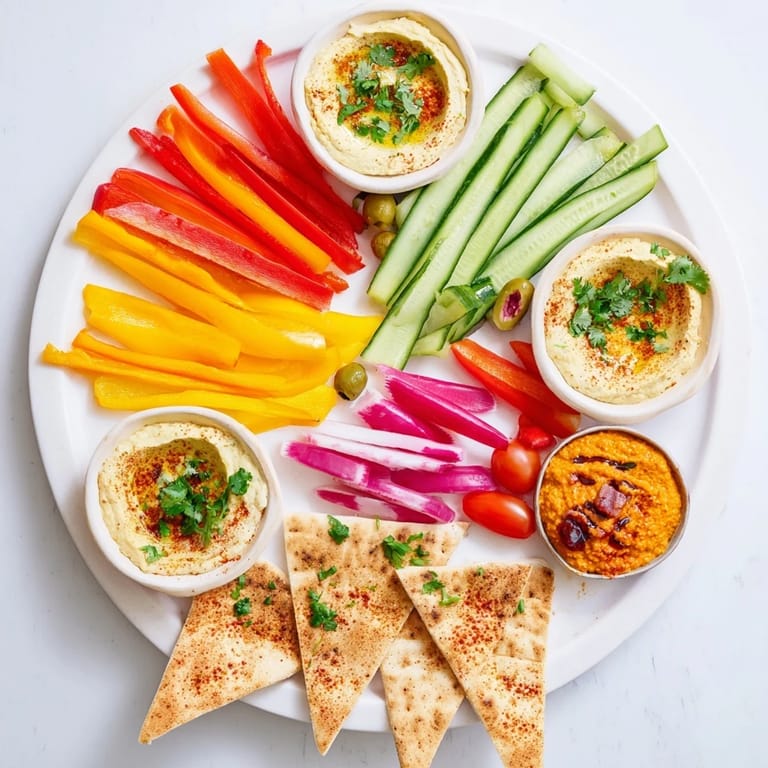
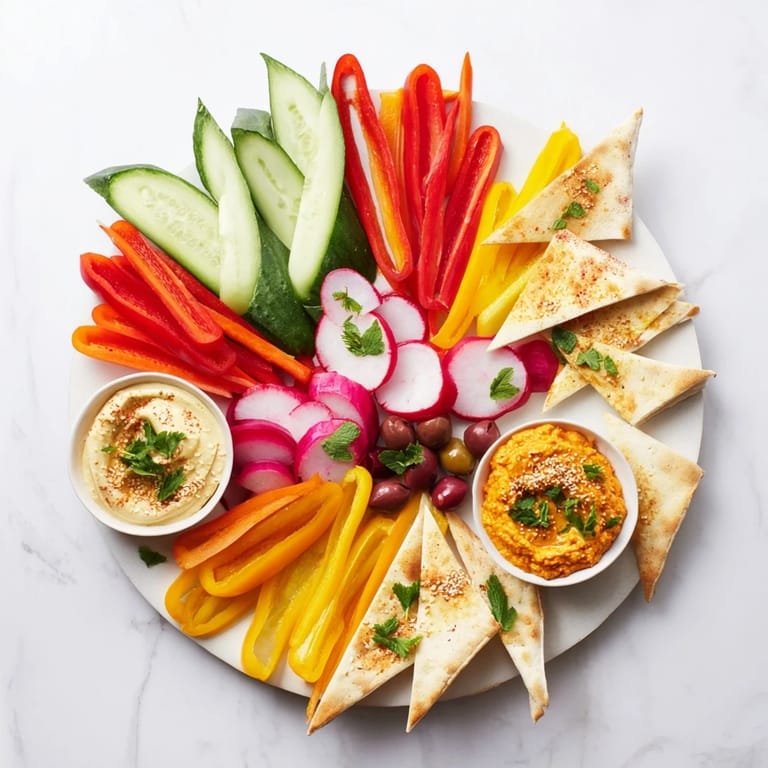
- Arrange the vegetables in pointed, triangular groupings on your largest platter, alternating colors so every angle shows contrast and movement. Let them lean slightly against each other so they naturally hold that tent shape.
- Warm and fan the bread:
- Heat your pita or msemen in a dry skillet for 2-3 minutes per side or in a 350°F oven until just pliable, then cut into triangles. Fan them out around the base of your vegetable canopy like they're the supporting walls of the tent.
- Dress the dips:
- Spoon hummus, muhammara, and baba ganoush into small bowls and nestle them at the center base where everything converges. Sprinkle each with cumin, paprika, and sesame seeds so even the dips look intentional and finished.
- Final garnish and serve:
- Scatter your olives, cilantro, and any extra sesame seeds across the arrangement just before serving, so everything looks fresh and alive. Set it down and watch people lean in.
 Pin it
 What surprised me most wasn't just that the platter looked beautiful, but that it transformed how people gathered. Instead of hovering near a single table with drinks, everyone naturally congregated around the tent, building their own combinations and discovering flavor pairings they wouldn't have noticed eating separately. Food brought them closer in the most literal sense.
The Art of Vegetable Arrangement
The tent shape isn't accidental—it's actually a proven way to make people feel welcomed by your food. When items are arranged in a pyramid or pointed grouping, it naturally draws the eye upward and creates visual movement that flat arrangements never achieve. The key is thinking in layers: your tallest vegetables create the peak, medium-height pieces fill the middle, and shorter pieces anchor the base where everything meets the plate. As you arrange, step back every few minutes and look at it from different angles, the way your guests will see it as they approach.
Building Flavor Combinations
One of the greatest parts of this platter is watching guests discover their favorite pairings. The raw crunch of radish against creamy baba ganoush, the sweetness of roasted red pepper muhammara balanced by briny olives, the way cilantro ties everything together with freshness—these combinations reveal themselves as people eat rather than being decided by you. I've learned that the best appetizers don't dictate the experience; they invite guests to become the creators, and that's when food becomes memorable.
Serving and Storage Wisdom
Timing is everything with a platter like this. Prep it no more than an hour before serving, because vegetables will begin releasing moisture and the bread will lose its texture if it sits too long. If you're making this for a lunch and need to prepare earlier, keep the vegetables and dips separate and assemble just before people arrive. The tent shape will hold for about two hours if kept at cool room temperature, though honestly, it rarely lasts that long once guests start gathering.
- Store any leftovers in an airtight container in the refrigerator, separated by component, and use within two days.
- The bread is best enjoyed fresh, so if you have extra, warm it gently the next morning rather than eating cold pita.
- You can prep all vegetables the night before, storing them separately in sealed containers so everything stays crisp and ready to arrange.
 Pin it
 This platter taught me that entertaining doesn't require elaborate cooking—it requires intention and the confidence to present simple things beautifully. Every time I make it now, someone asks for the recipe, and I smile knowing they're going to experience that same moment of discovering that great food is as much about how it's presented as what's in it.
Frequently Asked Questions
- → What vegetables are used in this platter?
Cucumber, red and yellow bell peppers, carrots, cherry tomatoes, red onion, and radishes are sliced and arranged for variety and color.
- → Can I substitute the flatbreads?
Pita or Moroccan msemen are recommended, but other flatbreads warmed lightly can be used as a base for dipping.
- → How are the dips flavored?
Hummus, roasted red pepper muhammara, and baba ganoush are garnished with ground cumin, smoked paprika, and toasted sesame seeds for added depth.
- → What garnishes are included?
Pitted green and black olives, along with chopped cilantro or parsley, provide fresh, savory notes to brighten the platter.
- → Can this platter be adapted for vegans?
Yes, ensure all dips and breads are dairy-free and use plant-based alternatives to keep it fully vegan.