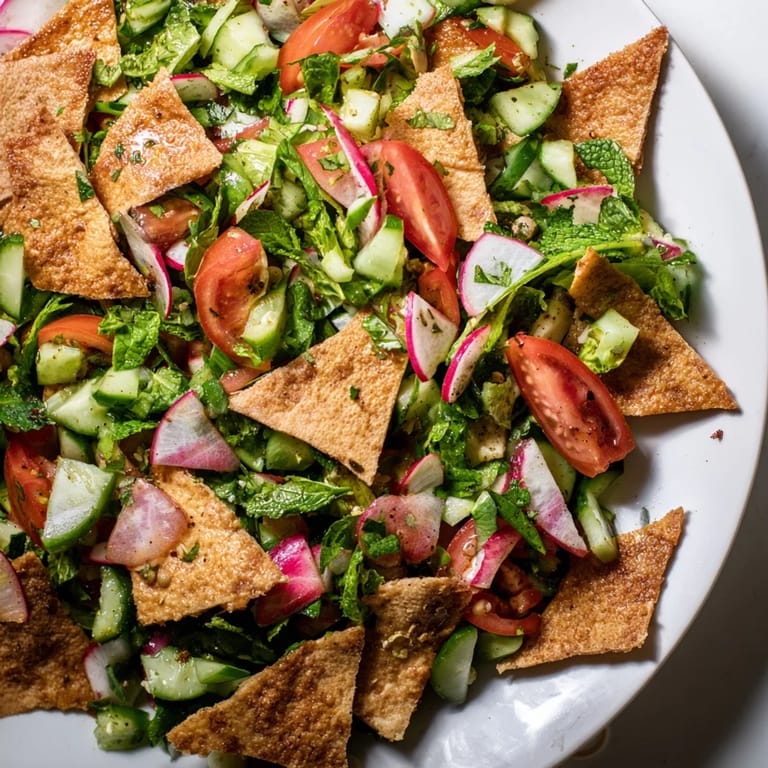
 Save
Save There's something about the way a wooden spoon sounds against the salad bowl that takes me straight to my friend Layla's kitchen in Beirut, where fattoush wasn't just lunch—it was an art form that changed with whatever was growing in her garden that week. She taught me that this salad is really about catching vegetables at their absolute peak, when tomatoes still taste like summer and radishes have that peppery snap that makes you sit up straight. The first time I made it alone, I was convinced I'd miss something essential, but then the oven timer chimed and those pita chips came out golden and crackling, and suddenly the whole thing clicked. Now I make it whenever I need to remember that the best meals are the ones that feel like someone you love is standing right beside you.
I'll never forget making this for my sister's birthday potluck, when I showed up with the components separate and assembled it right on her dining room table—the smell of lemon and sumac filling the room, radishes catching the afternoon light like little jewels. Everyone went quiet for a second when they tasted it, which doesn't happen often, and I realized that this salad doesn't apologize for being simple. It just quietly proves that you don't need complicated techniques or rare ingredients to make people feel cared for.
Ingredients
- Mixed greens (2 cups): Use whatever you have—romaine is forgiving, arugula adds pepper, and purslane brings this subtle sourness that makes the dressing sing even louder.
- Tomatoes and cucumber: Dice them roughly so you get irregular shapes that catch the dressing in different ways; uniformity is actually the enemy here.
- Radishes (4 sliced thin): These aren't just decoration—they're the ones doing the heavy lifting flavor-wise, so don't skimp.
- Red onion (1 small, thin sliced): The acidity in the dressing will soften it just enough by serving time if you slice it paper-thin.
- Fresh parsley and mint (¾ cup combined): Tear the mint by hand so you don't bruise it, and use both herbs the same day you buy them for maximum brightness.
- Pita bread (2 pieces): The crispness of these is non-negotiable—they're what turns a vegetable bowl into something memorable.
- Olive oil (5 tbsp total): Use your best extra-virgin for the dressing; this is where you taste the quality difference.
- Lemon juice and red wine vinegar: The 3:2 ratio keeps things balanced—enough tang to wake everything up without turning it sour.
- Sumac (1–1½ tsp): This is the secret weapon, giving that purple-pink note and lemony zing that people can't quite name but absolutely love.
- Garlic, salt, and pepper: One clove minced, not crushed—you want little flavor bursts, not a blanket of garlic.
Tired of Takeout? 🥡
Get 10 meals you can make faster than delivery arrives. Seriously.
One email. No spam. Unsubscribe anytime.
Instructions
- Crisp Your Pita:
- Heat your oven to 375°F and cut pita into rough bite-sized pieces—they don't all have to be the same size, which honestly looks better anyway. Toss them with olive oil and salt, spread them out so they're not touching, and bake for 8–10 minutes until they're golden brown and smell absolutely irresistible.
- Build Your Base:
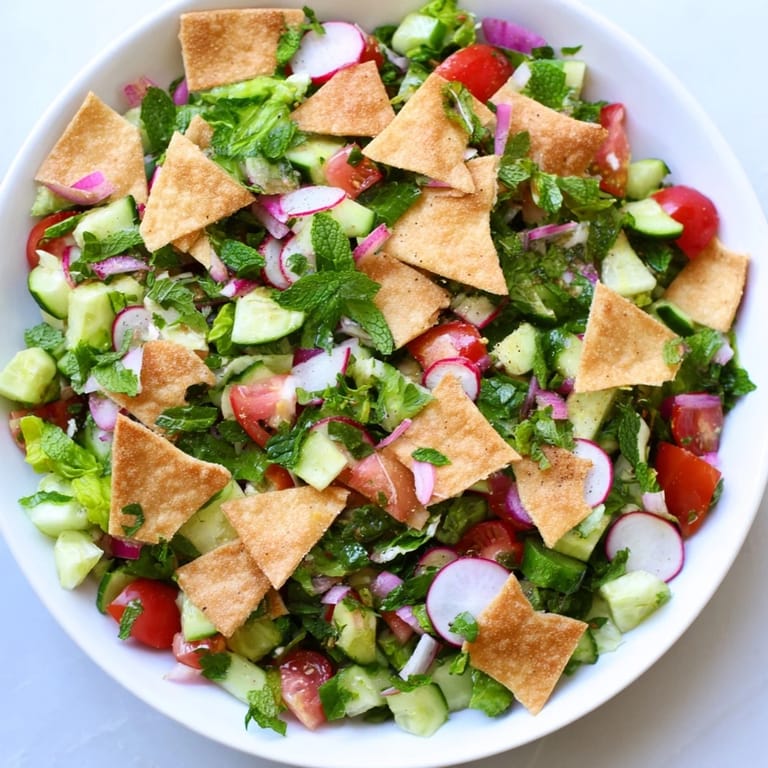
- In a big bowl, combine all your chopped greens, tomatoes, cucumber, radishes, onion, parsley, and mint—just pile it all in there and get comfortable with how much room it takes up. Don't dress it yet; that's the one thing that will change everything.
- Make the Dressing:
- Whisk together olive oil, lemon juice, vinegar, sumac, minced garlic, salt, and pepper in a small bowl until it looks emulsified and smells like you're about to taste something important. The sumac will give it that beautiful dusty-rose color that you'll recognize every time you make it from now on.
- Bring It Together:
- Add those crispy pita chips to your salad bowl right before serving—not a moment before, because they'll lose their crunch the second they meet the dressing. Pour the dressing over and toss with a gentle hand, like you're turning over something delicate.
- Taste and Serve:
- Take a bite and adjust the salt or lemon if it needs it—your tomatoes might be juicier or less flavorful depending on when you're making this, so trust your mouth. Serve it immediately while everything is still vibrant and crisp.
 Pin it
 What I love most about this salad is that it gave me permission to stop overcomplicating things, to trust that fresh ingredients and good technique are actually enough. The first time someone asked me for the recipe and then came back two weeks later saying they'd made it three times already, I understood that sometimes the most powerful food is the kind that makes people feel capable in their own kitchens.
Why Sumac Is Your Secret Weapon
Sumac is that mysterious ingredient that makes people pause mid-chew and ask what you did differently, because it brings this tart, almost purple-tinged flavor that tastes like lemon without actually being lemon. Once I started keeping it on my shelf, I realized I was using it in everything—dusting it over roasted vegetables, sprinkling it on hummus, even stirring it into yogurt dressing—because it's one of those ingredients that elevates without shouting about it.
Building Better Salad Texture
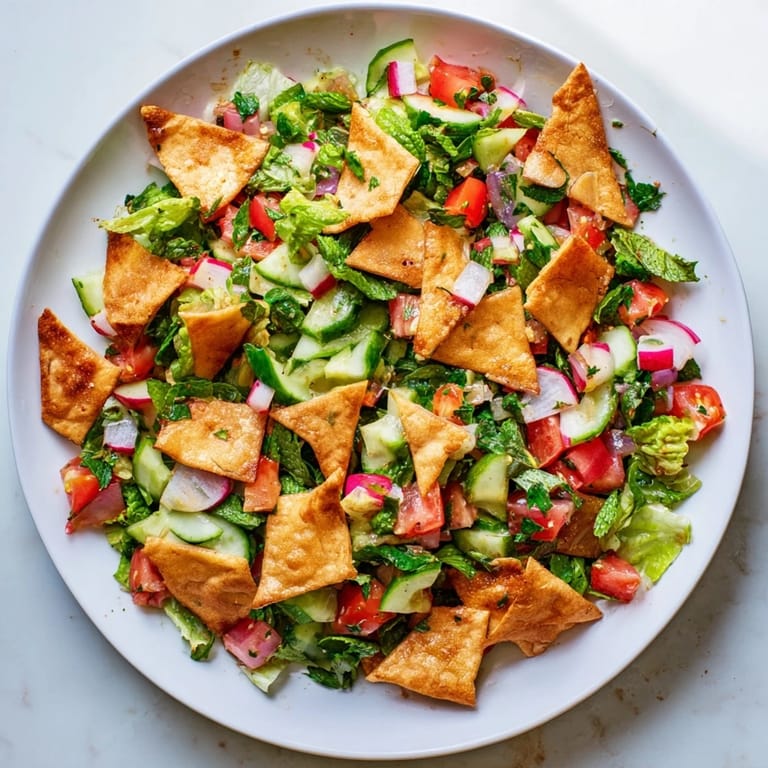
The real magic of fattoush happens in the last 30 seconds before you eat it, when the warm, crispy pita chips haven't yet surrendered to the dressing but the vegetables are perfectly coated. I learned to cut my pita pieces slightly thicker than you'd think necessary, because they need enough structure to stay crunchy even when they're fighting the moisture from the tomatoes and cucumber. The bowl itself matters too—a larger one gives you more surface area to toss gently without crushing everything into submission.
Variations and Personal Touches
This salad is forgiving in the way that good peasant food always is—it welcomes additions and substitutions like it's been expecting them the whole time. I've made it with torn mint instead of chopped, added crumbled feta because I had it, swapped in bell pepper when radishes weren't looking their best, and it's never once disappointed me. The bones of the recipe stay the same, but the feeling changes depending on what's in your market and what you're craving.
- Try rubbing a raw garlic clove on the pita before you oil and toast it for an extra dimension of flavor.
- Add a handful of pomegranate seeds if you're feeling fancy or want a burst of something sweet against all that tang.
- If you need it gluten-free, skip the pita chips entirely and toast some chickpeas with oil and salt instead—they give you that crunch in a totally different way.
 Pin it
 Lebanese fattoush taught me that some of the most important meals in life are the ones that come together quickly and taste like home, even if you're cooking it for the first time. Make this whenever you want to prove to yourself that simple ingredients in the right proportions are all you ever really need.
Frequently Asked Questions
- → What gives Fattoush its distinctive tangy flavor?
The tanginess comes from a blend of lemon juice, red wine vinegar, and ground sumac in the dressing, providing a bright and zesty taste.
- → How are the pita chips prepared to maintain crispiness?
Pita bread is cut into pieces, tossed with olive oil and sea salt, then baked at 375°F until golden and crisp, ensuring a crunchy texture.
- → Can the salad be made gluten-free?
Yes, either use gluten-free pita bread for the chips or omit the pita chips entirely without compromising flavor.
- → What herbs are typically used in this salad?
Fresh parsley and mint leaves are chopped and combined with the greens to add freshness and aromatic notes.
- → How should the dressing be combined with the salad for best results?
The dressing is emulsified separately, then poured over the salad with pita chips just before serving to preserve crunch and flavor balance.