 Save
Save There's something almost meditative about the sizzle of vegetables hitting hot oil, especially when you're racing against the clock on a Tuesday night. I discovered this stir-fry during a phase when I was trying to eat better without spending hours in the kitchen, and honestly, it changed how I thought about weeknight cooking. The peanut sauce is what makes it feel indulgent rather than virtuous, creamy and rich despite being made from just a few humble ingredients. Every time I make it, the kitchen fills with this incredible aroma of toasted sesame and garlic that somehow manages to be both comforting and energizing. It's become my go-to when I want something that tastes like I put in effort but really didn't.
I made this for a friend who'd just gone vegetarian, and I was nervous about impressing her, if I'm honest. But watching her eat a second bowlful and asking for the sauce recipe felt like a small victory, especially since she'd been skeptical about vegetables being the star of a meal. That afternoon taught me that good food isn't about restriction, it's about flavor so good you forget to think about what you're missing. Now whenever someone tells me they're cutting back on meat, this is the first thing I suggest.
Ingredients
- Broccoli florets: Cut them slightly smaller than you think you need so they cook through in the short cooking time and still stay bright green.
- Red and yellow bell peppers: The different colors aren't just pretty, they each have subtle flavor differences that layer together beautifully.
- Carrot: The diagonal slices cook faster and look more intentional than chunks.
- Sugar snap peas: These are the luxury ingredient that makes the dish feel special without adding complexity.
- Red onion: Thinly sliced so it softens just enough but still has a hint of crunch and bite.
- Garlic and ginger: Add them at the end so they perfume the entire dish without becoming harsh or burnt.
- Natural peanut butter: The kind with just peanuts and maybe salt, no added oils or sugar that would make the sauce feel cloying.
- Soy sauce: Use tamari if you need gluten-free, the umami depth is what makes this taste restaurant quality.
- Rice vinegar: It cuts through the richness of the peanut butter with a gentle acidity.
- Maple syrup or honey: Just enough sweetness to balance the salty soy and tangy vinegar.
- Toasted sesame oil: A little goes a long way, it's the ingredient that whispers Asian-restaurant authenticity into the dish.
- Red pepper flakes: Optional but they add a gentle heat that wakes up your palate.
Tired of Takeout? 🥡
Get 10 meals you can make faster than delivery arrives. Seriously.
One email. No spam. Unsubscribe anytime.
Instructions
- Whisk the sauce together first:
- Combine the peanut butter, soy sauce, rice vinegar, maple syrup, and sesame oil in a small bowl, whisking slowly until the mixture is smooth and creamy. Add the warm water a little at a time until you get a sauce that's pourable but still coats the back of a spoon. Taste it and adjust if needed, remembering that the flavors will concentrate slightly once they hit the hot vegetables.
- Get your heat up and ready:
- Place your skillet or wok over medium-high heat and let it genuinely warm up for a minute so it's ready to give those vegetables a proper sear. You want to hear that sizzle the moment anything hits the pan.
- Stir-fry the heartier vegetables:
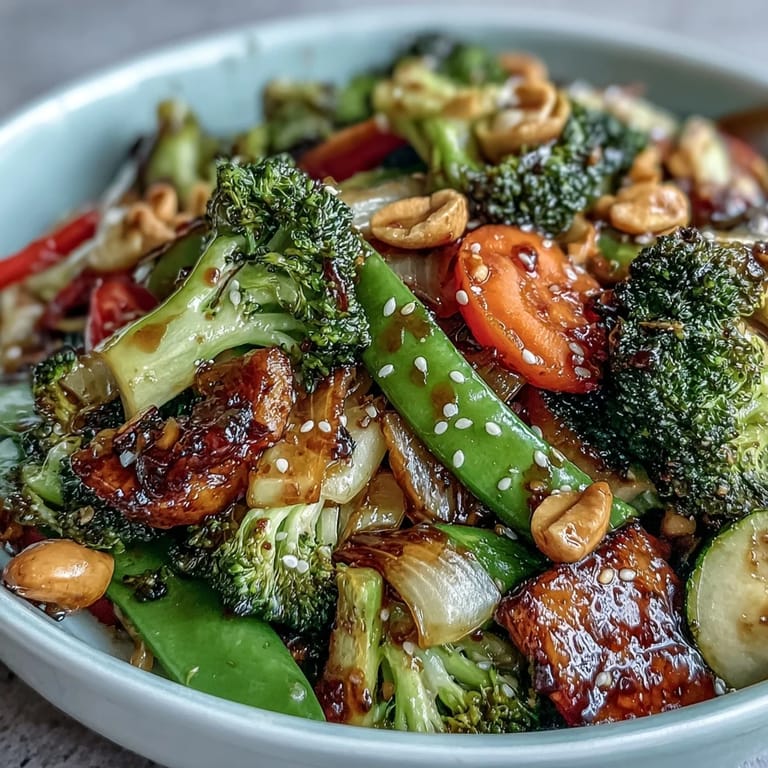
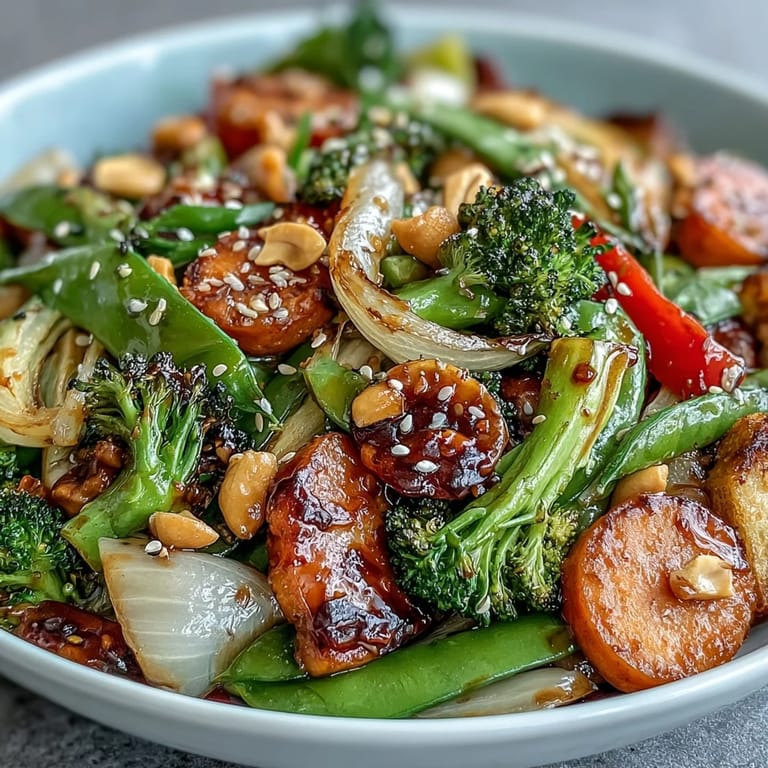
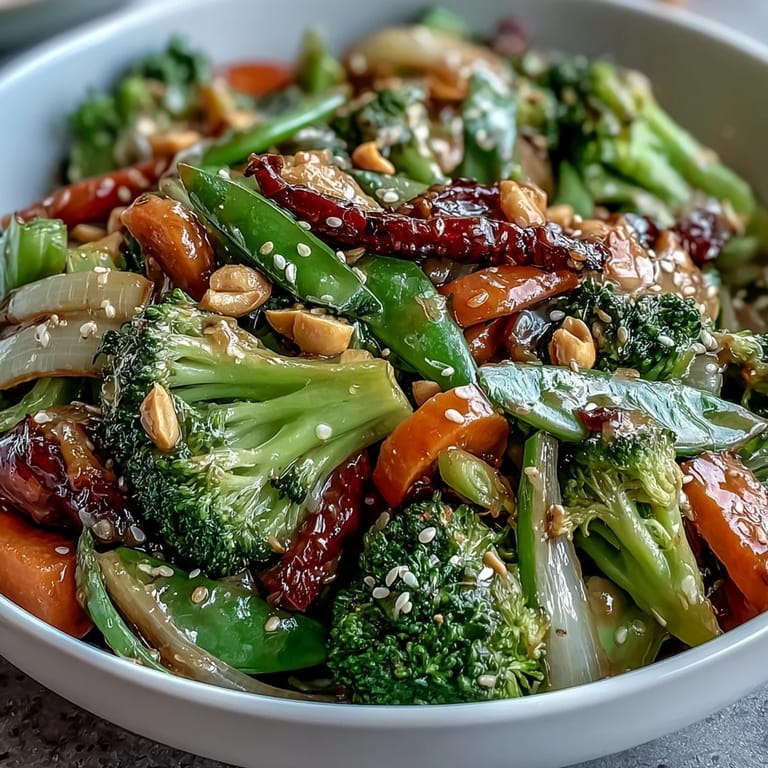
- Add the broccoli, bell peppers, carrot, sugar snap peas, and red onion all at once, stirring constantly for about four to five minutes until they're tender but still have a slight firmness when you bite them. Watch for the peppers to start developing little charred edges, that's when you know they're getting flavorful.
- Wake up the aromatics:
- Scatter the minced garlic and grated ginger over the vegetables and stir everything together for exactly one minute, long enough for them to become fragrant but not long enough to burn. Your kitchen will smell absolutely incredible.
- Bring it all together with sauce:
- Pour the peanut sauce over everything and toss vigorously for one to two minutes until every piece of vegetable is glossy and coated. The sauce will warm through and deepen in color slightly, and that's when you know it's ready.
- Finish with personality:
- Plate it over rice if you'd like, then scatter the chopped roasted peanuts, sliced green onions, and sesame seeds over the top and give each bowl a generous squeeze of lime. That lime is not optional, it's what brings all the flavors into sharp focus.
 Pin it
 There was an evening when my teenage nephew came home and immediately asked what smelled so good, and I realized that good food has this quiet power to make people feel welcomed and cared for without any fuss. That's when this dish stopped being just a recipe for me and became something I make when I want to show up for people without the performance.
Variations Worth Trying
This stir-fry is endlessly flexible, which is part of why I keep coming back to it. Sometimes I'll add cubed tofu or tempeh for extra protein, or throw in mushrooms and zucchini when the weather shifts into late summer. I've even swapped peanut butter for almond butter on nights when I wanted something slightly different, though the peanut version remains my first choice. The beauty is that you can build this around whatever's in your produce drawer without changing the essential character of the dish.
The Secret Behind the Sauce
What makes this peanut sauce different from others I've tried is that it doesn't rely on coconut milk or cream to create richness, instead letting the peanut butter shine while the other ingredients support it like a well-arranged harmony. The ratio of salty to sour to sweet took me a few attempts to nail, but once I understood how those three elements balance, I could adjust the sauce based on what vegetables I was using and what I was in the mood for. I've learned that the warmth of the vegetables actually helps emulsify the sauce, creating something silky and cohesive rather than separated or broken.
Why This Meal Works Better Than You'd Expect
I think part of what makes this stir-fry so satisfying is that it hits multiple needs at once: it's fast enough for a busy weeknight, flavorful enough to feel exciting, and nutritious enough that you're not secretly hungry an hour later. The combination of protein from the peanut butter, fiber from the vegetables, and the little bit of oil for satiety creates something that actually sticks with you. It's also somehow elegant enough to serve to guests but casual enough that you can make it alone on a random Thursday without overthinking it.
- Prep all your vegetables before you turn on the heat so you can move quickly once things start sizzling.
- If you're cooking for someone with nut allergies, tahini makes a surprisingly good substitute for the peanut butter.
- Leftovers are fantastic cold the next day, though I usually eat mine hot straight from the pan.
 Pin it
 This stir-fry has become one of those recipes I make without thinking because it's reliable and rewarding, the kind of dish that reminds me why I cook in the first place. Give it a try and I promise it'll become one of your go-to meals too.
Frequently Asked Questions
- → Can I use different vegetables in this stir-fry?
Yes, feel free to swap in vegetables like zucchini, mushrooms, or baby corn based on your preference or availability.
- → How can I make the peanut sauce gluten-free?
Replace soy sauce with tamari to keep the sauce gluten-free without compromising flavor.
- → Is it possible to add more protein?
Absolutely, adding tofu, tempeh, or edamame boosts protein content and complements the dish well.
- → What kind of oil should I use for stir-frying?
A neutral oil with a high smoke point, such as canola or vegetable oil, works best for quick stir-frying.
- → How do I adjust the sauce consistency?
Gradually add warm water until the sauce reaches a smooth, pourable consistency that coats vegetables evenly.