 Save
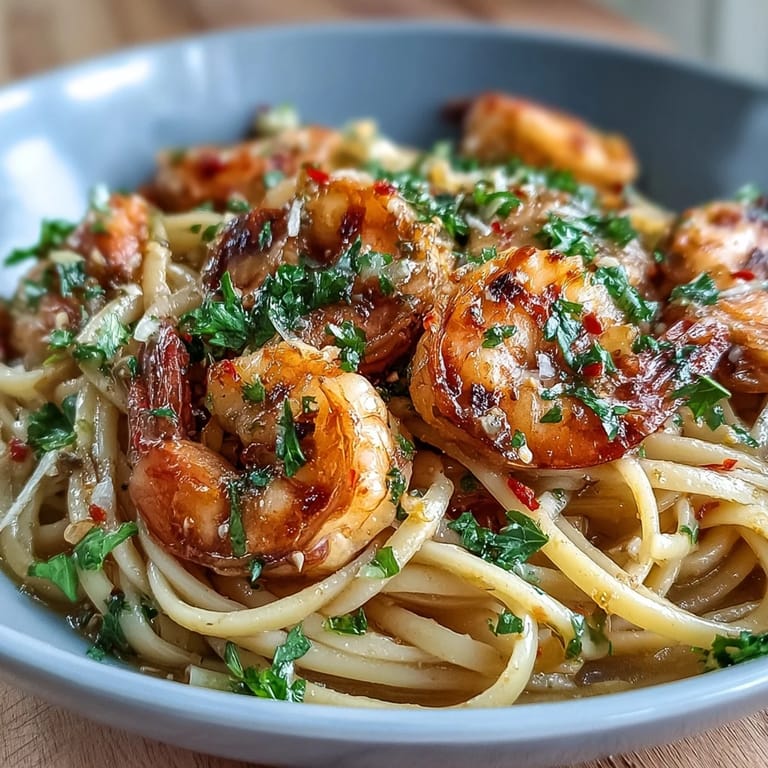
Save There's something about the smell of garlic hitting hot oil that makes you feel like you're cooking in a Roman kitchen, even if you're standing in your apartment on a Tuesday night. I discovered this shrimp linguine during one of those evenings when I had good ingredients but no real plan, just the confidence that heat, garlic, and shrimp would sort themselves out. The first time I made it, my partner wandered in halfway through and asked what smelled so good, and honestly, that's when I knew this dish had staying power. It came together in less than thirty minutes, which felt like a small miracle given how impressive it looked on the plate. Now it's become my go-to when I want something that tastes like effort but doesn't demand it.
I made this for my sister when she was visiting last spring, and she actually put her fork down mid-bite to ask for the recipe. She'd been skeptical about seafood pasta, thinking it would be too fancy or fussy, but one taste of those garlicky shrimp and she was converted. We ate it at my kitchen counter with a chilled white wine, and she kept saying things like "this is so simple, why don't I make this at home?" That question stuck with me because it's exactly what this dish is about—accessibility meeting genuine deliciousness.
Ingredients
- Large shrimp (400 g / 14 oz): These cook so fast that size really matters; smaller shrimp can turn to rubber before you blink, so don't skimp on the larger ones.
- Linguine (350 g / 12 oz): The flat ribbon catches the oil and garlic beautifully, but honestly spaghetti or fettuccine will work just as well if that's what you have.
- Garlic (5 cloves, thinly sliced): Thin slices cook faster and distribute more evenly than minced, and they give you little bursts of flavor rather than a uniform garlicky paste.
- Red chili peppers (1–2, thinly sliced) or red pepper flakes (1 tsp): Fresh peppers give you more control over heat and add a subtle sweetness that flakes can't quite match, but flakes are faster and keep longer.
- Fresh flat-leaf parsley (1 small bunch, chopped): Add this at the end so it stays bright and fresh; cooked parsley loses its personality.
- Lemon zest (from 1 lemon): This is what lifts the whole dish above ordinary, adding a whisper of brightness that makes people wonder what your secret is.
- Extra-virgin olive oil (3 tbsp): Quality matters here because it's not hidden in a sauce; use something you'd actually want to taste.
- Dry white wine (2 tbsp, optional): It adds a gentle acidity and rounds out the flavors, but the dish works beautifully without it if you're not a wine person.
- Lemon juice (from 1/2 lemon): Squeeze this in at the end to brighten everything and balance the richness of the oil.
- Salt and freshly ground black pepper: Taste as you go; shrimp needs proper seasoning to sing.
Tired of Takeout? 🥡
Get 10 meals you can make faster than delivery arrives. Seriously.
One email. No spam. Unsubscribe anytime.
Instructions
- Get your water boiling and pasta going:
- Fill a large pot with salted water—it should taste like the sea—and bring it to a rolling boil before adding linguine. While it cooks, you'll have time to prep everything else, which is the beauty of this dish. Cook the pasta until it's just tender with a tiny bit of resistance when you bite it, then fish out about half a cup of that starchy water before draining.
- Coax the garlic and chili into aromatic submission:
- Pour olive oil into a large skillet and let it warm over medium heat until it shimmers slightly, then add your thinly sliced garlic and chili. You're aiming for that moment when the kitchen fills with an incredible aroma but before anything starts to brown, which usually takes just a minute or two.
- Add the shrimp and let them blush pink:
- Season your shrimp generously with salt and pepper, then add them to the skillet and cook for about two to three minutes per side. You'll know they're done when they've turned from gray to opaque pink and they feel firm but not rubbery when you press one.
- Deglaze with wine if you're using it:
- If you have dry white wine on hand, pour it into the skillet and let it bubble for about thirty seconds, scraping up any flavorful bits stuck to the bottom. This step is optional but adds a lovely depth to the oil.
- Toss everything together and adjust:
- Add the drained linguine to the skillet along with some of that reserved pasta water, stirring gently until the noodles are coated and everything moves together like one cohesive thing. The starchy pasta water helps create a silky sauce that clings to the linguine without being heavy.
- Finish and serve immediately:
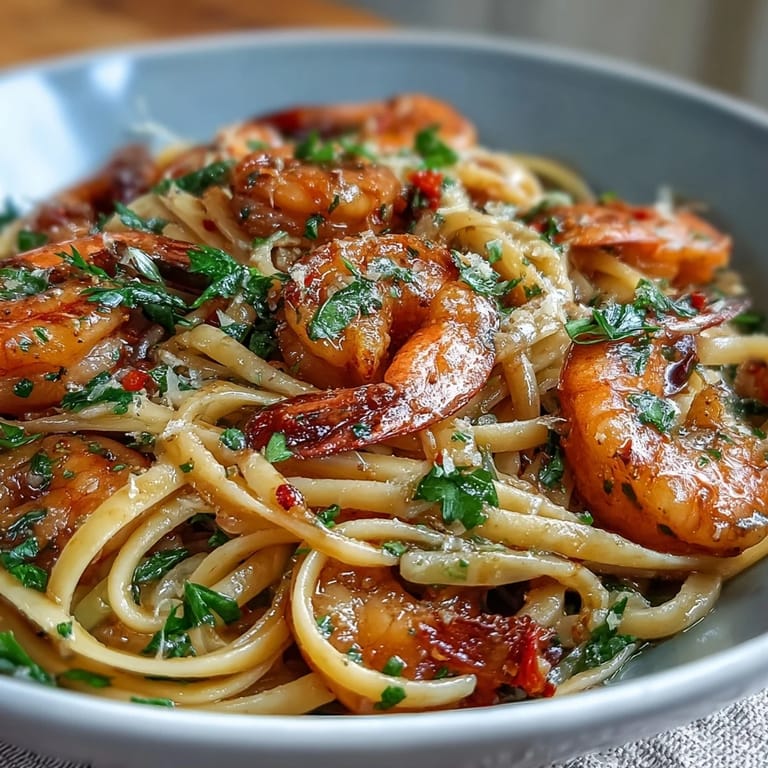
- Remove from heat, scatter in your chopped parsley and lemon zest, squeeze in the lemon juice, and taste for salt and pepper. Serve right away while everything is still hot and the parsley is still bright green.
 Pin it
 My neighbor knocked on my door one evening because the smell was driving her crazy, and we ended up sharing a bowl on my fire escape while watching the sunset. That's when I realized this dish has a quality that goes beyond the sum of its parts—it makes people want to gather around it, to taste it, to ask for the recipe.
The Magic of Olive Oil as a Sauce
In Italian cooking, especially in the south, oil is often the sauce, not something hidden in a cream or tomato base. Here, the garlic-infused oil becomes silky when tossed with the hot pasta and its starchy water, creating something that feels luxurious without being heavy. Once I understood this principle, everything changed about how I approach simple pasta dishes. The quality of your olive oil matters tremendously because it's the star of the show, not a supporting player.
Why Lemon Is Your Secret Weapon
Lemon does something magical in seafood pasta that I didn't fully appreciate until I made this dish without it once. The zest adds a fragrant citrus note that makes people pause and wonder what herb you've used, while the juice brightens everything and balances the richness of the oil and butter that clings to the shrimp. It's not about making the dish taste like lemon; it's about making all the other flavors pop louder.
Timing and the Art of Not Overthinking
The first few times I made this, I stressed about timing because everything happens quickly, but that's actually the gift of this recipe. Thirty minutes from start to finish means there's no time to second-guess yourself or make unnecessary adjustments. Once I stopped treating speed as a liability and started treating it as part of the charm, my shrimp came out better and my stress levels dropped dramatically.
- Start the pasta water boiling first, then prep your ingredients while it heats—multitasking is built into the timeline.
- If your shrimp isn't at room temperature, it'll take longer to cook, so pull it out of the fridge while you're getting everything else ready.
- Keep tasting throughout so you can adjust salt, lemon, and heat exactly to your preference rather than guessing at the end.
 Pin it
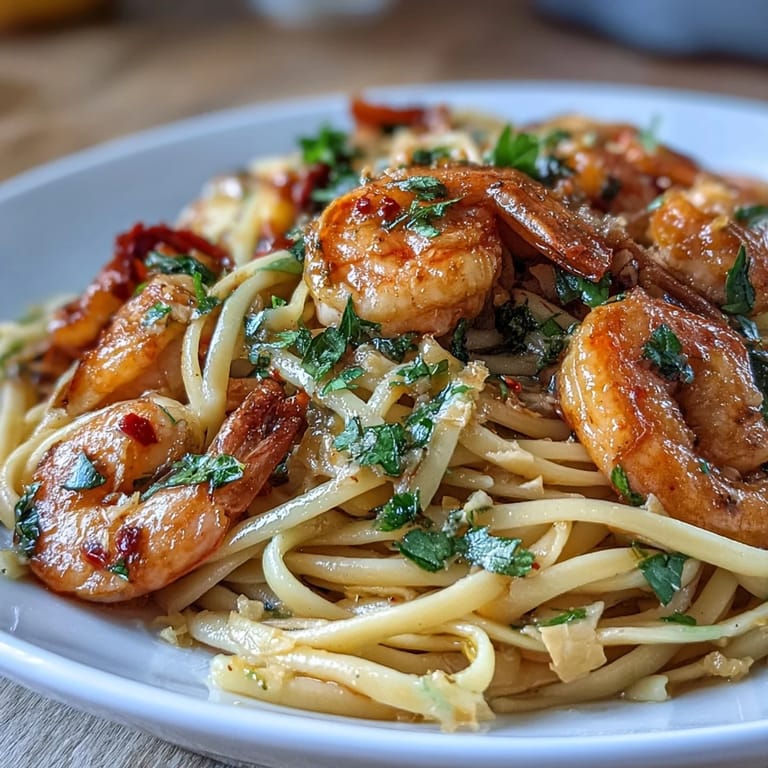
 This shrimp linguine has become my answer to the question "what should I cook tonight?" when I want something that feels special without requiring special skills. It's proof that simplicity, when done right, is never boring.
Frequently Asked Questions
- → What type of chili works best for this dish?
Fresh red chili peppers provide a bright, spicy kick, but red pepper flakes can be used for a milder, controlled heat.
- → Can I substitute the linguine with other pasta types?
Yes, spaghetti or fettuccine are great alternatives if linguine isn't available.
- → How do I know when the shrimp is perfectly cooked?
The shrimp should turn pink and opaque with a firm texture, usually after 2–3 minutes of sautéing.
- → Is the white wine necessary for the sauce?
The white wine adds subtle depth and acidity but can be omitted or replaced with a splash of lemon juice if preferred.
- → How can I adjust the heat level in this dish?
Increase or decrease the amount of chili peppers or red pepper flakes to suit your preferred spice intensity.