 Save
Save There's something about deconstructed food that makes you feel like you're in control of your own destiny at the dinner table. I discovered this bowl one lazy summer afternoon when my fridge was overflowing with vegetables and I couldn't decide how to use them all at once. Instead of forcing everything into a stir-fry, I laid them out separately, cooked some noodles, stirred together a peanut sauce, and suddenly had something that felt both effortless and intentional. The beauty of it hit me immediately: everyone gets to customize their own experience, mixing and matching flavors at their own pace.
I made this for a group of friends during that awkward transition from spring to summer when everyone's diets are shifting toward lighter meals. One friend arrived with her new boyfriend who claimed he didn't like vegetables, and I watched his expression completely change when he took his first bite. The sesame oil, the crunch of raw cabbage, the way the peanut sauce pulled everything together—suddenly he was asking for seconds and whether he could take the recipe home. That moment crystallized why I keep coming back to this bowl.
Ingredients
- Rice vermicelli noodles: These delicate strands soak up the peanut sauce without getting mushy, and tossing them with sesame oil while still warm prevents clumping later.
- Carrots and cucumber: The julienne cut isn't just for looks—thin, uniform pieces mean every bite gets a balanced ratio of vegetable to noodle to sauce.
- Red bell pepper: Beyond the vibrant color, it brings a subtle sweetness that rounds out the earthiness of the sauce.
- Red cabbage and bean sprouts: These provide the textural contrast that makes each spoonful interesting; the cabbage stays crisp even when dressed, while sprouts add an almost effervescent quality.
- Fresh cilantro and mint: These aren't optional additions—they brighten the whole bowl and prevent it from feeling heavy or one-dimensional.
- Tofu or shrimp: Choose based on what you're craving; pan-fried tofu gets a golden exterior and creamy interior, while shrimp brings a subtle brininess.
- Peanut butter for the sauce: Natural, creamy peanut butter works best because you want it to blend smoothly without bits of peanut interrupting the flow.
- Soy sauce, rice vinegar, and sesame oil: This trio creates the backbone of umami depth that transforms simple peanut butter into something sophisticated.
- Garlic and ginger: Fresh is non-negotiable here; they provide a bright, slightly spicy note that keeps the sauce from becoming too heavy.
Tired of Takeout? 🥡
Get 10 meals you can make faster than delivery arrives. Seriously.
One email. No spam. Unsubscribe anytime.
Instructions
- Cook your noodles ahead:
- Boil the rice vermicelli until just tender, then immediately rinse under cold water while stirring gently to stop the cooking. The sesame oil tossed through while they're still slightly warm coats each strand and keeps them from sticking together in clumps.
- Prep vegetables with precision:
- Julienne your carrots and cucumber using a mandoline or sharp knife, slice the bell pepper into thin strips, and shred the cabbage finely. Keeping each vegetable separate until assembly maintains their individual textures and lets diners choose their ratios.
- Pan-fry tofu until golden:
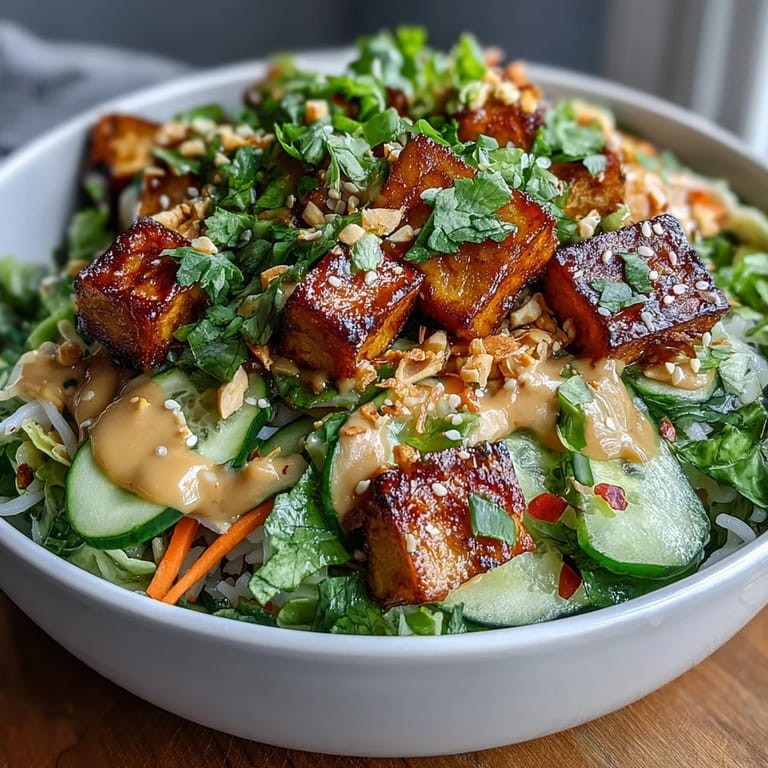
- Press your tofu between paper towels to remove moisture, cut into cubes, then cook in a hot pan with a bit of oil until all sides turn golden and develop a slight crust. This takes about eight minutes and transforms tofu from bland to genuinely craveable.
- Or prepare shrimp simply:
- If using shrimp, ensure they're fully cooked and chilled before assembly—room temperature protein in a fresh bowl feels wrong, so a quick chill in the fridge is worth the extra step.
- Whisk the peanut sauce to silky smoothness:
- Combine peanut butter, soy sauce, rice vinegar, maple syrup, sesame oil, garlic, and ginger in a bowl, whisking until the mixture is uniform. Add warm water one tablespoon at a time until you reach a consistency that's pourable but still coats the back of a spoon—this is personal preference, so taste as you go.
- Assemble with intention:
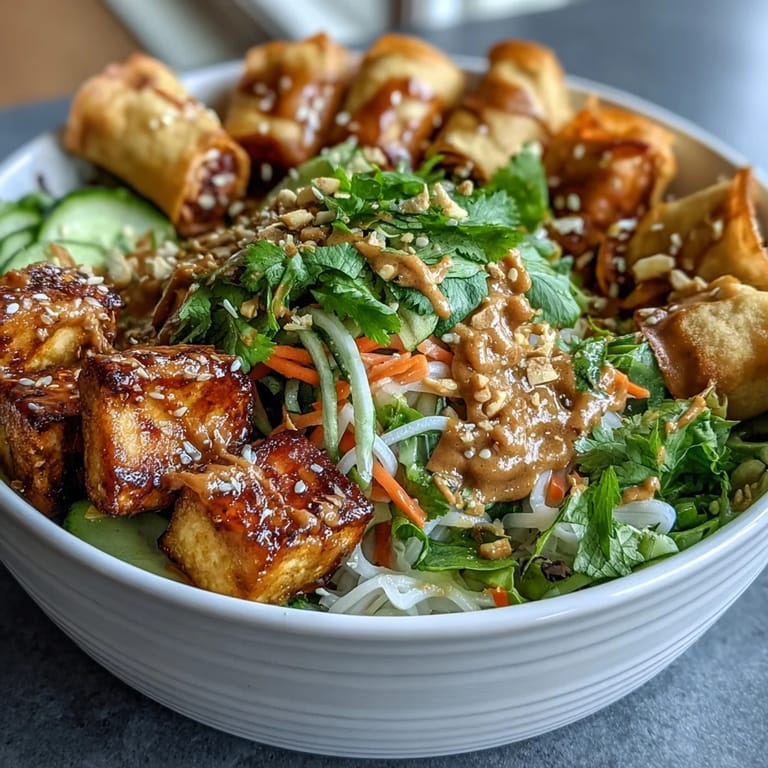
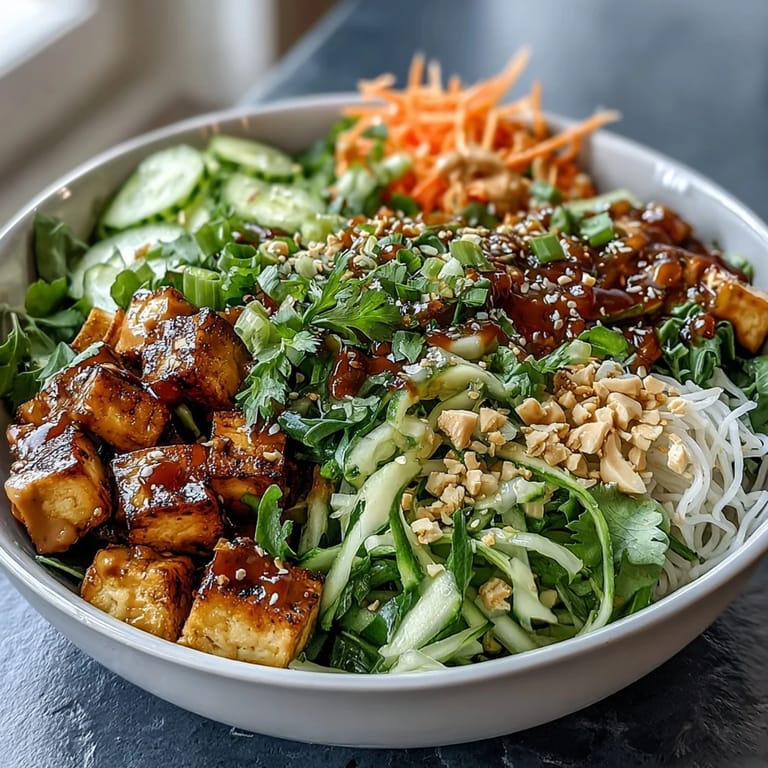
- Divide cooked noodles among bowls, then arrange your vegetables, protein, and herbs in distinct sections rather than tossing everything together. This visual arrangement invites people to engage with the bowl and make their own flavor combinations.
- Finish with the peanut sauce and garnishes:
- Drizzle sauce over everything, then scatter roasted peanuts and sesame seeds on top—the crunch of these additions is essential. A squeeze of fresh lime just before eating brings everything into focus.
 Pin it
 My mother-in-law, who had grown up eating traditional spring rolls, took one bite of this bowl and smiled in a way that made me realize she was seeing it as a love letter to the food of her childhood. She said the deconstructed approach let her taste each component individually while still experiencing the familiar harmony she remembered, and that's when I understood this wasn't just a convenient dinner—it was a way of honoring a tradition while making it accessible and modern.
The Magic of the Peanut Sauce
The peanut sauce is where all the complexity lives, even though it takes less than five minutes to make. When you whisk together peanut butter and soy sauce, something chemical and beautiful happens—the saltiness of the soy intensifies the nuttiness of the butter, while the rice vinegar adds a subtle tang that keeps it from cloying. The garlic and ginger don't announce themselves loudly; instead they hover in the background, making the sauce feel sophisticated without being aggressive.
Building Your Perfect Bowl
The arrangement matters more than you might think, though not for appearance alone. When vegetables are grouped rather than mixed, each spoonful becomes a choice—you can take a bite heavy on cucumber one moment and carrot-forward the next. The herbs scattered throughout mean you hit pockets of fresh mint or cilantro at different moments, which keeps the eating experience from becoming monotonous. Think of it like building a palate with each bite rather than averaging all the flavors together from the start.
Variations and Flexibility
This bowl thrives on variation, which is partly why it's become such a reliable dinner in my rotation. You can swap proteins without changing a single other element—grilled chicken, crispy chickpeas, or leftover roasted vegetables all feel at home here. The vegetable list is a suggestion rather than a mandate; whatever looks good at the market works beautifully, and seasonal eating happens naturally because you're drawn to what's available. The sauce is infinitely adaptable too; a dash of sriracha transforms it into something with heat, while a spoonful of coconut milk turns it creamy and richer.
- Add sliced radishes or chopped lettuce for extra crunch without changing the flavor profile.
- A sprinkle of crispy fried onions or wonton strips adds textural interest and feels like an unexpected luxury.
- For spice, mince fresh chili or stir sriracha directly into the sauce rather than serving it on the side.
 Pin it
 This bowl has become my answer to almost every dinner question, partly because it's wholesome and quick, but mostly because it tastes like both comfort and adventure in the same spoon. Make it once and you'll understand why it lives rent-free in my regular rotation.
Frequently Asked Questions
- → Can I substitute the protein in this dish?
Yes, you can swap tofu or shrimp with grilled chicken or another protein of your choice to suit dietary preferences.
- → How do I keep the noodles from sticking together?
After cooking, rinse the noodles under cold water and toss with sesame oil to prevent sticking.
- → Is the peanut sauce spicy, and can it be adjusted?
The peanut sauce is mild by default. You can add sriracha or fresh chili slices for a spicy kick.
- → Are there gluten-free options for this dish?
Yes, use tamari instead of soy sauce to make the dish gluten-free.
- → What are some good garnishes to add texture?
Roasted peanuts, toasted sesame seeds, and fresh lime wedges add crunch and brightness to the bowl.
- → Can this bowl be prepared ahead of time?
You can pre-cut the vegetables and prepare the sauce in advance, but assemble just before serving to maintain freshness and texture.