 Save
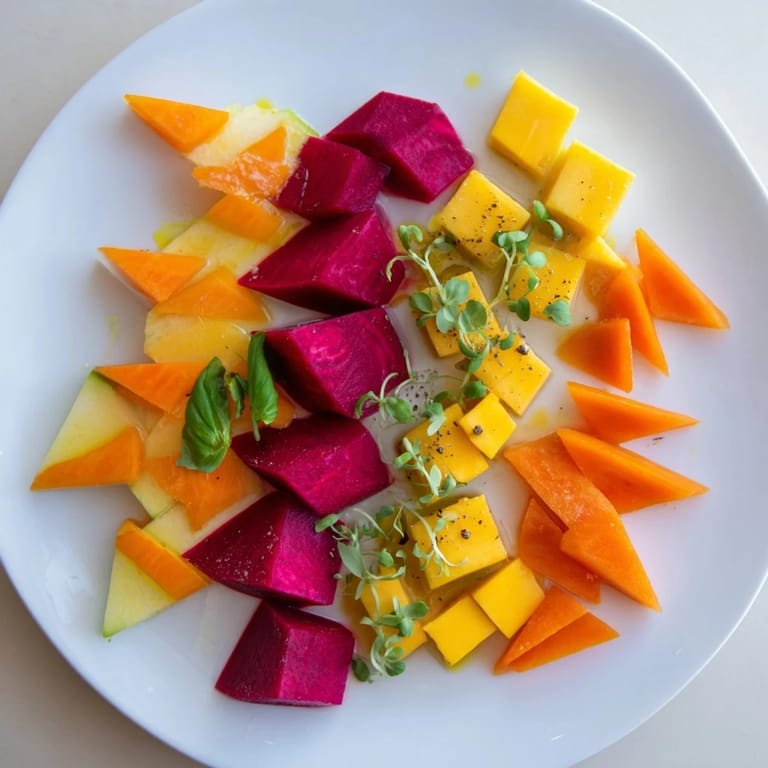
Save I'll never forget the evening I discovered that food could be art. A friend invited me to a gallery opening where a chef was presenting edible installations, and I watched guests stop mid-conversation to admire a platter that looked like it belonged on a museum wall. That night, I realized that the most memorable meals aren't always about complexity—sometimes they're about perspective. This Cubist Deconstruction was born from that moment, a playful homage to visual storytelling where every vegetable, every piece of cheese becomes a brushstroke on the canvas of your plate.
The first time I made this for a dinner party, my mother-in-law walked into the kitchen and simply stopped. She stood there for a full minute, then said, "This doesn't look like food, it looks like a puzzle." By the end of the night, there wasn't a single piece left on the platter, and three guests asked for the recipe. That's when I knew I'd created something special—something that surprises both the eyes and the taste buds.
Ingredients
- 1 small cucumber, peeled: Choose one that's firm and fresh—the cool, crisp texture is essential to the interplay of sensations. A watery cucumber will weep onto your beautiful platter, so select wisely.
- 1 medium golden beet, cooked and peeled: If you're cooking it fresh, roast it wrapped in foil until a knife slides through like butter. The earthiness anchors the brighter flavors beautifully.
- 1 medium watermelon radish, peeled: Those shocking pink and white rings are pure visual magic. If you can't find one, a regular radish works, but the watermelon variety is worth seeking out for the dramatic effect.
- 1 ripe avocado: Cut it open just before assembly—oxidation will dull its perfect green, and timing is everything in a dish this visual.
- 100 g feta cheese, block not crumbled: This matters enormously. A block gives you clean, geometric edges that reinforce the cubist theme. Crumbled feta just becomes sad little pieces.
- 1 ripe mango, peeled: Press gently with your thumb—when it yields just slightly, it's ready. The sweetness is your dish's secret surprise.
- 2 tbsp extra virgin olive oil: Use one you actually like tasting. This isn't the place to hide behind a cheap bottle.
- 1 tbsp lemon juice: Fresh squeezed, always. It's the difference between brightness and bitterness.
- Flaky sea salt and fresh cracked black pepper: These humble seasonings are the final word on whether your art becomes delicious.
- Microgreens or fresh herbs: Basil and cilantro are my go-to's, but any tender green adds that final flourish of liveliness.
Tired of Takeout? 🥡
Get 10 meals you can make faster than delivery arrives. Seriously.
One email. No spam. Unsubscribe anytime.
Instructions
- Gather Your Tools and Prep Your Workspace:
- Get a sharp chef's knife—and I mean truly sharp. A dull knife will bruise delicate vegetables and ruin the clean edges that make this dish sing. Lay out a large flat platter, the biggest you have. This is your canvas, and you need room to breathe.
- Cut with Intention:
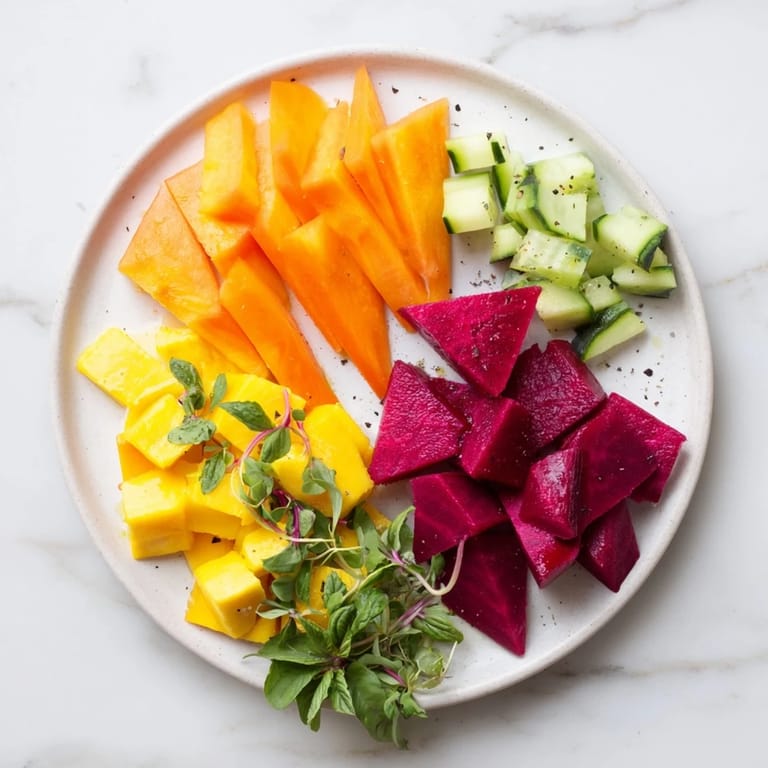
- This is where the meditation begins. Slice your cucumber, beet, radish, and mango into varied geometric shapes—think triangles, parallelograms, hexagons. Aim for roughly 1 cm thickness. If you have small cookie cutters, they're wonderful for precision, but honestly, a sharp knife and a steady hand create more character. Let each cut feel deliberate.
- Handle Your Cheese Like Sculpture:
- Cut your feta block into geometric cubes or prisms. The cold cheese is forgiving—it won't crumble if your knife is sharp. Hold the blade at different angles to create visual variety.
- Compose Your Arrangement:
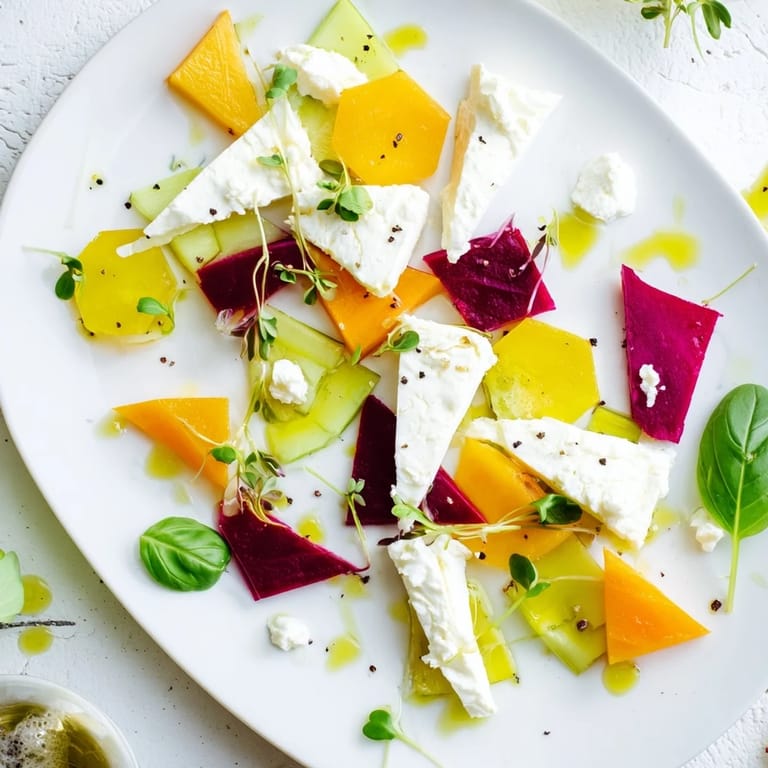
- This is the creative heart of the dish. Start placing pieces close together without overlapping, creating a visual rhythm. Think of it like arranging a mosaic or a painting. Let colors balance each other—don't cluster all the pink radishes in one corner. Step back frequently and really look at what you're making.
- Dress It Like You Mean It:
- Drizzle olive oil and lemon juice across the arrangement with a gentle hand. Let it pool slightly between pieces, catching the light. This isn't a drowning—it's a kiss of flavor.
- Season and Garnish:
- Scatter flaky sea salt and cracked black pepper across the platter, using them like an artist uses a spice shaker. Finish with microgreens or fresh herbs, tucking them into spaces like final touches of color. Serve immediately while every line is clean and every color is bright.
 Pin it
 What surprised me most about this dish wasn't the visual impact or even the flavors—it was how it changed the conversation at the table. With no clear sequence of eating, no traditional "course" structure, people relaxed. They picked what called to them, combined unexpected bites, made their own discoveries. It became less about consuming food and more about playing together, and somehow that made everything taste better.
Choosing Your Vegetables Wisely
Color is your first language in this dish. The golden beet brings earthiness and warmth. The watermelon radish offers a shocking visual contrast and a peppery bite. The cucumber is your cooling element, your palette cleanser. The mango is your sweet surprise. But here's what I've learned: you can absolutely improvise. Purple carrots, yellow bell peppers, red radishes, pink grapefruit—all of these sing together if you think about color balance and flavor contrast. The geometry matters, but so does your instinct about what wants to live on your platter.
The Cheese Question
Feta is my choice because it's salty, creamy, and cuts into clean shapes. But I've also made this with firm tofu for vegan friends, and it's equally stunning. Tofu takes on flavors beautifully and holds its geometric shapes perfectly. Manchego cheese would bring a nuttier note. Even fresh mozzarella has a place here if you're feeling fancy. The point isn't the specific cheese—it's choosing something that will play well with your vegetables and won't crumble under the knife.
- Block cheese over crumbled every time—structure matters
- Let your cheese sit at room temperature for 10 minutes before cutting for easier slicing
- Consider how salty your cheese is and adjust your sea salt accordingly
Serving and Pairing Ideas
This dish is a conversation starter, a visual anchor to an evening, the kind of appetizer that makes people slow down before they even take a bite. Pair it with a crisp white wine like Sauvignon Blanc—the acidity mirrors the lemon juice and complements the fresh vegetables. Set out small cocktail picks so guests can graze without making a mess. The beauty of this presentation is that it's not pretentious; it's joyful. It says, "I noticed you. I thought about beauty. I wanted to share something unexpected."
 Pin it
 This recipe taught me that sometimes the most memorable food isn't about technique or complicated instructions—it's about paying attention, about making something that honors both flavor and beauty.
Frequently Asked Questions
- → What vegetables are ideal for geometric cutting?
Cucumber, golden beet, and watermelon radish work well due to their firmness and vibrant colors allowing precise, clean shapes.
- → Can I substitute feta cheese with a non-dairy option?
Yes, firm tofu can be used to keep the texture and shape while accommodating dairy-free preferences.
- → How should I cut the ingredients to achieve the cubist effect?
Use a sharp knife or small cookie cutters to slice ingredients into triangles, hexagons, prisms, and irregular polygons about 1 cm thick.
- → What garnishes enhance the flavor and appearance?
Microgreens or fresh herbs like basil or cilantro add freshness and vivid color to brighten the presentation.
- → How can I keep the presentation fresh before serving?
Arrange the cuts just before serving, drizzle with olive oil and lemon juice, and avoid overlapping pieces to preserve clean lines and texture.