 Save
Save I discovered this board while standing in my kitchen on a rainy afternoon, staring at an odd collection of cheeses and fruits I'd picked up without a real plan. The idea hit me suddenly: what if I stopped trying to make everything look perfect and instead created something that felt balanced, intentional, almost like a visual meditation? The blackberries became my dividing line, and suddenly the whole board made sense—not just as food, but as a quiet statement about harmony on a plate.
My friend Sarah showed up to a dinner party and took one look at the board, then looked at me, and said, 'This is what I needed to see today.' I realized then that food arranged with intention does something beyond nourishing—it speaks to people. She sat there for ten minutes just contemplating it before she ate anything, and I think that's the whole point of this board.
Ingredients
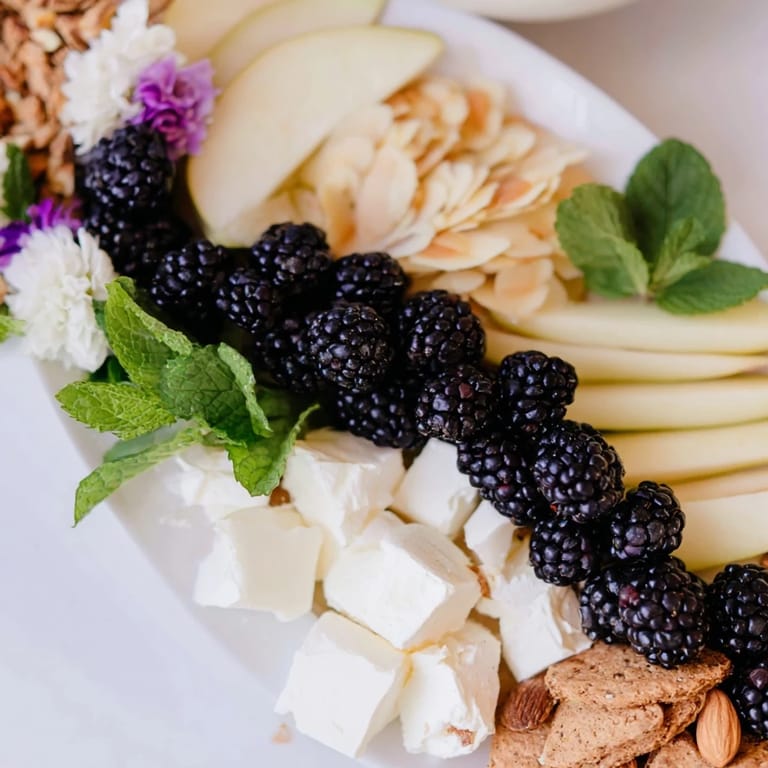
- Fresh blackberries (150 g): These are your visual anchor and your philosophy made edible—use them to draw a confident curve down the center, and don't worry if it's not perfect; the imperfection is the beauty.
- Goat cheese (100 g): The creamy, tangy heart of the light side; its softness contrasts beautifully with the crunch of almonds, so don't skip slicing it fresh.
- Young Manchego or white cheddar (100 g): Mild and slightly sweet, these cheeses bridge the gap between sophisticated and approachable.
- Pear slices (1 small pear): Slice them just before serving to keep them from browning, and their delicate sweetness will make sense against the sharp blue cheese across the divide.
- White grapes (50 g): They act as little flavor palate-cleansers between the heavier cheeses.
- Raw almonds (30 g): Leave them whole so guests can hear that satisfying snap when they bite down.
- Rice crackers or light-colored crackers (30 g): Choose ones that taste like something, not cardboard; your crackers set the tone for the entire experience.
- Aged blue cheese (100 g): This is where the drama lives; its sharpness should make you pause for a moment before you taste it again.
- Aged Gouda or sharp cheddar (100 g): Deep, nutty, complex—these are the cheeses that make people slow down and really taste.
- Black plum slices (1 small plum): Their dark color echoes the blackberries and their slight tartness plays perfectly against the richness of aged cheese.
- Red or black grapes (50 g): The dark side's own palate-cleansers, earthier than their white cousins.
- Roasted hazelnuts (30 g): Their deeper flavor complements dark cheeses in ways raw nuts never could; the roasting brings out hidden richness.
- Dark rye crisps or seeded crackers (30 g): These should taste earthy and substantial, like they came from a serious bakery.
- Fresh mint leaves: A final whisper of freshness that reminds everyone this board is alive and thoughtful.
- Edible flowers (optional): Use them sparingly—they should feel like a secret detail, not a decoration.
Tired of Takeout? 🥡
Get 10 meals you can make faster than delivery arrives. Seriously.
One email. No spam. Unsubscribe anytime.
Instructions
- Start with your canvas:
- Place your large round board on the table and take a breath—this is your moment to create something intentional. The shape matters because it's already balanced, and that balance will guide your hands.
- Create the dividing line:
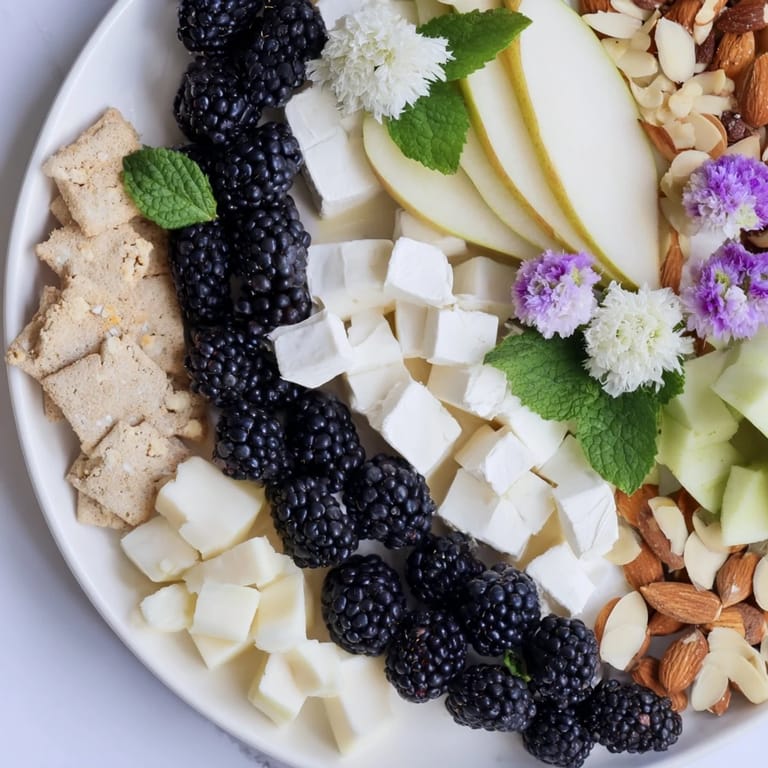
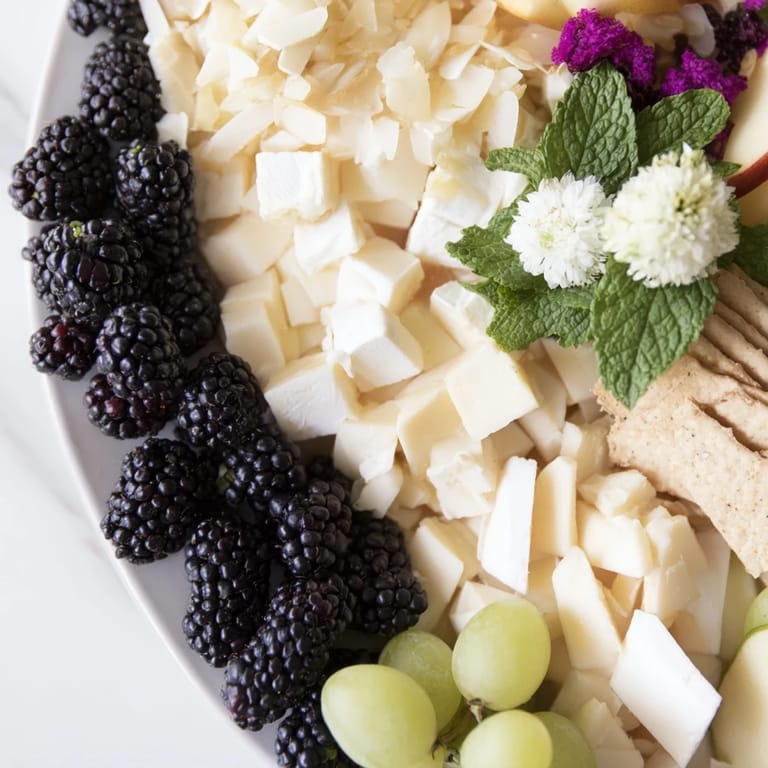
- Arrange the blackberries in a confident, curved line across the center, S-shaped or yin-yang style, whatever feels right in the moment. Let them touch but not crowd each other, like they're holding hands rather than clinging.
- Build the light side:
- On one half, scatter the goat cheese slices first as your anchor, then cluster the Manchego cubes nearby, creating little pockets of visual interest. Arrange pear slices in a gentle arc, add white grapes in small groups (not spread thin), and scatter almonds where they feel balanced rather than random.
- Build the dark side:
- Mirror the light side's logic but with deeper flavors and colors—blue cheese slices, Gouda cubes, plum slices, dark grapes, and roasted hazelnuts, each element placed with the same gentle intention. This isn't symmetry; it's conversation.
- Add the crackers:
- Tuck light crackers around the light side and dark crisps around the dark side, but leave some space for movement and discovery. A guest's hand should have room to make choices.
- Finish with grace:
- Scatter mint leaves across both sides like you're blessing the board, and add edible flowers if they speak to you—small touches that say 'I thought about this.' Serve immediately while everything is fresh, and watch people discover the balance you've created.
 Pin it
 My mother called me while I was arranging this board and asked what I was doing. When I explained the concept—this quiet philosophy about balance made edible—she got quiet too. She said it reminded her that good food doesn't have to be complicated to matter, and that visual beauty can be an act of care in itself. That's when I knew this wasn't just a cheese board.
The Philosophy Behind the Board
The yin-yang concept translates beautifully to food because it speaks a language everyone understands: balance. One side isn't better than the other; they're complementary, each making the other more interesting. When you build this board, you're not just arranging cheese and fruit—you're creating a visual argument for harmony, for the idea that opposing flavors and textures can coexist and even celebrate each other. The blackberries aren't just a dividing line; they're a meditation on contrast made delicious.
Sourcing Your Cheeses Matters
The quality leap between grocery-store blocks and what you'll find at a good cheese counter is worth mentioning because it changes everything about this board. A young, creamy goat cheese from a local maker tastes completely different from a mass-produced version—it's more alive, more present on your tongue. The same applies to aged blue cheese; seek out one that's been aged long enough to develop complexity but not so long it's become aggressively sharp. When you have time, visit a cheesemonger and ask what's good right now, in this season, in this moment. Your board will taste like you actually paid attention.
Making This Board Your Own
The magic of this concept is that it invites variation without losing its soul. Swap pears for apples in autumn, use stone fruits in summer, or lean into whatever your market is offering when you decide to make it. The structure—the balance, the curve, the conversation between light and dark—stays the same even as the ingredients shift with the seasons. I've made this board with different cheeses every time, and each version tells its own story while respecting the original concept.
- Add honeycomb to the light side for a touch of sweetness and sophistication, or drizzle fig jam on the dark side for depth and slight tartness.
- Consider thin slices of prosciutto on the dark side for a savory element, or spread a small amount of good quality honey-lavender spread somewhere unexpected.
- Remember that the board should feel generous but not overwhelming—leave breathing room for the eye to rest and for guests to actually taste rather than just graze.
 Pin it
 This board exists in that beautiful space where food becomes more than sustenance—it becomes a moment, a conversation starter, a small rebellion against the idea that beautiful things must be complicated. Make it with intention, but not with pressure, and let the balance speak for itself.
Frequently Asked Questions
- → What types of cheeses work best on this board?
Mild cheeses like goat cheese and Manchego balance nicely against stronger options such as aged blue and Gouda, offering a range of flavors that complement the fruits and nuts.
- → Can I use seasonal fruits instead of the suggested ones?
Absolutely, seasonal fruits can be substituted to keep the board fresh and interesting while maintaining the contrast between light and dark flavors.
- → How should I arrange the board for the best presentation?
Arrange the blackberries in a curved line down the center to mimic yin-yang balance, placing light-colored items on one side and darker items opposite, ensuring visual harmony.
- → What garnishes enhance the appetizer board?
Fresh mint leaves add a burst of color and aroma, while edible flowers bring elegance and a delicate visual touch to the presentation.
- → Are there any pairing suggestions for this appetizer board?
This board pairs beautifully with a crisp white wine or a light-bodied red, enhancing the balance of flavors without overpowering them.
- → How do I accommodate gluten-free needs with this board?
Use gluten-free rice crackers and ensure all nuts and cheeses are confirmed gluten-free to maintain dietary restrictions without compromising taste.