 Save
Save I discovered the magic of sculptural cheese boards during a dinner party that almost went sideways. I'd planned an elaborate main course, but when a guest texted saying they were running late, I pivoted to assembling cheeses I had on hand. As I arranged those tall, dramatic wedges of Manchego and Parmigiano-Reggiano, something clicked—this wasn't just a cheese board, it was edible architecture. My guests spent more time exploring this landscape than they ever would have spent at a traditional appetizer. That night taught me that sometimes the most memorable meals come from creative improvisation.
I'll never forget watching my grandmother trace her finger across the board, discovering new flavor combinations with the curiosity of a child exploring actual mountains. She paired a sliver of aged Cheddar with an apricot and announced it was better than any dessert I'd made her. That's when I understood—this wasn't about the individual components, it was about the journey of exploration, the little moments of discovery that happen when food invites people to play.
Ingredients
- Aged Manchego: These Spanish wheels are your anchor. When you cut them into tall, irregular chunks, they create those dramatic peaks. The nutty, slightly caramel notes work beautifully as your tallest points—aim for pieces that stand at least 2 inches high.
- Parmigiano-Reggiano: Break this into rugged, jagged shards rather than neat pieces. The sharper, more crystalline texture creates visual drama and those addictive umami notes that make people keep coming back.
- Aged Cheddar: Choose something aged for complexity. Slice it into tall triangles that lean like real mountain peaks. The sharpness balances beautifully against the sweet elements.
- Brie: Creamy and elegant, these thick wedges become your foothills. They soften slightly at room temperature, creating an inviting texture contrast.
- Gorgonzola: The blue notes add sophistication. Break it into rustic pieces so the veining shows—it's visually stunning and adds that peppery punch.
- Red Grapes: Halve them so they nestle naturally into the valleys. They roll slightly, creating movement and filling empty spaces beautifully.
- Cherry Tomatoes: Halving them prevents rolling and shows off that gorgeous interior. The acidity is the palate cleanser everyone needs between bites.
- Cucumber: Slice into rounds for neat, uniform circles that contrast with the irregular cheese shapes. They're refreshing and add that cool, crisp element.
- Apple: Thin slices prevent browning and catch the light prettily. The slight tartness brightens everything around it.
- Dried Apricots: These are your hidden treasures that guests discover—pair one with a sharp cheddar and watch faces light up.
- Roasted Almonds: Already roasted means they have maximum flavor and stay crispy. They scatter like actual boulders across your landscape.
- Walnuts: Their earthier flavor grounds the sweetness of the fruits. Toast them lightly if they're not already roasted.
- Baguette Slices: Thin and crisp, these become the pathways. Cut them at an angle for visual interest and easier handling.
- Assorted Crackers: Mix textures—some seedy, some herbed, some simple. They're the plateaus and resting places on your edible map.
- Honey: Drizzle it in small pools, letting it pool in the natural valleys created by cheese placement. It becomes both garnish and surprise flavor element.
- Fresh Rosemary: Tuck sprigs vertically and horizontally to suggest trees and natural landscape elements. The herbal aroma ties the whole composition together.
Tired of Takeout? 🥡
Get 10 meals you can make faster than delivery arrives. Seriously.
One email. No spam. Unsubscribe anytime.
Instructions
- Build Your Mountain Range:
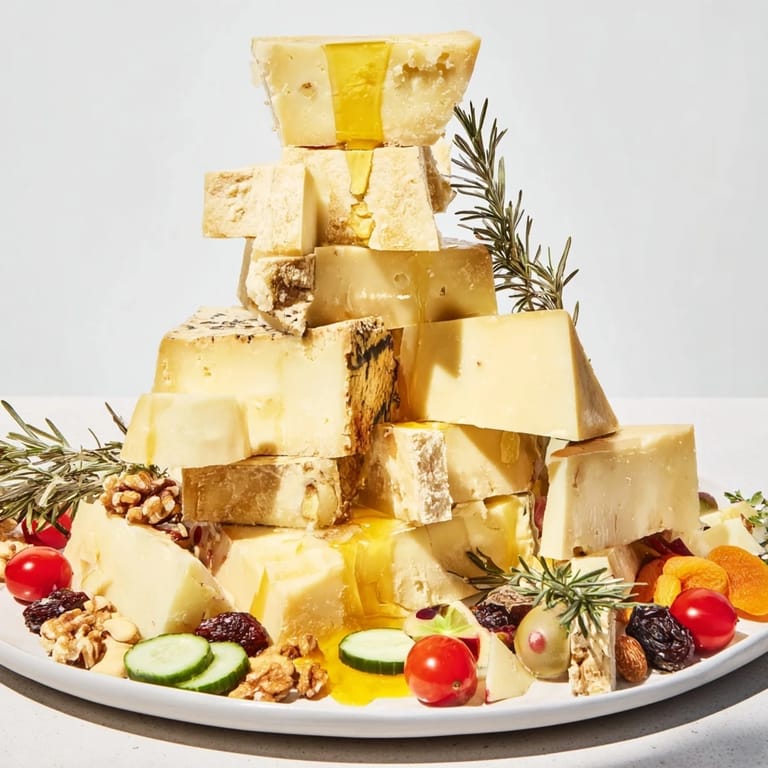
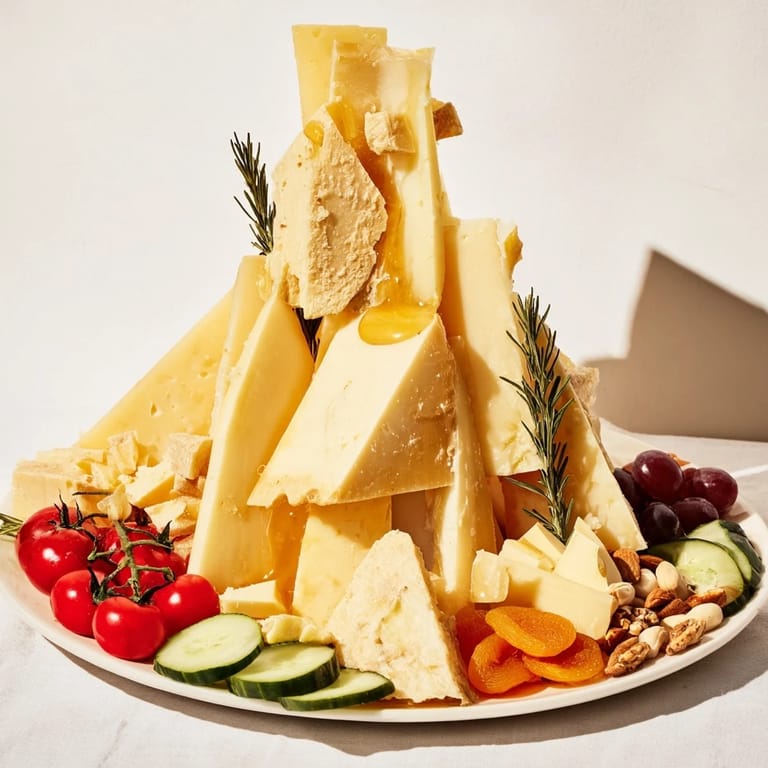
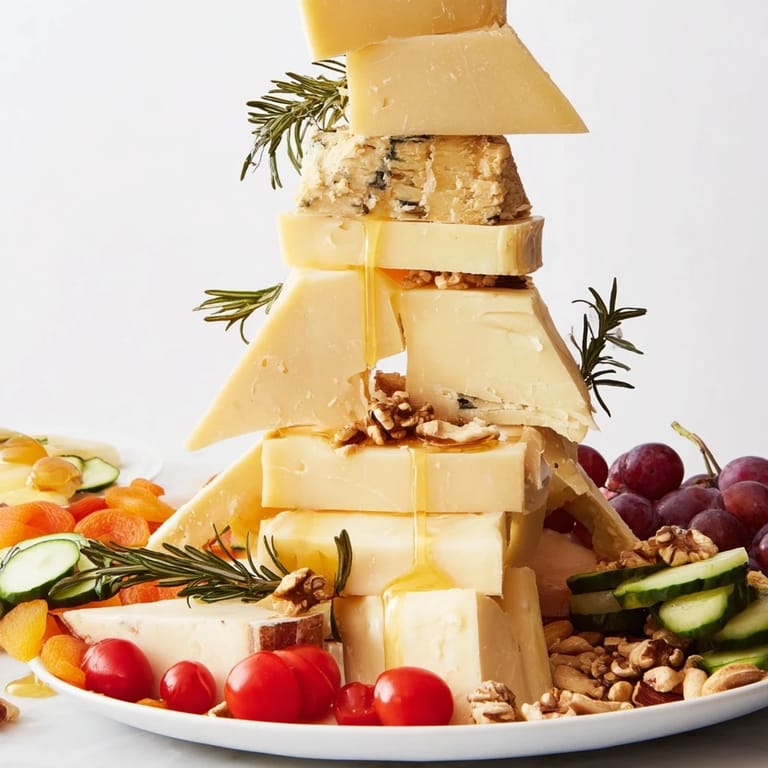
- Start with your largest board or platter—you want real estate to work with. Stand those hard cheese chunks vertically, creating height variations. The Manchego and Parmigiano should reach the highest points. Don't arrange them in a straight line; instead, cluster them to suggest actual peaks and ridges. This is where drama happens.
- Create the Foothills:
- Nestle your soft cheeses around the base of those tall peaks. The Brie wedges and Gorgonzola pieces should rest naturally, filling the spaces between mountains. This is where the landscape starts to feel real—the transition from sharp peaks to gentle slopes.
- Fill the Valleys:
- Now comes the meditative part. Fill the lower areas with your fruits and vegetables. Grapes roll gently into natural hollows. Tomato halves tuck into gaps. Cucumber rounds create neat pathways. Let them cascade and cluster naturally rather than arranging in perfect rows. This is where color and movement live.
- Scatter the Boulders:
- Sprinkle almonds and walnuts around the landscape. They nestle between pieces, creating texture and suggesting actual rocky terrain. Don't overdo it—they should look like nature placed them, not that you carefully positioned each one.
- Create the Pathways:
- Lean baguette slices and crackers along the edges and between major features. They're both practical and part of the composition, inviting people to understand they're meant to pick things up and explore.
- Add the Final Magic:
- This is where you step back and feel like an artist. Drizzle honey in small pools—let it catch light and create visual interest. Tuck fresh rosemary sprigs vertically between cheeses, horizontally across fruits, creating the suggestion of a living, breathing landscape. This final step is what transforms an arranged board into a sculptural piece.
- Serve and Celebrate:
- Bring it to the table with a quiet confidence. Watch as people lean in, studying it before they take their first bite. Encourage them to explore combinations, to build their own paths through the landscape. The magic happens in that moment of discovery.
 Pin it
 I remember my sister photographing this board from every angle before touching it, something she'd never done with food before. When I finally told her to just eat, she laughed and said 'but it's too pretty.' That's the moment I realized this wasn't really about the cheese anymore—it was about creating a moment where food becomes a reason to pause and appreciate the small artistry of a thoughtfully made meal.
Choosing Your Cheeses Wisely
The beauty of this board is that it's less about specific cheese varieties and more about understanding cheese categories and how they relate to each other. Hard cheeses give you structure, literally and flavor-wise. Semi-soft cheeses bridge flavors and textures. Soft cheeses round everything out. When you're at the cheese counter, think about contrast—you want variety in color, texture, and intensity. If aged Manchego isn't available, aged Gouda creates similar drama. Can't find Gorgonzola? Any blue cheese works. The principle matters more than perfection here.
The Geometry of Arrangement
Don't underestimate how much the actual shape of your board influences the final composition. Rectangular boards naturally suggest landscapes. Round boards create concentric arrangements. Asymmetrical boards feel modern. Wooden boards feel warm; slate feels sophisticated. Your board is your canvas, and the landscape grows from its shape. Think about sight lines—if people are approaching from one direction, create a focal point. If it's table-center, make it interesting from all angles. The physical space you're working with should guide your arrangement strategy.
Building Flavor Combinations
The best part of this format is teaching people how flavors work together. A sharp cheese needs sweetness—that apricot, that honey. A creamy cheese needs something crisp to break it up. A bland cracker is just a vehicle for something more interesting. When you're arranging, think about pairing opposites nearby so people naturally discover them. Put walnuts next to Gorgonzola. Place honey near sharp Cheddar. Position apricots where they'll be visible next to aged Manchego. You're not forcing combinations, you're creating opportunities for people to find them.
- Trust your instincts about proximity—flavors that seem interesting together probably are.
- Leave small empty spaces intentionally so the board doesn't look crowded or overwhelming.
- Step back frequently and look at your composition from a distance before you start adding details.
 Pin it
 This sculptural cheese board taught me that food is never just sustenance—it's an invitation to slow down, explore, and discover something together. The cheese matters, yes, but the memory of reaching across the board, finding something unexpected, and sharing that little moment of joy with someone else? That's what makes it beautiful.
Frequently Asked Questions
- → Which cheeses work best for the tall mountain shapes?
Hard, aged cheeses like Manchego, Parmigiano-Reggiano, and aged Cheddar hold their shape well and create striking vertical pieces.
- → How can I add texture and variety to the platter?
Incorporate fresh fruits, dried apricots, roasted nuts, and a variety of crackers or baguette slices to add different textures and flavors.
- → What is the purpose of the rosemary sprigs?
Rosemary sprigs add a fresh, herbal aroma and visual greenery that complements the rustic layout of the platter.
- → Can this arrangement be customized for dietary preferences?
Yes, consider using vegetarian-certified cheeses and excluding cured meats to maintain a vegetarian-friendly spread, or swap components to suit individual tastes.
- → How should I present the platter for serving?
Use a large wooden board or platter, arrange cheeses vertically and in clusters with fruits and nuts below, drizzle honey, and garnish with rosemary for an inviting look.
- → What pairings complement this cheese arrangement?
Light-bodied reds or crisp white wines enhance the flavors and textures without overpowering the ingredients.