 Save
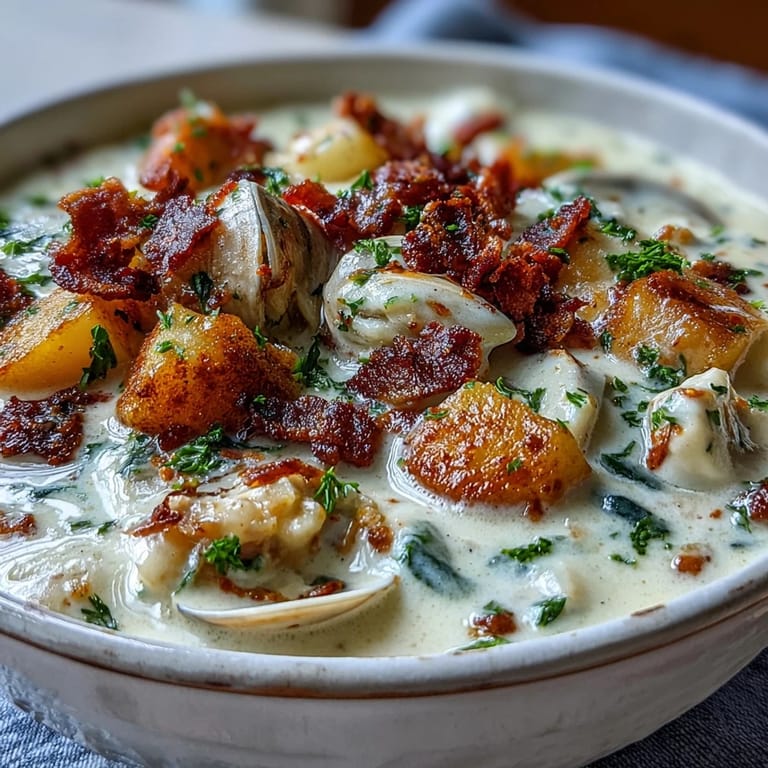
Save There's something about the first sip of New England clam chowder that transports you straight to a weathered dock in Maine, even if you're sitting in your own kitchen. My aunt made this for me one October afternoon, and I watched her hands move with such confidence—dicing potatoes, rendering bacon fat, whisking cream into that golden roux—that I realized this wasn't just a recipe, it was a ritual she'd perfected over decades. The smell alone filled her entire house, creamy and briny and impossibly comforting. I've made it dozens of times since, and it never fails to feel like coming home.
I'll never forget bringing a pot of this to a soup swap at work, watching people go back for thirds, and overhearing someone say it tasted like their grandmother's kitchen. That's when I understood that good food isn't about impressing anyone—it's about creating a moment where people feel cared for. Every time I make it now, I'm channeling a little bit of that warmth.
Ingredients
- Fresh clams (littlenecks) or canned clams: Fresh clams mean you'll have that briny, ocean-forward flavor that canned clams can't quite match, though canned saves you time and still tastes wonderful—choose based on what your fishmonger has and what your schedule allows.
- Yukon Gold potatoes: These hold their shape better than russets and have a buttery flavor that feels like a small luxury in every bite.
- Salt pork or bacon: Don't skip this; those rendered fat and crispy bits are the silent flavor foundation that makes people ask for the recipe.
- Unsalted butter: Use real butter, not margarine—it matters more than you'd think once it's melted into the cream.
- Heavy cream and whole milk: This combination gives you richness without being quite so heavy that you feel weighed down after a bowl.
- All-purpose flour: The thickener that transforms broth into something luxuriously creamy.
- Fresh parsley: A bright finish that cuts through the richness and reminds you that this is still a vegetable-forward dish.
- Bay leaf and thyme: These quiet seasonings add depth that people won't be able to name but will definitely taste.
Tired of Takeout? 🥡
Get 10 meals you can make faster than delivery arrives. Seriously.
One email. No spam. Unsubscribe anytime.
Instructions
- Prepare your clams (if using fresh):
- Scrub the clams under cold water to remove any sand, then steam them in a covered pot with 1 cup of water over medium heat until they crack open, about 6 to 8 minutes—discard any stubborn ones that refuse to open. Once they're cool enough to handle, remove the meat and chop it roughly, keeping that precious cooking liquid you'll use later as your briny base.
- Render the salt pork:
- In a large Dutch oven or heavy-bottomed pot, cook your diced salt pork or bacon over medium heat until the fat releases and the meat turns crispy, about 5 minutes—this fat is liquid gold for your chowder. Scoop out the meat with a slotted spoon and set it aside, leaving that rendered fat glistening in the pot.
- Build your aromatic base:
- Add butter to the pot and let it melt into the pork fat, then toss in your diced onion and celery, stirring occasionally until they soften and turn translucent but haven't taken on any color, about 5 minutes. Finish with minced garlic, stirring for just 1 minute so it perfumes everything without burning.
- Create the roux:
- Sprinkle flour over the vegetables and stir it around constantly for 2 minutes—this cooks out the raw flour taste and sets you up for a silky, lump-free chowder. You're creating a paste-like base that will thicken your liquid later.
- Add your liquid slowly:
- Gradually pour in your clam juice (including any reserved liquid from steaming), milk, and cream while whisking constantly to prevent lumps from forming—this is the moment that separates a smooth chowder from a lumpy disappointment. Take your time; patience here pays off.
- Simmer with the potatoes:
- Stir in your diced potatoes, bay leaf, and thyme, then let everything simmer uncovered until the potatoes are tender enough to break with a spoon, about 12 to 15 minutes. Stir occasionally and keep an eye on the bottom so nothing sticks.
- Finish with the clams:
- Add your chopped clams (or the canned clams with their juice) and the crispy pork back into the pot, then let it all warm through gently for 3 to 5 minutes—keep the heat low and avoid boiling once the clams are in, since overcooked clams become rubbery. This is the moment you taste for salt and pepper, remembering that clams are naturally salty.
- Brighten and serve:
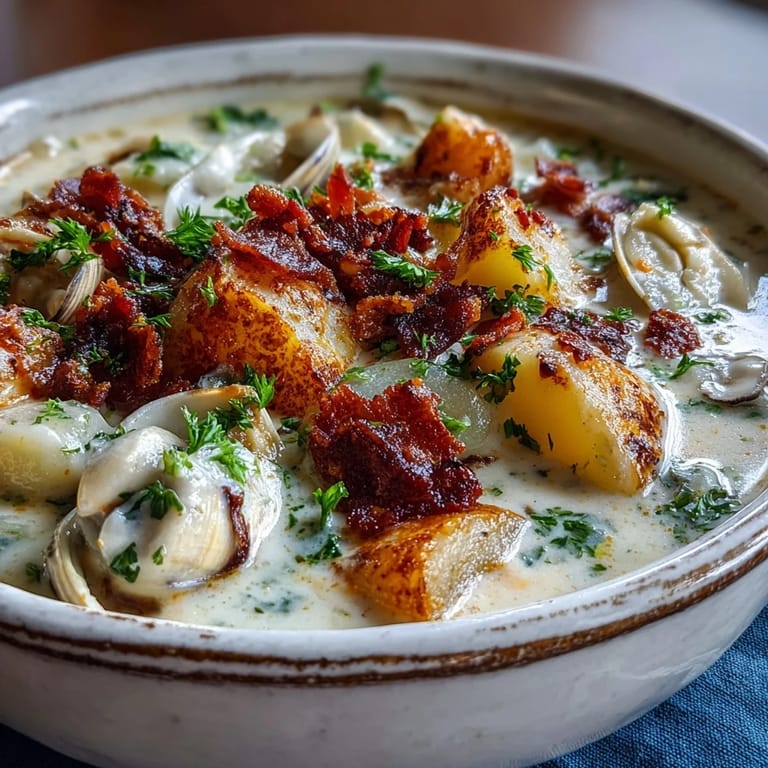
- Fish out that bay leaf, stir in fresh parsley, and ladle the chowder into bowls while it's steaming hot. Serve with oyster crackers or crusty bread for soaking up every last spoonful.
 Pin it
 There was an evening when my neighbor stopped by unexpectedly, caught the aroma wafting through the open window, and I found myself offering her a bowl without hesitation. She sat at my kitchen counter, ate slowly, and at the end said it reminded her of a trip she took to Cape Cod when she was twenty. Food that bridges time like that—that gives someone a memory they didn't know they were missing—that's when cooking stops being a task and becomes something sacred.
On Choosing Your Clams
Fresh clams are a commitment, I'll admit—you need to scrub them, steam them, and deal with the ones that refuse to open. But that ocean flavor you get in return is worth the extra five minutes of work. Canned clams are your shortcut and honestly, nobody's going to judge you for taking it; they're pre-cooked and already chopped, which means you can be eating chowder in under an hour. The choice really comes down to whether you want the most authentic version or the most realistic one for a busy weeknight.
The Potato Question
Yukon Gold potatoes are the secret weapon here because they have a naturally buttery flavor and they hold their shape as they cook, so you end up with defined pieces floating through your chowder rather than a mealy mush. Russet potatoes will work in a pinch, but they tend to break down and make things starchy—which isn't terrible, just not the same. The size of your dice matters too; cut them roughly uniform so they cook at the same rate and you're not fishing out half-cooked chunks.
Storage and Leftovers
This chowder actually tastes better the next day after the flavors have had time to get cozy with each other, so don't hesitate to make a batch and eat it throughout the week. Store it in an airtight container in the fridge for up to three days, or freeze it for up to a month—though if you freeze it, the texture will be slightly different when you thaw it, so just know that going in. When reheating, do it gently over medium-low heat with a splash of milk or cream to restore the creamy texture, and taste for seasoning since sometimes things need a little salt and pepper boost after they've been chilling.
- Cool the chowder completely before storing so you don't create steam that makes the lid stick.
- If you're freezing, leave a tiny bit of headspace in the container since cream-based soups expand when they freeze.
- Reheat slowly and stir often to keep everything from sticking to the bottom of the pot.
 Pin it
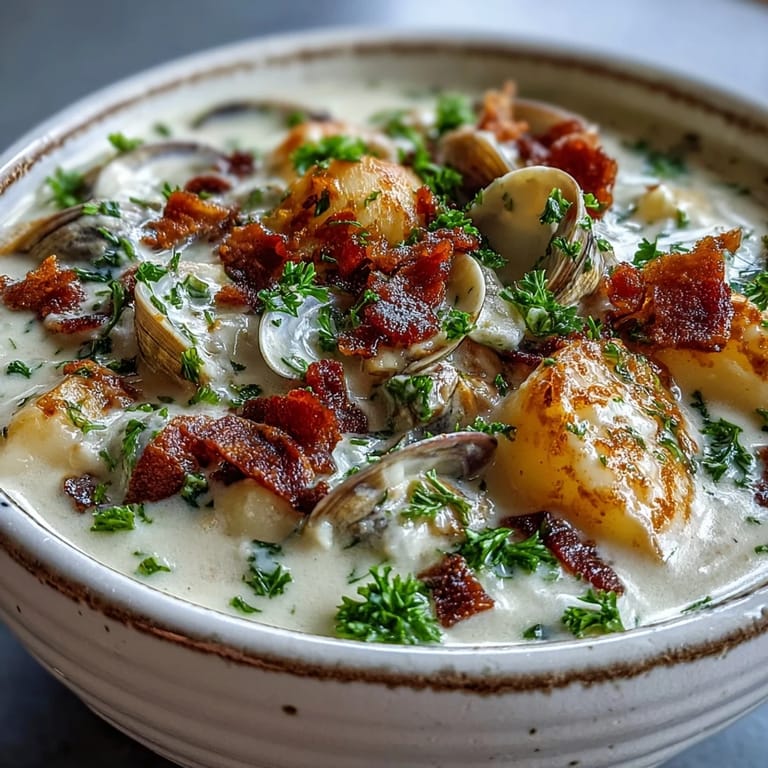
 New England clam chowder is the kind of dish that asks for nothing fancy—just good ingredients, a little patience, and the willingness to let something simple become something memorable. Make it once and you'll understand why people crave it when the weather turns cold.
Frequently Asked Questions
- → What's the difference between New England and Manhattan clam chowder?
New England chowder uses a cream-based broth with milk and heavy cream, creating a rich, white soup. Manhattan version features a tomato-based broth, resulting in a reddish, lighter soup with different flavor profile.
- → Can I use canned clams instead of fresh?
Absolutely. Canned chopped clams work perfectly and save prep time. Use 2 cups canned clams with their juice, and supplement with bottled clam juice to reach the required liquid amount.
- → How do I prevent the dairy from curdling?
Add milk and cream after the roux is fully incorporated, whisking constantly. Avoid boiling once dairy is added—gentle simmering maintains smooth texture. Room temperature dairy helps too.
- → Can I make this chowder ahead of time?
Yes, prepare up to 2 days in advance. Store refrigerated in airtight container. Reheat gently over low heat, stirring occasionally. Add splash of milk if too thick after reheating.
- → What potatoes work best for chowder?
Yukon Gold or russet potatoes are ideal. They hold shape during cooking while becoming tender. Avoid waxy varieties like red potatoes, which won't break down enough to help thicken the broth.
- → How long does leftover chowder keep?
Properly stored in refrigerator, leftover chowder lasts 3-4 days. Freeze for up to 3 months, though texture may change slightly. Thaw overnight in refrigerator before reheating.