 Save
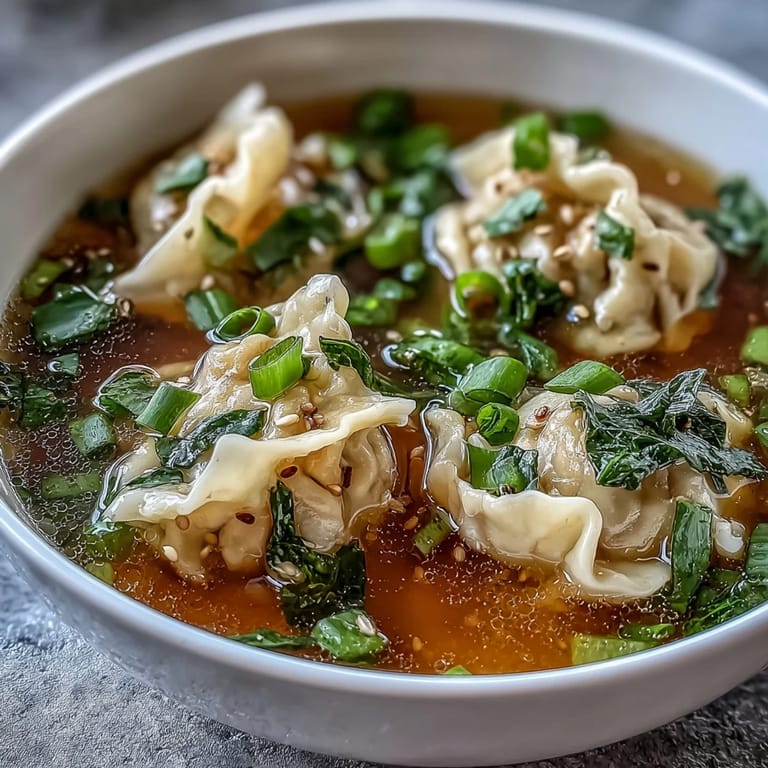
Save My neighbor taught me to make dumpling soup on a rainy Tuesday when she showed up at my door with a bag of flour and a patient smile. She guided my clumsy hands through folding those first awkward dumplings, and when we finally sat down to eat what we'd made together, something clicked—the warm broth, the tender pockets of chicken filling, the bright green scallions floating on top. It became the soup I now make whenever someone needs comfort, or when I'm craving something that tastes like being taken care of.
There's a moment when you're pinching the edges of a dumpling and your fingers finally understand the motion—that's when you know you're doing it right. My sister laughed at me the first time because I kept over-filling mine, but after about ten dumplings, I found the sweet spot of generosity without spillage. Now when we make this soup together, we work in comfortable silence, our hands moving at the same pace, and it feels like the best kind of teamwork.
Ingredients
- All-purpose flour: This is your foundation—it needs to be the right texture, somewhere between playdough and your earlobes, which sounds strange but is oddly accurate.
- Water: Add it gradually because humidity in the air affects how much you actually need, and wet dough is harder to salvage than dry dough.
- Salt: A little in the dough and more in the filling creates layers of seasoning that make people ask for your secret.
- Ground chicken: Use something with a bit of fat in it rather than ultra-lean, or your filling will taste dry and one-note.
- Soy sauce: This is where umami lives, and it's what makes people close their eyes when they taste the broth.
- Sesame oil: Just a teaspoon, but it's non-negotiable—it's the difference between good soup and soup that makes you feel understood.
- Garlic and ginger: Mince them finely so they distribute evenly through the filling instead of creating surprise pockets that are too intense.
- Scallions: Use the green parts both in the filling and as a garnish, but keep some raw on top for that fresh, slightly sharp contrast.
- Grated carrot: It adds sweetness and texture to the filling, plus a subtle color that makes the dumplings prettier when you bite into them.
- Chicken broth: Low sodium is essential because you're adding soy sauce, and there's nothing worse than oversalted soup.
- Baby spinach: Optional but worthwhile—it wilts into the broth and adds an earthiness that rounds everything out.
Tired of Takeout? 🥡
Get 10 meals you can make faster than delivery arrives. Seriously.
One email. No spam. Unsubscribe anytime.
Instructions
- Make the dough with patience:
- Mix flour and salt, then add water slowly while stirring with a fork until shaggy bits form. Your hands go in next, kneading for about five minutes until the dough stops being sticky and becomes smooth and cooperative. The resting time isn't filler—it lets the gluten relax so your dough becomes tender instead of tough.
- Build a filling that tastes like comfort:
- Combine ground chicken with soy sauce, sesame oil, minced garlic, ginger, chopped scallions, and grated carrot in a bowl. Mix gently but thoroughly so everything is evenly distributed—this is where you taste and adjust, adding white pepper until it smells like something you want to eat.
- Fold dumplings like you mean it:
- Pinch off walnut-sized pieces of dough and roll them thin—about the thickness of a coin and roughly three inches across. Place a teaspoon of filling in the center, then fold in half and pinch the curved edge firmly to seal, creating those little half-moon shapes that catch the light. The seal is everything because a burst dumpling is sad.
- Boil them until they float:
- Bring a large pot of water to a boil and add dumplings in batches so they have room to move around. They'll sink, then rise to the surface within a few minutes—that's when you know they're almost done. Give them another minute or so of floating time, then lift them out with a slotted spoon to a waiting plate.
- Simmer the broth into something special:
- Heat chicken broth until it's gently bubbling, then stir in soy sauce and sesame oil. Add baby spinach if you're using it and watch it wilt from dark green to something ethereal and soft.
- Marry the dumplings and broth:
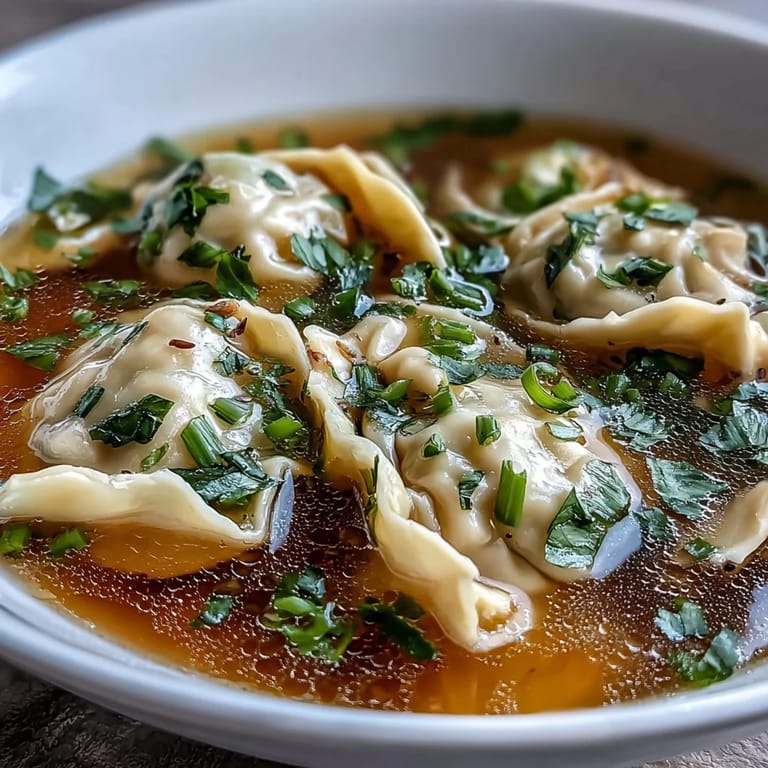
- Gently add your cooked dumplings to the simmering broth and let them warm through for a couple of minutes. Taste the broth now—this is your last chance to adjust the seasoning before serving.
- Serve with ceremony:
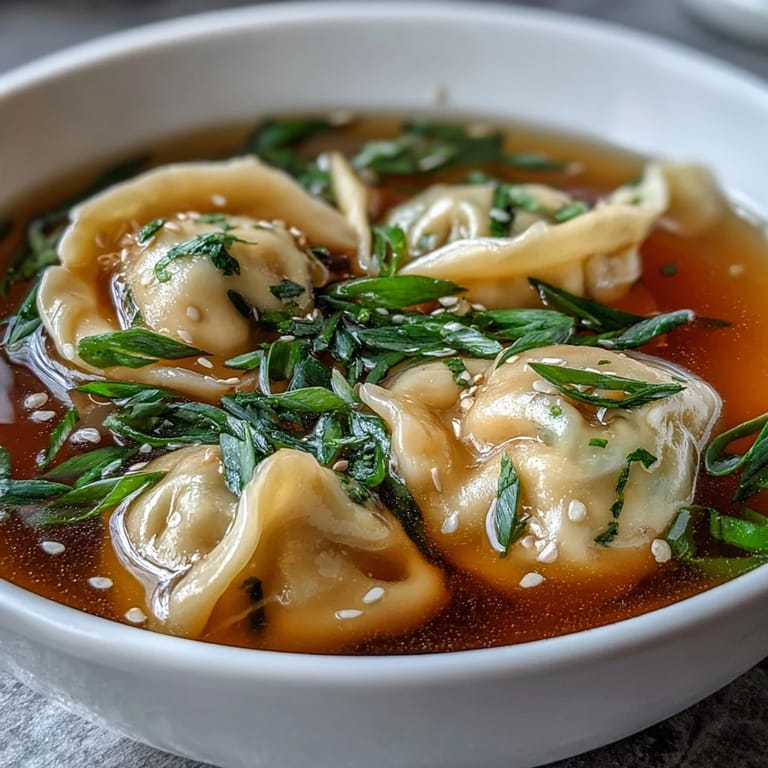
- Ladle soup into bowls, making sure each one gets several dumplings, and garnish with fresh sliced scallions that will float across the top like little green ribbons.
 Pin it
 The first time someone asked for seconds of this soup, I felt something shift—like I'd accidentally stumbled onto something that meant something. It's not fancy or difficult, but there's something about sharing dumplings made by your own hands that makes people sit a little longer at the table.
The Magic of the Seal
Getting dumplings to seal properly is partly technique and partly confidence. The first few always feel impossibly fragile, like you're holding a secret that might spill out, but after you've made twenty or so, your fingers understand what they're doing. I learned to press the edge like I was tucking in a small child—firm but gentle, with intention. The dough has memory and will cooperate if you ask nicely.
Timing is Everything
There's a narrow window between dumplings that are tender and dumplings that fall apart, and it's shorter than you'd think. The moment they float is the moment you set your timer, because that's when they're almost done. I used to over-boil them because I was worried they weren't cooked through, but now I trust the process and pull them out right when they're perfect.
Building Layers of Flavor
This soup works because nothing is too loud—everything whispers together instead of shouting. The broth carries the flavor of chicken and sesame oil, the dumplings add richness, and the raw scallions cut through it all with something bright. When you taste it, you're tasting the intention of someone who made it.
- Make the dumplings the night before and freeze them so you can make fresh soup without the assembly stress.
- If the broth tastes a little bland before serving, that usually means it needs salt more than soy sauce—add a pinch at a time.
- Leftover soup keeps in the fridge for three days, but the dumplings soften slightly, which is still delicious but different from fresh.
 Pin it
 This soup has become something I make when I want to say I love you without words, or when I need to remind myself that simple things done with care are sometimes the most nourishing things we can create. It's worth the time and the floury hands.
Frequently Asked Questions
- → How do I prevent dumplings from sticking together during cooking?
Boil dumplings in plenty of water and stir gently to keep them separate. Removing them as they float up helps prevent sticking.
- → Can I prepare the dumplings in advance?
Yes, dumplings can be assembled and refrigerated for a few hours before cooking to save time.
- → What substitutes can be used for ground chicken?
Ground pork or tofu can replace chicken for different flavors and textures.
- → How do scallions contribute to the dish?
Scallions add a fresh, mild onion aroma and light crispness that balances the rich broth and tender dumplings.
- → Is it possible to add greens to the soup?
Yes, baby spinach or other leafy greens can be stirred into the broth near the end of cooking for added nutrition and color.
- → What seasonings enhance the broth flavor?
Soy sauce and sesame oil enrich the broth with savory depth and delicate nuttiness, while salt and pepper adjust the taste.