 Save
Save There's a particular Tuesday evening that stands out, not because anything extraordinary happened, but because my roommate walked in just as I was stirring the cheese sauce and asked if I was making the kind of mac and cheese that ruins you for every version you've had before. I hadn't planned to share, but something about the golden, bubbling dish that came out of the oven made it impossible to say no. That's when I learned that the best comfort food is the kind that quietly becomes someone's new standard.
I made this for my sister's first night in her new apartment, and she actually teared up a little while eating it. Not because it was sad, but because it was exactly what she needed—something warm and solid and made with intention. We sat on the floor of her empty living room, and somehow a baking dish of mac and cheese felt like the perfect housewarming gift.
Ingredients
- Elbow macaroni (350 g): The shape matters more than you'd think—those little tubes actually hold the sauce instead of just coating it, so don't substitute with pasta shapes that are too smooth or too delicate.
- Unsalted butter (3 tbsp): Use real butter here, not margarine, because it's the foundation of your béchamel and deserves to taste like butter.
- All-purpose flour (3 tbsp): This thickens the sauce without any weird gumminess if you cook it just long enough to lose the raw flour taste.
- Whole milk and heavy cream (2 cups milk + 1 cup cream): The milk is the body, but the cream is what makes this luxurious instead of just thick—don't skip it or use a substitute.
- Sharp cheddar cheese (200 g): Sharp is non-negotiable; mild cheddar will disappear into the background and you'll end up with something that tastes like school lunch.
- Gruyère or Swiss cheese (75 g): This adds a subtle nuttiness that keeps the dish interesting, something Gruyère does better than almost any other cheese.
- Parmesan cheese (50 g): Finely grated, not from a can—the texture matters for mixing in smoothly.
- Dijon mustard (1 tsp): Seems small, but this is the secret weapon that makes people ask what you did differently.
- Garlic powder, onion powder, salt, pepper, cayenne (½ tsp each, ¼ tsp pepper, pinch of cayenne): These are background singers that never take the spotlight but make the whole performance better.
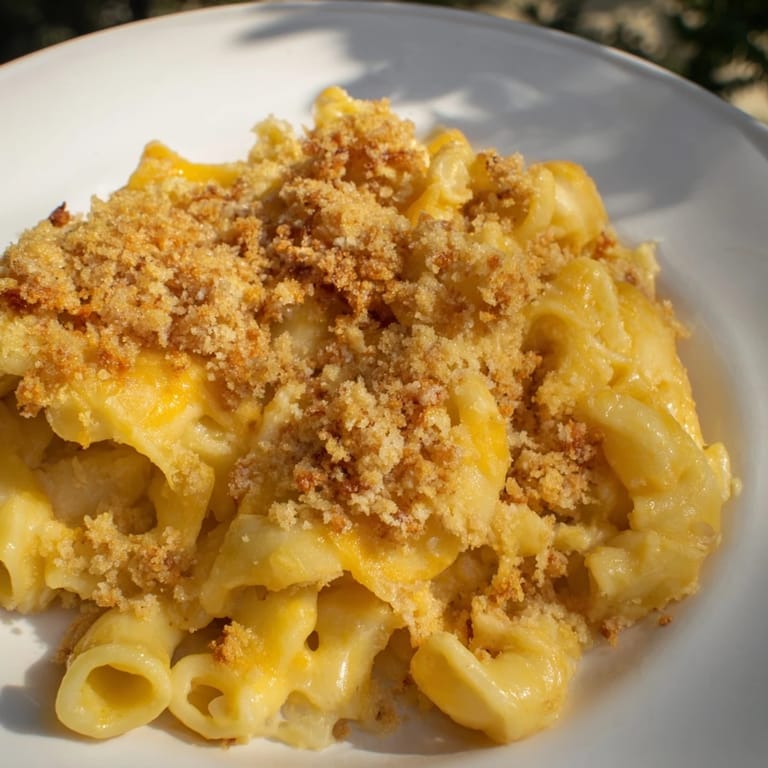
- Panko breadcrumbs and melted butter (for topping): If you're baking this, this golden crust is what makes people come back for seconds.
Tired of Takeout? 🥡
Get 10 meals you can make faster than delivery arrives. Seriously.
One email. No spam. Unsubscribe anytime.
Instructions
- Set the stage:
- Preheat your oven to 200°C (400°F) if you're baking, and grease your baking dish so nothing sticks. Cook the macaroni in salted water until it's just barely al dente—about a minute or two before the package says it's done, because it'll soften more when it mingles with the hot sauce.
- Build the base:
- Melt the butter in a large saucepan over medium heat, then whisk in the flour and cook it for a minute or two until it smells toasty and golden but hasn't turned brown. This is called making a roux, and the smell is your signal that you're doing it right.
- Create the sauce:
- Slowly pour in the warm milk and cream while whisking constantly—no rushing, or you'll end up with lumps. Keep stirring until the whole thing is smooth and thick enough to coat the back of a spoon, about 4 to 5 minutes at a gentle simmer.
- Season and layer:
- Turn the heat down to low and stir in the mustard, garlic powder, onion powder, salt, pepper, and cayenne. Then add the cheeses one handful at a time, stirring until each batch melts completely before adding the next—this patience makes all the difference between a smooth sauce and one that's somehow grainy.
- Bring it together:
- Gently fold the drained macaroni into the cheese sauce until every piece is coated in that golden, creamy mixture. At this point, you can either serve it immediately from the pot for a stovetop version, or transfer it to the baking dish for the crust version.
- Finish (baked version):
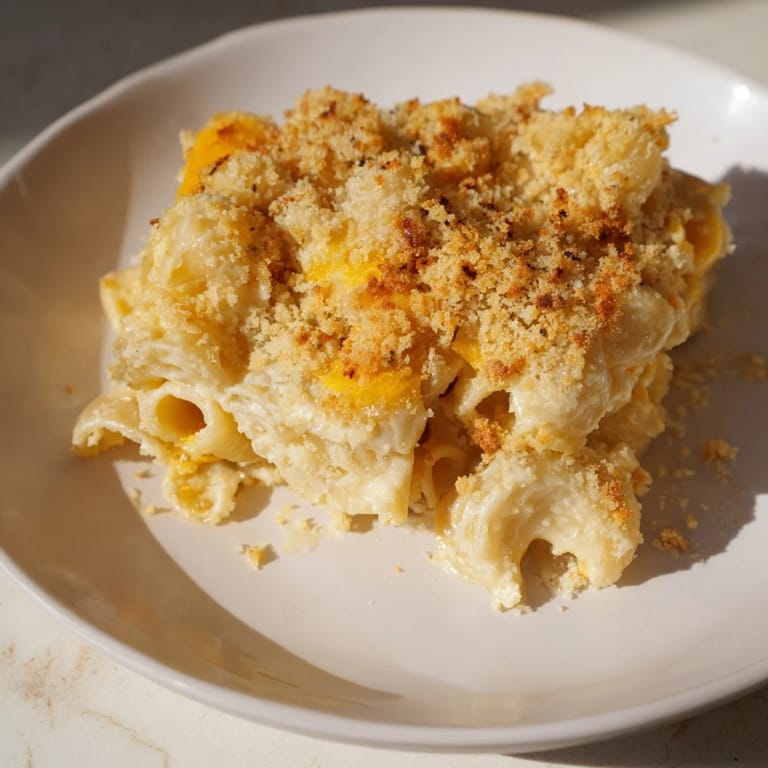
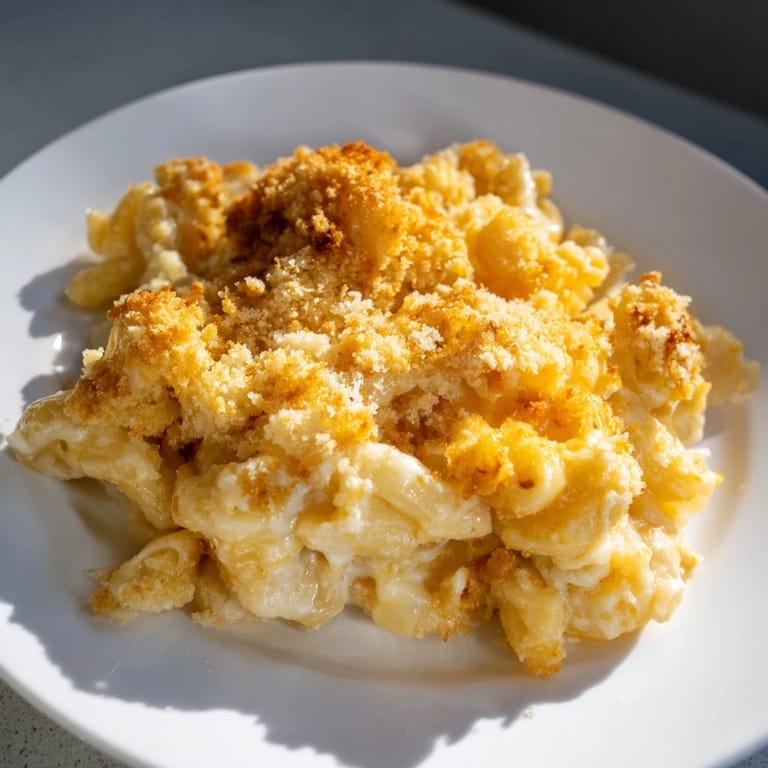
- Mix the panko breadcrumbs with melted butter and the extra Parmesan, then scatter it over the top of the mac and cheese. Bake for 20 to 25 minutes until the top is golden brown and the edges are bubbling, then let it rest for 5 minutes so it sets just a little.
 Pin it
 The moment that really cemented this recipe for me was watching my dad, who claims he never cooks, take seconds without saying a word and then ask me to write down what I did. Sometimes a dish transcends being just food and becomes something like a small act of care that you can put on a plate.
The Choice Between Stovetop and Baked
The stovetop version is silkier and more luxurious, ready to eat the moment it's done, perfect for when you want pure comfort right now. The baked version takes a few extra minutes but gives you that golden, crispy top that's almost a different dish entirely—it's crunchier, more substantial, the kind of thing you serve when people are coming over and you want them to know you were thinking about them.
Cheese Combinations That Work
The three-cheese approach is classic for a reason, but this recipe is flexible enough to work with variations if you have preferences or favorites. Sharp cheddar is the anchor, but you can swap Gruyère for something milder like Monterey Jack if you want less sharpness, or add a little fontina for earthiness. Parmesan is harder to replace because of its sharpness, but if you're in a pinch, an aged Gouda or Asiago can do similar work in terms of adding complexity.
Taking It Further
Mac and cheese is one of those dishes that accepts additions gracefully instead of resenting them. I've made versions with crispy bacon stirred through, roasted mushrooms for earthiness, and blanched broccoli florets for something green. The sauce is sturdy enough that these changes feel like variations on a theme rather than completely different dishes. Some people add a touch of hot sauce or smoked paprika for complexity, and others top it with panko mixed with everything bagel seasoning for a fun textural contrast.
- Bacon works best when cooked until crispy, crumbled, and stirred in just before serving so it doesn't soften.
- If you use vegetables, blanch or cook them first so they're not releasing water into the final dish.
- A crisp green salad and a cold glass of Chardonnay are almost mandatory accompaniments.
 Pin it
 This is the kind of recipe that feels like a friend cooking with you, not a set of rigid instructions. Once you understand why each step matters, you'll find yourself making small changes and trusting them, and that's when it becomes truly yours.
Frequently Asked Questions
- → What type of pasta works best?
Elbow macaroni is ideal as it holds the sauce well and provides a classic texture, though other short pasta shapes like shells or cavatappi can be used.
- → How can I make the sauce extra creamy?
Using a blend of whole milk and heavy cream in the béchamel sauce helps achieve a rich, velvety texture.
- → Can I prepare this dish without baking?
Yes, serving it straight from the stovetop yields a luscious, creamy version without the crispy topping.
- → What cheeses create the best flavor balance?
Sharp cheddar provides boldness, Gruyère adds nuttiness, and Parmesan contributes depth and a subtle umami note.
- → Any suggestions for enhancing the dish?
Incorporate cooked bacon, sautéed mushrooms, or blanched broccoli to add texture and flavor variations.