 Save
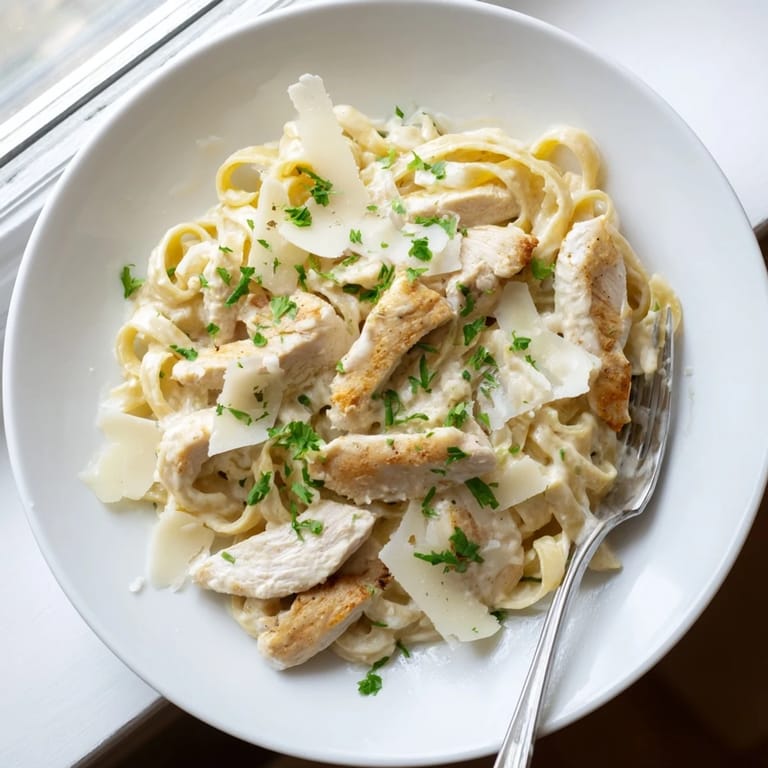
Save The first time I attempted chicken Alfredo, I made two separate pans and created a mountain of dishes. My husband watched from the doorway, grinning, as I frantically stirred sauce in one pot and chicken in another. That night was delicious, but the cleanup took longer than a Tuesday evening deserves. Now everything happens in one skillet, and I've learned that sometimes convenience actually makes the food taste better.
Last winter my sister came over exhausted from a new job, and this skillet dinner was the only thing that could make her smile. She took three helpings and finally admitted she'd been surviving on takeout for weeks. Now she texts me every time she makes it, usually with some variation about how she added mushrooms or used half-and-half instead of cream. Some recipes become part of your routine because they work every single time.
Ingredients
- 2 large boneless skinless chicken breasts: Slicing into strips helps them cook evenly and creates more surface area for that golden sear
- 300 g fettuccine or penne pasta: The shape matters less than you think—whatever grabs sauce best is the right choice
- 2 tablespoons unsalted butter and 2 tablespoons olive oil: This blend prevents burning while giving you that rich restaurant flavor
- 3 garlic cloves minced: Fresh garlic transforms cream from ordinary into something extraordinary
- 1 cup heavy cream: The backbone of the sauce—half-and-half works but won't give you that velvety texture
- 1 cup freshly grated Parmesan cheese: Pre-grated cheese resists melting and makes grainy sauce
- 1 cup low-sodium chicken broth: Builds depth while keeping the salt levels under control
- 1/4 teaspoon freshly grated nutmeg: The secret ingredient that makes cream sauces taste professionally balanced
- Salt and black pepper: Season the chicken before cooking, but save most adjustments for the final sauce
- Fresh parsley and extra Parmesan: That finishing touch makes the difference between dinner and a dish worth remembering
Tired of Takeout? 🥡
Get 10 meals you can make faster than delivery arrives. Seriously.
One email. No spam. Unsubscribe anytime.
Instructions
- Get your pasta started first:
- Bring a large pot of salted water to a boil and cook pasta until al dente, reserving 1/2 cup of that starchy water before draining—it's liquid gold for fixing sauce consistency later.
- Sear your chicken until golden:
- Season the strips generously with salt and pepper, then cook them in 1 tablespoon each of butter and olive oil over medium-high heat for about 6 minutes until they develop a beautiful brown crust.
- Build your flavor foundation:
- In the same pan, melt the remaining butter and olive oil over medium heat, then add minced garlic and let it sizzle for just 1 minute until fragrant but not burned.
- Create the sauce base:
- Pour in chicken broth and bring it to a simmer, using your spoon to scrape up all those browned bits from the bottom—they're where the flavor lives.
- Add the cream and nutmeg:
- Stir in heavy cream with that pinch of nutmeg and let everything simmer gently for 2-3 minutes until slightly thickened.
- Melt in the Parmesan:
- Reduce heat to low and gradually stir in the cheese, letting it melt completely into a smooth, glossy sauce.
- Bring it all together:
- Add cooked pasta and chicken back to the skillet, tossing to coat everything in sauce and adding reserved pasta water as needed to reach that perfect clingy consistency.
- Season and serve:
- Taste your sauce and adjust salt or pepper if needed, then finish with parsley and extra Parmesan while it's still hot.
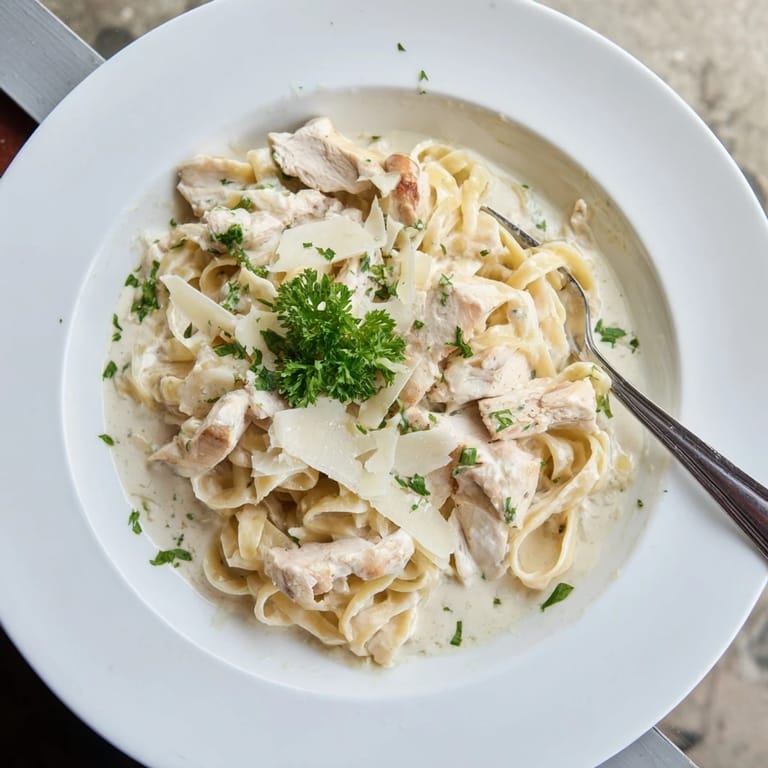 Pin it
 This recipe has become my answer to everything from bad days at work to unexpected guests. Something about that creamy, garlicky sauce just makes people slow down and actually talk across the table. Food should do that more often.
Making It Lighter
Some nights I swap half-and-half for heavy cream and nobody notices the difference except me. The sauce is slightly less velvety but still luxurious enough to feel like a treat. Fresh spinach wilted into the hot sauce at the end adds bulk without changing the flavor profile much.
The Perfect Pasta Choice
I used to insist on fettuccine for this recipe until a friend served it over penne and I realized how well the tube shape grabs sauce inside and out. Long pasta feels more traditional, but shorter shapes make every bite evenly coated. Either way, cooking it to al dente is non-negotiable—soft pasta turns into mush when tossed with rich cream sauce.
Timing Everything Right
The biggest challenge with skillet Alfredo is getting the pasta done while the sauce finishes. I start boiling water before I even cut the chicken, which usually works out perfectly. If the pasta finishes first, a quick toss in olive oil prevents sticking while you finish the sauce.
- Keep your pasta water warm in the pot after draining
- Have all ingredients measured before you start cooking anything
- Warm your plates in the oven so sauce stays fluid longer
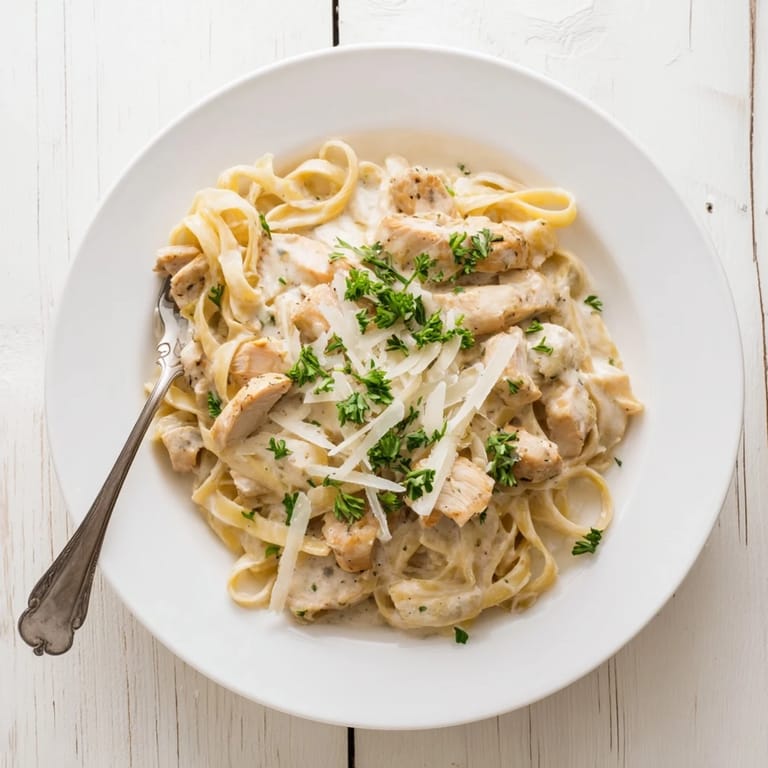 Pin it
 This skillet has saved more weeknight dinners than I can count, and nobody has ever guessed it took less than 40 minutes. Sometimes the simplest recipes are the ones we keep coming back to.
Frequently Asked Questions
- → Can I make the sauce lighter?
Yes, substitute half-and-half for heavy cream to reduce the richness while maintaining creaminess.
- → What pasta works best?
Fettuccine is traditional for Alfredo, but penne, rigatoni, or linguine also coat beautifully with the sauce.
- → How do I store leftovers?
Refrigerate in an airtight container for up to 3 days. Reheat gently with a splash of cream or broth to loosen the sauce.
- → Can I add vegetables?
Sautéed mushrooms, spinach, or broccoli make excellent additions. Add them when cooking the garlic or toss in with the pasta.
- → Why reserve pasta water?
The starchy water helps bind the sauce to the pasta, creating that silky restaurant-style coating that clings perfectly.