 Save
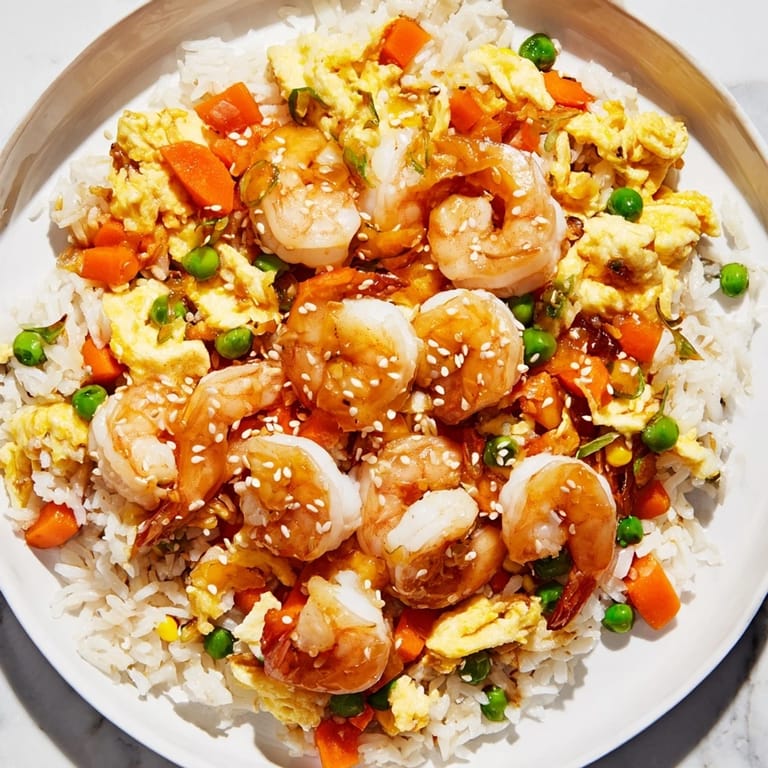
Save Last Tuesday I was staring at my fridge at 6 PM, exhausted from back-to-back meetings, when I spotted a container of day-old jasmine rice and some frozen shrimp. Twenty minutes later, my kitchen smelled like a proper Asian takeout joint, and I realized I'd just stumbled onto something that would become my go-to weeknight salvation. This shrimp fried rice hack changed how I think about quick dinners—turns out, you don't need a wok the size of a planet or an hour of prep to eat something that tastes restaurant-quality.
I made this for my neighbor who'd been helping me with garden stuff, and she literally asked for the recipe before she finished eating. That's when I knew I'd found something special. There's something about a dish that makes people slow down and actually taste what's in front of them that feels like a small victory in a busy week.
Ingredients
- Medium shrimp (200 g): They thaw quickly and cook in minutes, which is the whole point of this hack. Buy them frozen if you can—they stay fresher longer and defrost in cold water while you prep everything else.
- Large eggs (2): These scramble into fluffy bits that act like little flavor carriers throughout the rice. Don't skip them just because they seem simple.
- Frozen mixed vegetables (100 g): The frozen ones are actually perfect here because they're already cooked and won't turn mushy. No need to thaw them first.
- Scallions (2): Slice them thin—they add a fresh bite that cuts through the richness of the oil and soy sauce.
- Cooked jasmine rice (300 g, day-old): This is non-negotiable. Fresh, warm rice will turn into mush. Day-old rice that's been chilled separates beautifully when you stir-fry it.
- Soy sauce (2 tbsp): This is your backbone flavor. Use the real stuff, not the low-sodium version if you can help it.
- Oyster sauce (1 tbsp, optional): It adds a savory depth that makes people ask what makes it taste so good. I've never regretted using it.
- Sesame oil (1 tsp): A small amount goes a long way. It's the aromatic secret that makes this smell like the real deal.
- Ground white pepper (1/2 tsp): White pepper has a different flavor than black—it's subtler and cleaner in fried rice.
- Vegetable oil (1 tbsp): Use whatever you have. Neutral oil is your friend here.
Tired of Takeout? 🥡
Get 10 meals you can make faster than delivery arrives. Seriously.
One email. No spam. Unsubscribe anytime.
Instructions
- Get your pan screaming hot:
- Use medium-high heat and let your skillet or wok heat for a solid minute before adding oil. You'll know it's ready when a drop of water sizzles immediately.
- Flash-cook the shrimp:
- Add the shrimp to the hot oil and let them sit for about a minute before stirring—this creates a light golden edge that tastes amazing. They'll turn pink in 2 to 3 minutes total, and that's your cue to pull them out.
- Scramble the eggs fast:
- Pour beaten eggs into the empty hot pan and let them cook for just a few seconds before breaking them up into small, fluffy pieces. Push them to the side—you want room for the next ingredient.
- Warm the vegetables:
- Frozen vegetables need maybe 30 seconds to a minute. They're already cooked, so you're just bringing them back to temperature.
- Add the rice and break the clumps:
- Cold rice can stick together in blocks, so use your spatula to break it apart as you add it. Stir constantly for about 2 minutes so every grain gets a little kiss of heat and absorbs the flavors you're about to add.
- Bring everything together:
- Return the shrimp to the pan and pour in your soy sauce, oyster sauce, sesame oil, and white pepper all at once. The pan will smell incredible. Toss everything for about 1 minute so the seasonings coat everything evenly.
- Finish with fresh scallions:
- Add them at the very end so they stay bright and fresh instead of cooking down to nothing. Give it one more toss and taste before serving.
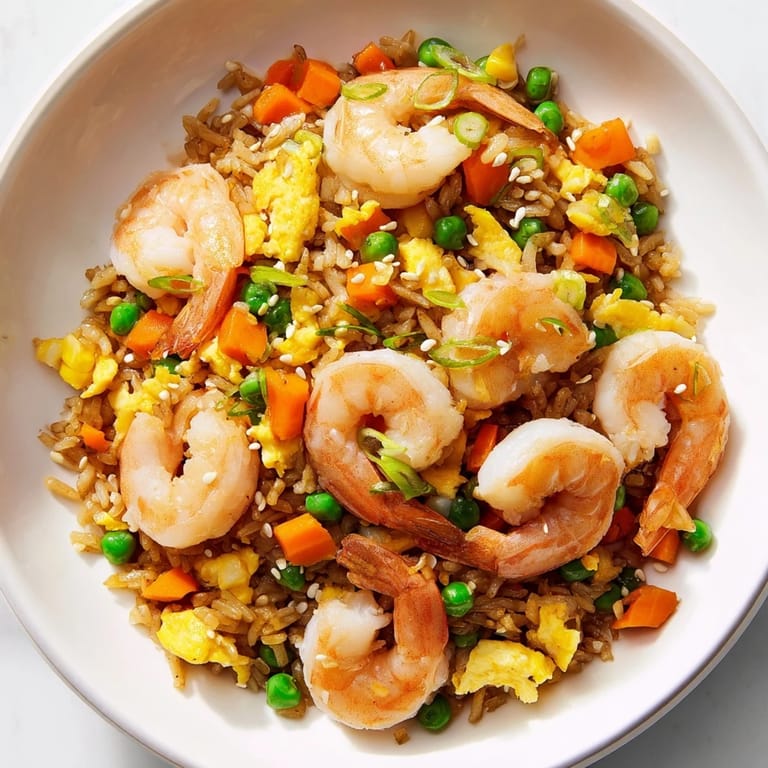 Pin it
 My mom tried this last month and called me surprised that I could make something taste this good in such a short amount of time. I realized this recipe isn't just about speed—it's proof that delicious food doesn't require complicated techniques or a three-hour commitment.
The Frozen Vegetable Secret
I used to think frozen vegetables were a compromise, something you used only when fresh ones weren't available. But in fried rice, they're actually better because they've been blanched and frozen at peak ripeness, which means they taste more vibrant than vegetables that have been sitting in your crisper drawer getting sad. Plus, they thaw instantly in a hot pan, so there's no weeping or releasing excess moisture like fresh vegetables would. The three-ingredient veggie mix saves you from having to buy five different things and use them across multiple recipes.
Why Cold Rice Changes Everything
Warm, freshly cooked rice is starches that want to stick together and absorb liquid, which is perfect for a rice bowl but terrible for fried rice. Cold rice has starches that have crystallized and separated, so when it hits the hot pan, each grain stays distinct and gets lightly coated with oil and sauce instead of turning into a risotto situation. This is actually why fried rice is the perfect way to use up yesterday's rice—it's a feature, not a workaround. I started planning my dinners around this technique once I figured it out.
Timing and Texture Control
The magic of this recipe lives in the order of operations. Shrimp first because they're done in seconds and you want them out before they overcook into little rubber pellets. Eggs second because they set faster than anything else and need real estate in the pan. Vegetables third because they're forgiving and just need warmth. Rice fourth because it needs the full heat of the pan to char slightly at the edges. Everything comes back together at the end with the seasonings, which bloom in the residual heat and coat every single element. This isn't random—it's the order that gives you the best texture on every component.
- Start with high heat and never apologize for it—fried rice demands it.
- If your pan feels crowded, work in batches instead of turning down the heat.
- The sizzle sound you hear when you add the rice is your friend; it means things are cooking properly.
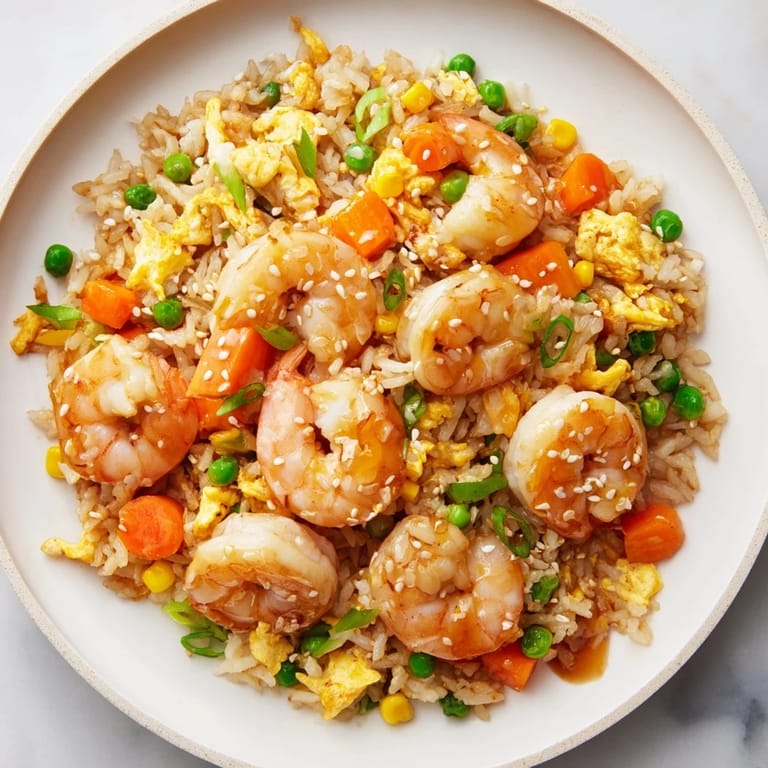 Pin it
 This recipe taught me that the best meals aren't always the ones that take forever. Sometimes the fastest dinner you can throw together in your smallest pan becomes the one you make again and again, and the one you end up telling other people about.
Frequently Asked Questions
- → What type of rice works best?
Day-old chilled jasmine rice is ideal as it prevents clumping and fries evenly for a perfect texture.
- → Can I substitute the shrimp?
Yes, chicken or tofu can replace shrimp to accommodate different preferences or dietary needs.
- → How do I avoid soggy vegetables?
Using frozen mixed vegetables and cooking them briefly retains a fresh bite without excess moisture.
- → What oils enhance flavor in this dish?
Vegetable oil is great for frying, and sesame oil adds a nutty aroma when finished in the stir-fry.
- → Are there seasoning tips to boost taste?
Add soy sauce and optional oyster sauce for depth, plus white pepper for subtle heat and balance.