 Save
Save The first time I made tikka salmon, I was trying to impress someone who had just returned from Delhi with stories about street food and spice markets. I'd never worked with tikka paste before, but the warm, amber color in the jar promised something special. Twenty minutes later, my kitchen smelled like a restaurant, and I realized I'd discovered a shortcut to restaurant-quality fish that actually works on a weeknight.
I made this for a casual dinner party where everyone assumed I'd spent hours in the kitchen. When one guest asked if I'd marinated the salmon overnight, I admitted it was actually fifteen minutes of prep, and suddenly everyone wanted the recipe. That's when I knew this dish had staying power.
Ingredients
- Salmon fillets (4, about 150g each): Choose skin-on or skinless depending on your preference; skin-on tends to crisp up beautifully and keeps the flesh moist.
- Plain yogurt (3 tbsp): This is your binding agent and tenderizer; use thick yogurt or Greek yogurt if you have it, and swap to plant-based without hesitation.
- Tikka masala paste (2 tbsp): This does most of the flavor work, so find a good quality paste you actually enjoy tasting on its own.
- Lemon juice (1 tbsp): Brightens the spices and prevents the fish from tasting heavy.
- Ground cumin (1 tsp) and ground coriander (1 tsp): These warm spices add depth; if you only have whole seeds, toast and grind them fresh for a noticeable difference.
- Smoked paprika (½ tsp): Adds a gentle smokiness that makes the salmon taste like it came off a proper tandoor.
- Chili powder (½ tsp): Start with less if you're sensitive to heat; you can always add more but you can't take it back.
- Olive oil (1 tbsp): Helps the marinade coat evenly and contributes to those crispy edges.
- Salt and pepper: Season generously; the yogurt mutes spices a bit, so don't be shy.
- Lemon wedges, fresh coriander, and sliced red onion for serving: These finishing touches add brightness and make the plate feel intentional.
Tired of Takeout? 🥡
Get 10 meals you can make faster than delivery arrives. Seriously.
One email. No spam. Unsubscribe anytime.
Instructions
- Heat your oven first:
- Get it to 220°C (425°F) and line a tray with parchment paper or foil. A screaming hot oven is your friend here; it's what creates those beautiful caramelized edges.
- Make the marinade:
- Whisk together the yogurt, tikka paste, lemon juice, cumin, coriander, paprika, chili powder, oil, salt, and pepper in a bowl until it looks uniform and smells incredible. This is the moment you realize how much flavor is about to happen.
- Dry your salmon properly:
- Pat the fillets completely dry with paper towels; any moisture on the surface will steam instead of crisping, which is the opposite of what we want.
- Coat generously:
- Spread the marinade all over each fillet, getting into any crevices and making sure the top is well covered. I use the back of a spoon to press it in gently.
- Wait for deeper flavor:
- Let the salmon sit for at least 10 minutes, or up to an hour in the fridge if you have time. This resting period lets the spices actually penetrate the fish rather than just sitting on top.
- Roast until golden:
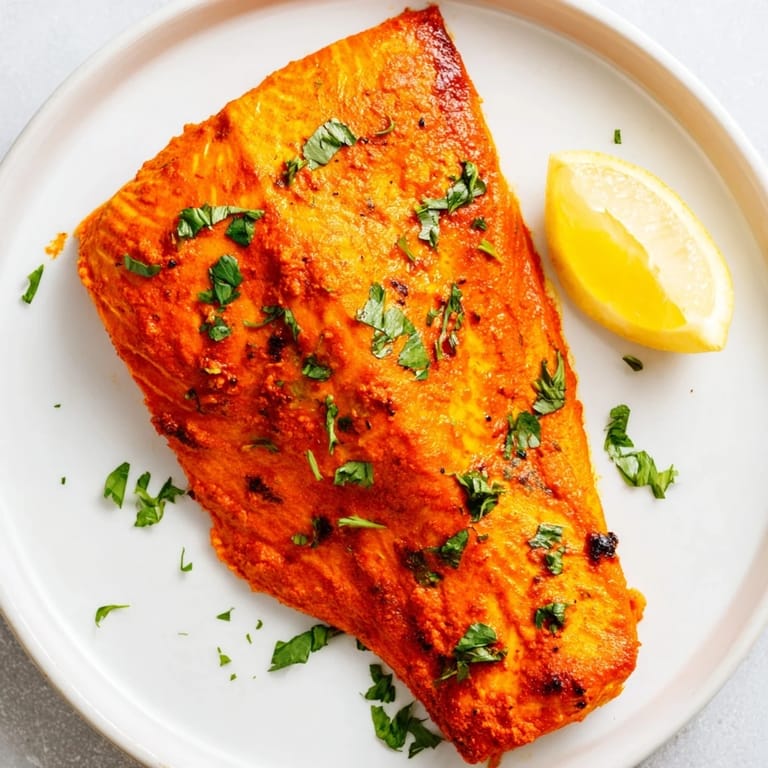
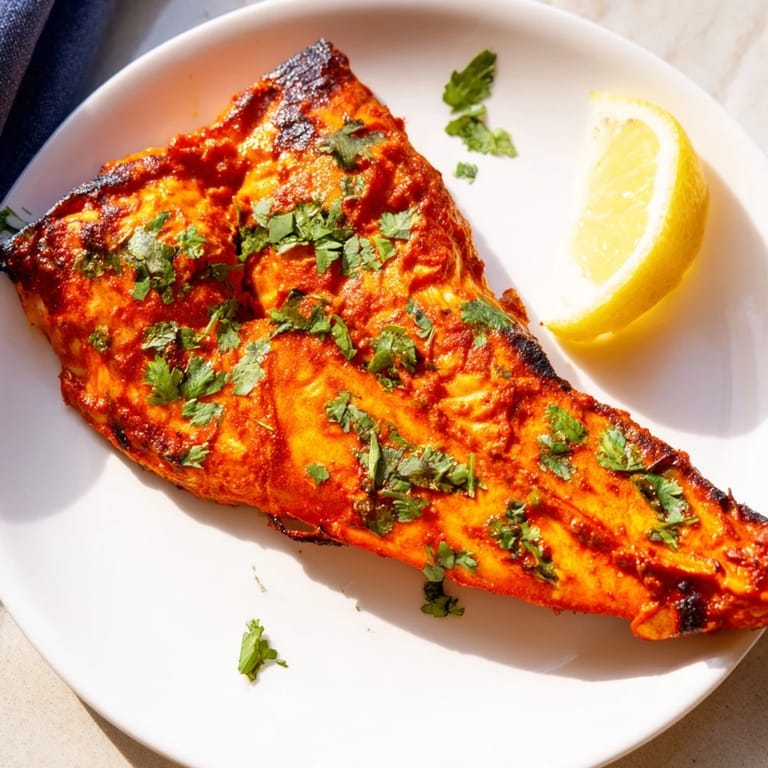
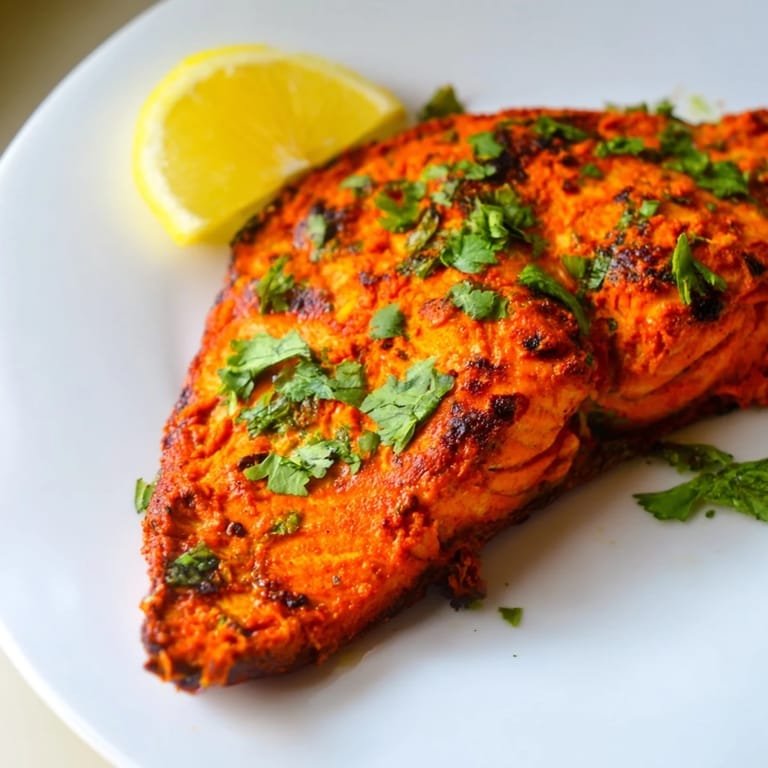
- Pop it into the oven for 15 to 18 minutes; the salmon is done when it flakes easily at the thickest point and the edges have turned slightly crisp and darker. Don't panic if it looks dark; that's caramelization, not burning.
- Finish and serve:
- Pull it from the oven, scatter fresh coriander over the top, add lemon wedges alongside, and plate it while it's still warm. If you want extra char, slide it under the broiler for a minute or two first.
 Pin it
 I once made this salmon for someone who swore they didn't like spiced fish, and they went back for seconds. We ended up talking for hours about how flavor doesn't have to be complicated to feel special, which feels like what this dish is really about.
Serving and Pairings
This salmon tastes perfect with basmati rice, which soaks up the residual spices beautifully, or alongside warm naan to scoop up every bit of the marinade. A cucumber salad with a squeeze of lime cuts through the richness and adds a refreshing contrast that rounds out the meal completely.
Storage and Reheating
Leftover salmon keeps well in the fridge for three days, though honestly, it rarely lasts that long. You can reheat it gently in a 160°C oven for about 5 minutes, or eat it cold the next day with a squeeze of fresh lemon, which is equally delicious and requires no equipment.
Ingredient Swaps and Variations
Not a salmon person? This marinade works beautifully on cod, haddock, or even thick slices of firm tofu if you're cooking for someone pescatarian or vegan. The cooking time might shift slightly depending on thickness, so adjust by checking for doneness rather than following the clock strictly.
- For a spicier version, add an extra ½ tsp of chili powder or a pinch of cayenne pepper to wake things up.
- If tikka paste isn't available, blend tomato paste, ginger, garlic, and curry powder together as a makeshift substitute.
- Plant-based yogurt works just as well as dairy, so never skip this dish due to dietary preferences.
 Pin it
 This salmon has become my go-to when I want to cook something that feels restaurant-worthy but doesn't demand much from me. It's proof that simplicity and flavor aren't mutually exclusive.
Frequently Asked Questions
- → What type of salmon works best for this dish?
Skin-on or skinless fillets both work well. Skin-on helps retain moisture during roasting, while skinless offers easier serving.
- → Can I prepare the marinade in advance?
Yes, the marinade can be mixed ahead and refrigerated. Marinating the salmon for at least 10 minutes enhances flavor, but up to an hour is ideal.
- → How spicy is the tikka marinade?
The marinade has a moderate heat from chili powder, which can be adjusted to taste by increasing or reducing the amount.
- → What are good side dishes to serve with this salmon?
Basmati rice, naan bread, or a simple cucumber salad complement the spiced salmon perfectly, balancing its vibrant flavors.
- → Can I substitute ingredients for dietary needs?
Plant-based yogurt can replace dairy yogurt for a dairy-free version, and cod, haddock, or tofu can be used instead of salmon.