 Save
Save Steam curling from a pot of simmering miso broth always makes my kitchen feel like a sanctuary, especially on chilly nights. The first time I tried building a ramen bowl from scratch, the aroma of ginger and garlic filled every corner, making the whole apartment seem warmer. There was a sprinkling of nervous excitement as I tried to balance all the toppings and remember the right order for each step. When the broth splashed on the stovetop and sizzled, it felt both messy and wonderfully alive. Even now, that sense of comforting bustle sticks with me every time I make this miso ramen.
One memorable evening, I cooked this ramen for a couple of friends squeezed around my kitchen counter—we laughed as I nearly overcooked the eggs, and everyone fought for the last few spoonfuls of broth. There was lively chatter about favorite noodle dishes and a steady soundtrack of slurping, not to mention the pride I felt when they asked for seconds.
Ingredients
- Low-sodium vegetable broth: Starts the soup with a comforting base that lets the miso shine; homemade or store-bought both work, but fresh always lends depth.
- White miso paste: Just the right amount of miso makes the broth slightly sweet and incredibly savory—if you stir it in too early, the flavor can dull, so always dissolve it after removing from a boil.
- Soy sauce: Brings balance and depth; using a good quality soy makes a surprising difference.
- Sesame oil: Adds a toasty richness you’ll notice with every spoonful; swirling it into the pot just before sautéing ginger and garlic infuses the base with flavor.
- Freshly grated ginger: Don’t skip the grating—a microplane delivers the best zing and ensures none of those woody bits get in your soup.
- Garlic cloves: The more finely you mince, the faster they’ll become fragrant in the hot oil.
- Mirin (optional): If you have it, just a splash brings a subtle touch of sweetness; totally optional but worth trying at least once.
- Chili paste (optional): Just a dab for gentle heat; if you want more fire, add a bit after tasting the finished broth.
- Ramen noodles: Fresh are a treat for sure, but good dried ramen will do the job beautifully—cook them just to tender so they don’t get soggy in the broth.
- Large eggs: Seven minutes is the sweet spot for creamy yolks; plunge them straight into cold water the moment they're done for easy peeling.
- Shiitake or cremini mushrooms: Slice them so they cook quickly and soak up broth—they lend earthiness that makes the bowl feel heartier.
- Baby spinach: Wilts in seconds, so toss it in at the very end for bright color and a boost of greens.
- Corn kernels: The natural sweetness is a must for contrast, especially if you like heat in your ramen.
- Green onions: Slice them as thin as you like for a fresh crunch and color pop right before serving.
- Nori sheet: Cut into strips with dry scissors for easy garnishing—they add a whiff of the sea and visual flair.
- Toasted sesame seeds: A final sprinkle elevates every bite; I always toast extra for snacking.
Tired of Takeout? 🥡
Get 10 meals you can make faster than delivery arrives. Seriously.
One email. No spam. Unsubscribe anytime.
Instructions
- Soft-boil the eggs:
- Bring a pot of water to a gentle boil, lower in the eggs, and let them simmer for 7 minutes. Immediately move them to a cold water bath for easier peeling and perfect golden centers.
- Sauté the aromatics:
- Heat sesame oil over medium in your largest pot, then toss in ginger and garlic, letting the fragrant steam tell you they're ready before adding the mushrooms.
- Add mushrooms and soften:
- Cook sliced mushrooms until they're browned and glossy, which gives the broth a meatiness without any actual meat.
- Simmer with broth and seasonings:
- Pour in the vegetable broth, soy sauce, and mirin (if using), letting everything bubble gently for about 10 minutes—it should smell irresistible by now.
- Incorporate miso paste:
- Take a ladle of hot broth, whisk with miso until smooth, and pour it back into the pot; add chili paste here if you like some spice.
- Adjust seasoning:
- Taste the broth and tweak it with extra soy sauce, miso, or a tiny pinch of salt until the flavor sings.
- Cook the noodles:
- Boil ramen noodles in a separate pot as per package instructions, then drain and shake off excess water.
- Assemble ramen bowls:
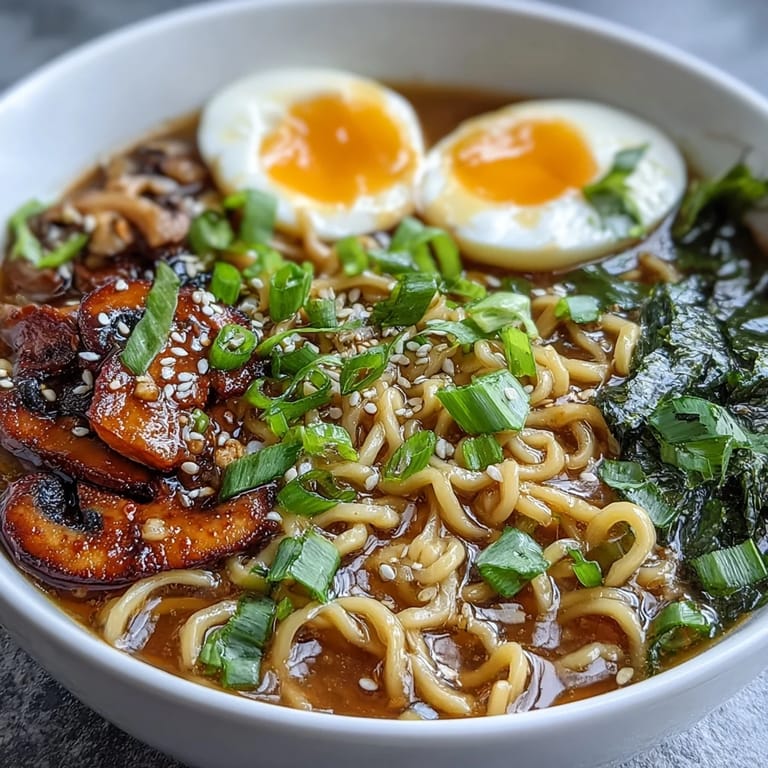
- Divide noodles into bowls, ladle on the hot broth, and arrange mushrooms, spinach, corn, halved eggs, scallions, nori and sesame seeds right on top.
- Serve and enjoy:
- Hand out chopsticks, encourage lots of slurping, and serve immediately for the best texture.
 Pin it
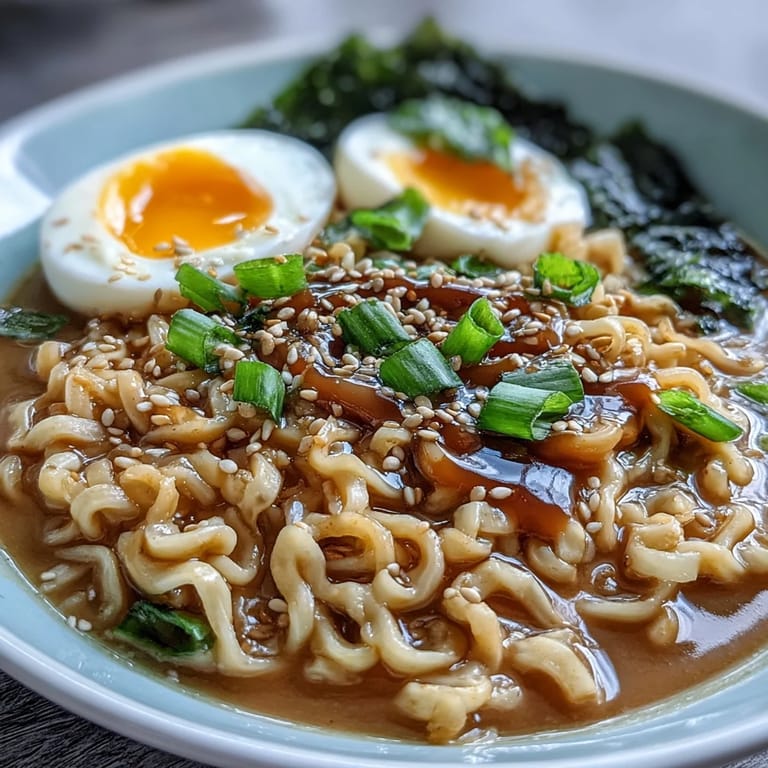
 Once, when I served this at a small birthday dinner, watching everyone assemble their own bowls—with extra mushrooms here and extra nori there—made the meal so much more than a recipe. All those small choices felt like little acts of love shared in every bowl.
Broth Troubleshooting (and Fixes)
The broth is truly the soul of this ramen, and I’ve learned more than a few tricks to rescue it when things go sideways. If it's too salty, a splash of hot water works wonders, and if you want a creamier texture, just whisk in a bit of extra miso at the end. A dash of mirin can mellow sharp edges, and sometimes a squeeze of lemon quietly brightens the whole bowl.
Seasonal Variations
Ramen is endlessly adaptable to the seasons—swap in roasted sweet potato in autumn, quick-pickle some radish in the spring, or load up on spinach and fresh corn during summer’s peak. I especially love tossing in leftover roasted vegetables or spicy kimchi for an extra punch. Never be afraid to experiment (some of my best bowls started as fridge cleanouts) and let the market inspire your next bowl.
Assembly Tips for Restaurant-Style Bowls
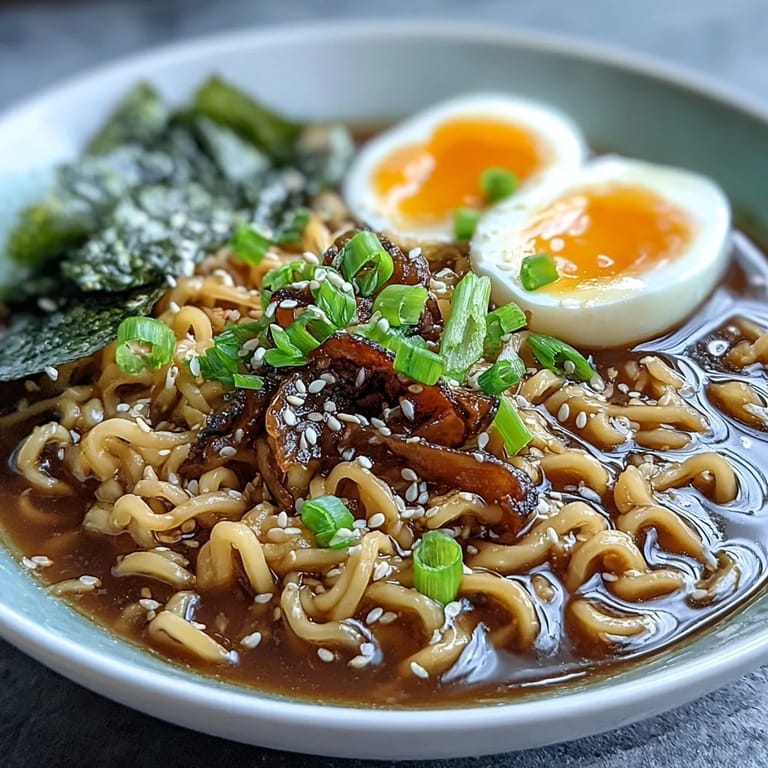
Building each bowl with care is almost meditative—layer the noodles loosely so the broth warms every strand and arrange toppings in colorful sections rather than tossing them all in at once for a truly inviting presentation. Try to cut toppings into bites that fit easily on a spoon: it looks neater and feels more satisfying. Let everyone customize with extra chili paste or a handful of greens at the table for a personal touch.
- Set all toppings out in small bowls for easy access.
- Gently ladle, don’t dump, broth over noodles to keep them bouncy.
- Don’t wait too long to serve—the noodles soak up broth lightning fast.
 Pin it
 May your kitchen smell of ginger and garlic, and may your ramen night bring comfort, conversation, and happy slurping. Happy cooking!
Frequently Asked Questions
- → How do I get a creamy miso broth without lumps?
Whisk the miso with a ladleful of hot broth until smooth before stirring it back into the pot; avoid boiling once miso is added to preserve flavor and texture.
- → What's the best way to cook soft-boiled eggs for this bowl?
Gently lower eggs into simmering water and cook for 7 minutes for jammy yolks, then plunge into cold water to stop cooking and make peeling easier.
- → Can I make this with a vegan approach?
Yes — omit the eggs, use plant-based noodles and vegetable broth, and add firm tofu, bean sprouts or extra mushrooms for protein and texture.
- → Which mushrooms work best?
Shiitake add deep umami, while cremini offer a milder earthiness; both sauté well and soak up the broth’s flavor.
- → How do I prevent noodles from getting soggy?
Cook noodles to package al dente, drain and keep them separate until serving; ladle hot broth over the noodles just before eating to avoid overcooking.
- → How should leftovers be stored and reheated?
Store broth separately from noodles and toppings. Reheat broth gently on the stove and warm noodles briefly in hot water or the microwave before assembling to retain texture.