 Save
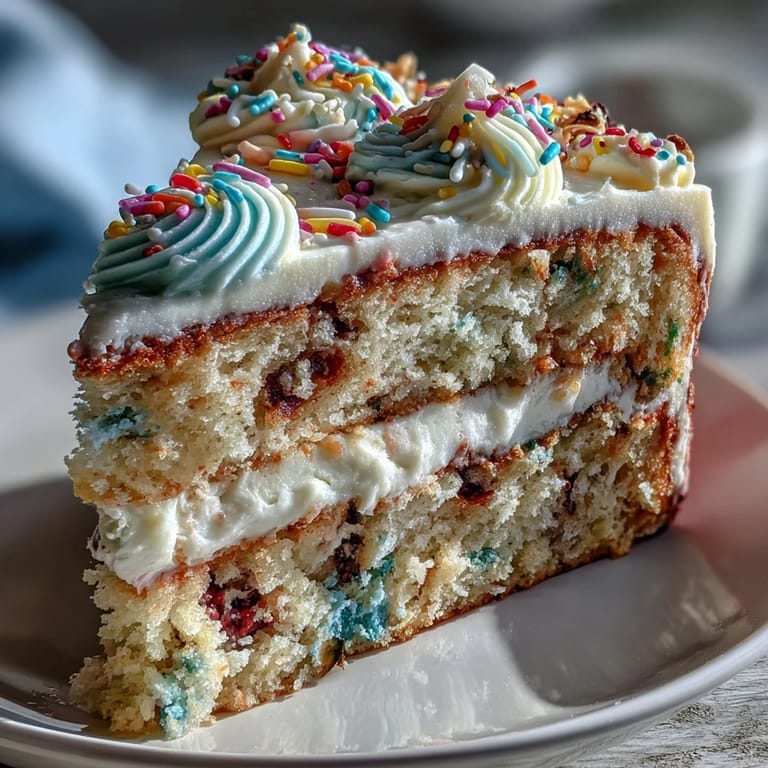
Save My neighbor knocked on the door one April morning asking if I could bake something for her daughter's garden party, and I found myself standing in the baking aisle staring at rainbow sprinkles like they held the secret to spring itself. I'd never made a Funfetti cake before—honestly, I'd always dismissed it as too simple, too nostalgic—but something about her enthusiasm made me grab a box and go home. What emerged from my oven that afternoon was pure joy: a tender vanilla cake speckled with color, layers of pastel buttercream swirled like a sunset, and the unmistakable taste of celebration.
That garden party cake became the story everyone told for weeks—my friend's daughter and her classmates actually cheered when I brought it out, and watching them pick at those pastel swirls with genuine delight reminded me that sometimes the most meaningful desserts are the ones that make people smile before they even taste them.
Ingredients
- All-purpose flour (2 1/2 cups): Make sure it's fresh and measured by spooning and leveling, not scooping straight from the bag—this prevents a dense crumb.
- Baking powder and baking soda (2 1/2 tsp and 1/2 tsp): These two work together to give you that tender, springy texture; don't skip the sour cream or milk mixture that activates them.
- Unsalted butter and sugar (1 cup and 1 1/2 cups): Room temperature is non-negotiable here—cold butter won't cream properly, and you'll lose that fluffy crumb.
- Eggs (4 large): Room temperature eggs incorporate more evenly, creating a silkier batter.
- Whole milk and sour cream (1 cup and 1/2 cup): The sour cream adds subtle tang and moisture; this combination creates the most tender cake.
- Rainbow sprinkles (2/3 cup): Buy jimmies, not nonpareils—they're sturdier and less likely to bleed color into the batter.
- Powdered sugar (5 cups, sifted): Sifting removes lumps and makes the buttercream silky smooth.
- Food coloring gels: Gels are more concentrated than liquids, so they won't thin out your frosting.
Tired of Takeout? 🥡
Get 10 meals you can make faster than delivery arrives. Seriously.
One email. No spam. Unsubscribe anytime.
Instructions
- Set the stage:
- Preheat your oven to 350°F and prepare two 9-inch round pans with grease and parchment paper—the parchment ensures your layers release without sticking.
- Blend the dry ingredients:
- Whisk flour, baking powder, baking soda, and salt together in a medium bowl. This distributes the leaveners evenly, preventing dense pockets.
- Cream butter and sugar:
- Beat them together for about 3 minutes until the mixture looks pale, fluffy, and almost cloud-like. This incorporates air, which is essential for a tender crumb.
- Incorporate eggs and vanilla:
- Add eggs one at a time, beating well after each addition so they emulsify into the butter mixture. Pour in vanilla and mix until smooth.
- Combine wet ingredients:
- Whisk the milk and sour cream together in a separate bowl to blend them evenly.
- Alternate wet and dry:
- Add the flour mixture to the butter mixture in three parts, alternating with the milk mixture and starting and ending with flour. Mix just until combined—overmixing develops gluten and toughens the cake.
- Fold in the sprinkles:
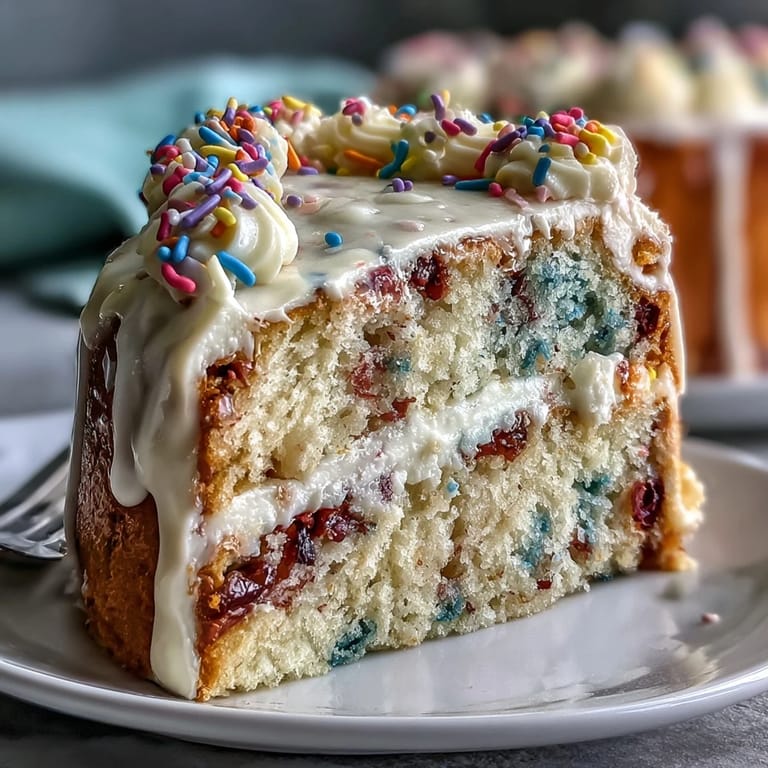
- Gently fold the rainbow sprinkles in with a spatula so you don't deflate the batter. This moment is oddly satisfying, watching those pops of color distribute throughout.
- Fill and bake:
- Divide batter evenly between pans, smooth the tops, and bake for 28–32 minutes until a toothpick inserted in the center comes out clean. The kitchen will smell like pure vanilla and spring.
- Cool properly:
- Let the cakes cool in their pans for 10 minutes, then turn them out onto a wire rack to cool completely. This prevents condensation from making them soggy.
- Make the buttercream base:
- Beat room-temperature butter until smooth and creamy, about 2 minutes. Gradually add sifted powdered sugar on low speed until it's incorporated.
- Achieve fluffy frosting:
- Add milk, vanilla, and salt, then beat on high for 2–3 minutes until the buttercream is light and airy. It should look almost mousse-like.
- Create pastel colors:
- Divide buttercream into four bowls and tint each with a different pastel gel—go easy on the coloring at first, you can always add more. Pastel colors come from using just a touch of gel in plenty of white frosting.
- Decorate with flair:
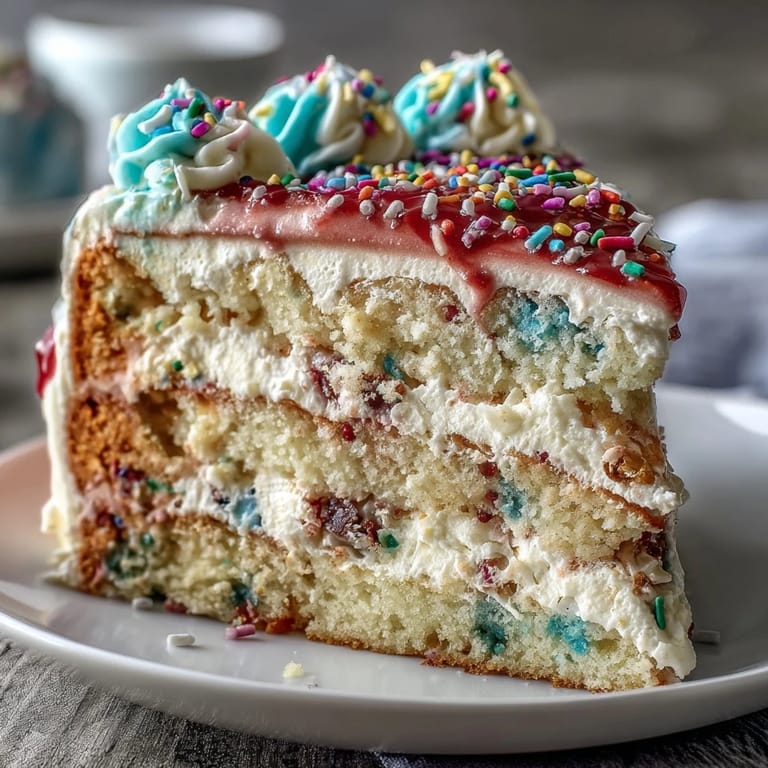
- Spread, dollop, or pipe the colored buttercream onto your cooled cake layers. Swirl the colors together with a knife or offset spatula for that marbled pastel effect that makes people stop mid-conversation.
 Pin it
 The real magic of this cake isn't in any single ingredient—it's in the moment you pull it from the oven and smell that buttery vanilla, and then later when you watch someone's face light up at their first bite. That's when you realize you've made something that tastes like good things are happening.
Why Room Temperature Really Matters
I learned this the hard way during my second attempt at this cake, when I grabbed eggs straight from the fridge because I was in a hurry. The batter broke, curdled slightly, and baked up with an oddly textured crumb—dense in some spots, weirdly cakey in others. Cold ingredients don't emulsify properly, and butter won't cream fully if it's too firm. Room temperature ingredients blend together smoothly, creating that cloud-like batter that bakes into something tender. Set your ingredients on the counter about an hour before baking and everything changes.
The Sprinkle Strategy That Changes Everything
Not all sprinkles are created equal, and I discovered this when a well-meaning friend suggested I save money by using the cheapest option. Those budget sprinkles bled red and blue dye throughout my batter, turning the whole cake a muddy purple-gray that looked frankly unappetizing. Jimmies—the longer, thicker sprinkles—hold their color better because they're denser and don't dissolve as easily into the wet batter. They're worth the few extra dollars, and they're honestly easier to find than you'd think at any grocery store. If you're making this for someone special, this detail matters.
Buttercream Blending and Beyond
The buttercream is where you get to play and make this cake entirely your own. Start with the base recipe, but don't be shy about experimenting once you understand how it works. Some people pipe buttercream rosettes across the top, others create a smooth, almost fondant-like finish by running a warm spatula over it. I've even seen people dust the whole thing with edible glitter for extra sparkle, or add a thin crumb coat first to catch any stray sprinkles from the cake crumbs.
- Gel food coloring is your friend—it's concentrated, won't thin out your frosting like liquid coloring does, and creates deeper, more sophisticated pastels.
- If your buttercream splits or looks curdled when you add the milk, don't panic—keep beating on high speed for another minute and it will come back together.
- Make the buttercream no more than a few hours before you decorate so it stays fluffy and spreadable.
 Pin it
 This cake reminds us that simple ingredients, handled with care and a little creativity, can become something that people remember. Bake it for someone who needs brightness in their day.
Frequently Asked Questions
- → What makes the sprinkles ideal for this cake?
Using jimmies-style sprinkles prevents color bleeding during baking, ensuring vibrant, evenly dispersed flecks throughout the cake.
- → Can sour cream be substituted?
Yes, Greek yogurt can replace sour cream to maintain moistness and add slight tang without altering texture significantly.
- → How is the pastel buttercream achieved?
Buttercream is divided into portions and tinted with pastel food coloring gels in soft pink, blue, yellow, and purple, then swirled together for a marbled finish.
- → What is the best way to bake the cake layers evenly?
Grease and line pans with parchment, then smooth batter tops before baking at 350°F until a toothpick comes out clean for consistent layers.
- → How should leftovers be stored?
Keep the cake refrigerated in an airtight container to preserve freshness and prevent the buttercream from drying out.