 Save
Save The first time I crafted a floral drip cake, my kitchen was alive with late afternoon sunlight and the sweet scent of strawberries wafting from the stand mixer. I remember the hum of excitement that comes with knowing you’re about to transform ordinary ingredients into something dazzling, layered, and celebratory. There was a moment when I nearly spilled the white chocolate as I tried to pour it, and it reminded me just how hands-on cake decorating can be. Swapping pans and scraping bowls, each step felt both delicate and surprisingly joyful. Spring always seems to bring out my need for color—and this cake is pure sunshine and blooms on a plate.
I baked this cake for a small spring gathering, and soon enough, everyone was drawn to the kitchen by the scent of warm vanilla and melting chocolate. When I set the finished cake on the table, friends pulled out their phones for photos before anyone even sliced it. We joked about cake crimes (cutting unevenly!) and decided the edible flowers looked almost too pretty to eat. Everyone asked for seconds, and strawberry crumbs dusted the tablecloth by the end. It turned the afternoon into a real celebration.
Ingredients
- All-purpose flour: Sifting before measuring keeps the sponge light, and I always double-check for lumps.
- Baking powder: I learned that leveling the spoon each time prevents heavy cake layers.
- Salt: Even just half a teaspoon sharpens the sweetness and makes flavors pop.
- Unsalted butter: Room temperature butter creams better, and softening it is essential for a fine crumb.
- Granulated sugar: It’s not just for sweetness—beating it well with butter lends airiness to your cake.
- Eggs: I crack them into a small bowl first to avoid shell mishaps, then add at room temp for easier mixing.
- Pure vanilla extract: Don’t skimp; this gives the sponge its signature warmth and aroma.
- Whole milk: Room temperature milk helps the batter emulsify, resulting in a smoother bake.
- Powdered sugar (for frosting): Sifting is key—otherwise, you might find unpleasant lumps in your buttercream.
- Fresh strawberries: Pureeing them gives the frosting a rosy color and genuine berry flavor; I sometimes strain for extra smoothness.
- White chocolate chips: Melting gently avoids scorching; chopped high-quality bars melt best.
- Heavy cream: Matching it to room temp helps the white chocolate blend flawlessly for the drip.
- Edible flowers: Pansies and violets are delicate and taste lightly herbal; check they’re unsprayed and safe.
- Fresh strawberries, halved: They add a playful, juicy finish and nestle between flowers (optional, but never wrong).
Tired of Takeout? 🥡
Get 10 meals you can make faster than delivery arrives. Seriously.
One email. No spam. Unsubscribe anytime.
Instructions
- Get your pans ready:
- Turn on the oven to 350°F and coat your three cake pans with butter, lining the bottoms with parchment. It’s the step that sets the stage for easy layer release later.
- Blend dry ingredients:
- In a mixing bowl, whisk together the flour, baking powder, and salt until the powder becomes almost invisible. The bowl should smell softly sweet and be whisper-light.
- Beat butter and sugar:
- Cream the butter and sugar on medium speed for 3–4 minutes; it should turn pale and fluffy. Add your eggs one at a time, scraping the sides as you go, and stir in the vanilla—listen for the whirr of the mixer blending it all.
- Combine and add milk:
- Alternately add flour mixture and milk to the butter bowl, starting and ending with flour. Stop as soon as everything looks creamy and unified; don’t worry if it’s a little thick.
- Bake the cake layers:
- Divide the batter evenly, smoothing tops with an offset spatula. Bake for 25–30 minutes, until a toothpick comes out clean and the kitchen smells like vanilla clouds.
- Cool and prepare:
- Let cakes cool in their pans for 10 minutes before you turn them out onto wire racks. The sponges will feel springy and warm in your hands.
- Mix strawberry frosting:
- Beat room temperature butter until creamy, then add sifted powdered sugar bit by bit. Mix in strawberry puree, vanilla, and salt, beating until fluffy and pink; chill if it gets too soft.
- Make the white chocolate drip:
- Combine chocolate and cream in a heatproof bowl and microwave in 20-second bursts, stirring each time. Let the mixture cool to room temperature; with patience, it’ll become glossy and smooth.
- Layer and frost:
- Arrange one cake round on your plate and spread a layer of strawberry frosting. Stack, repeat, and frost the sides, chilling for 20 minutes to help set the buttercream.
- Drip and decorate:
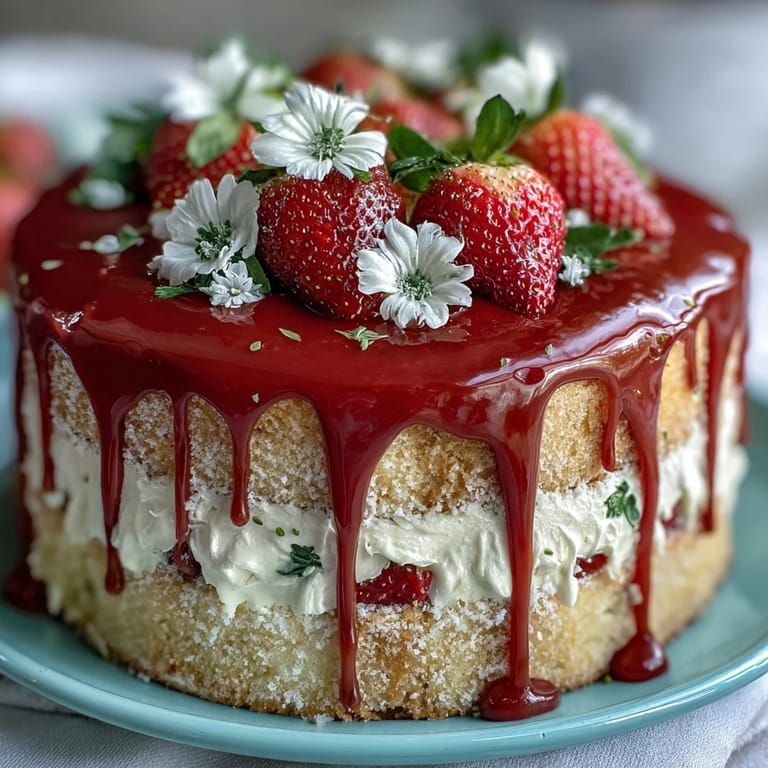
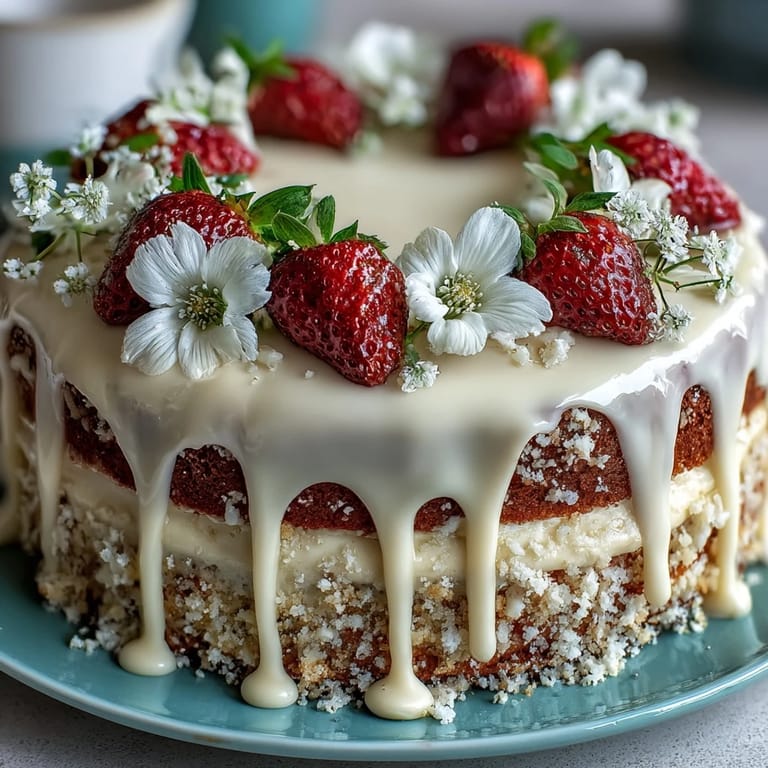
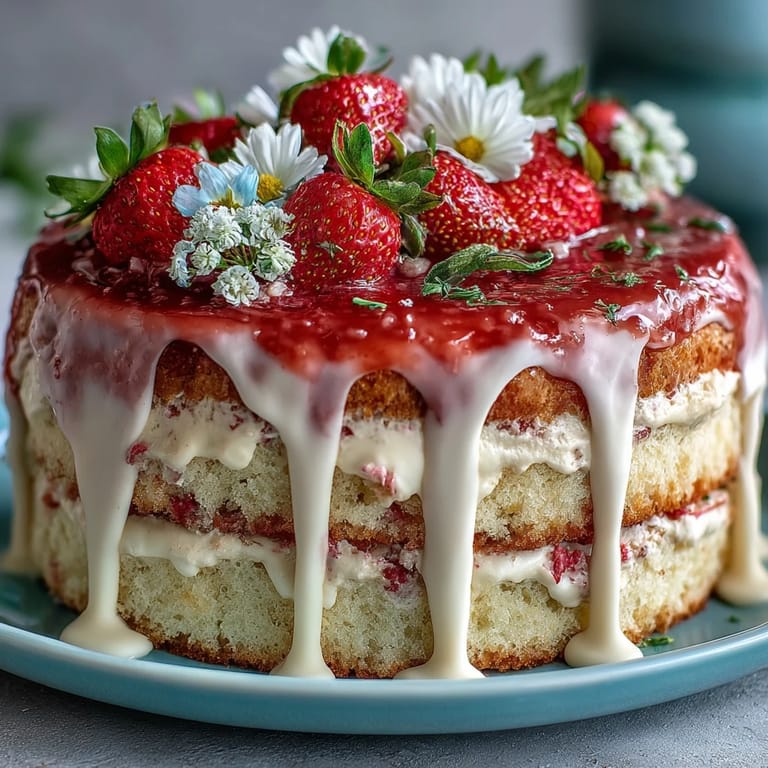
- Pour cooled white chocolate around the edge and let it drip naturally; gently smooth the top. Adorn with flowers and strawberries—let your eye guide the placement for a celebratory finish.
 Pin it
 The cake became more than dessert when my friend’s daughter insisted on naming each flower before picking one to eat—her delight was contagious. Everyone lingered at the table much longer than usual, savoring both bites and spring sunlight.
The Magic of Edible Flowers
Working with edible flowers always feels a bit like arranging a bouquet—choose blooms with bright faces and avoid anything wilted. Pansies and violets add color and a gentle flavor, but I’ve learned to check their stems for moisture so they don’t dampen the frosting. Rinsing gently preserves their freshness without bruising. The flowers transform the cake into a centerpiece, and guests often ask which petals are edible.
Getting the Strawberry Frosting Just Right
Whenever I make strawberry buttercream, I taste as I go to ensure it’s sweet enough but still has tang from fresh berries. Reducing the puree over low heat makes the flavor more intense, though sometimes I skip this and embrace the gentler taste. If the frosting ever feels thin, popping it in the fridge for ten minutes works wonders. There’s a fine balance—too thick, and spreading turns tricky; too thin, and it slips off the cake.
Making Your Drip Cake Look Professional
The white chocolate drip is a showstopper, but I learned it takes a steady hand and good timing. Pouring the chocolate when it’s cool ensures each drip is controlled and elegant; I usually test a spoonful before committing to the whole cake. The offset spatula is key for smoothing, and chilling beforehand gives the drip a clean finish.
- Arrange your workspace with parchment underneath the cake for easy clean-up.
- If you’re unsure, practice the drip on the side of a bowl first.
- Don’t forget to snap a photo—it’ll look like a masterpiece.
 Pin it
 Even on gray spring days, this cake is bright enough to lift everyone’s mood. Sharing it feels like bringing a little floral joy to the table.
Frequently Asked Questions
- → How do I ensure moist vanilla sponge?
Use room-temperature eggs and butter, avoid over-mixing, and don't overbake to keep the sponge tender and moist.
- → Can I use frozen strawberries for the frosting?
Yes, thaw and puree frozen strawberries, but drain excess liquid for a thick, stable buttercream texture.
- → What should I look for in edible flowers?
Select pesticide-free flowers that are labeled as edible, such as pansies, violets, and marigolds, and rinse gently before use.
- → How do I achieve a smooth white chocolate drip?
Melt white chocolate with cream and cool to room temperature before pouring, ensuring smooth consistency and beautiful drips.
- → Are there alternative decorations for this cake?
Yes, use fresh fruit slices, chocolate shavings, or colorful sprinkles as additional decor to complement the floral theme.
- → Is this dessert suitable for vegetarians?
Yes, all ingredients are vegetarian-friendly; just verify edible flowers and check white chocolate for potential allergen warnings.