 Save
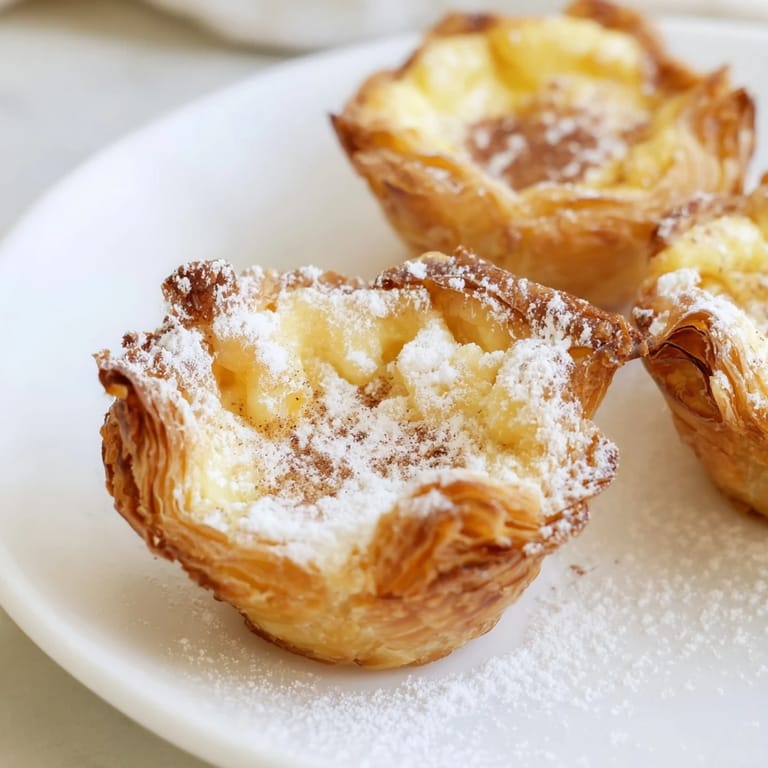
Save The first time I bit into a Portuguese egg tart at a tiny bakery in Lisbon, I was struck by how something so small could be so impossibly good—crispy phyllo giving way to silky, cinnamon-kissed custard that practically melted on my tongue. Years later, I decided to recreate that moment in my own kitchen, and what began as an ambitious afternoon became my favorite way to impress guests without much fuss. These tarts are deceptively simple, yet they feel special enough to serve at a dinner party or hoard for yourself on a quiet Sunday morning.
I still remember my neighbor stopping by unannounced one afternoon while these were cooling on the counter—the smell of butter and cinnamon had wafted right through her kitchen window. She left with three tarts and a list of questions, and now she makes them every time her grandchildren visit. There's something about these little bundles that turns a casual dessert into a gift people actually want to receive.
Ingredients
- Phyllo pastry sheets: Twelve sheets create enough layers for structure without becoming tough; the butter between each one is what gives you that shattered, golden-brown exterior.
- Unsalted butter, melted: Phyllo is delicate and forgiving only if you brush every sheet generously—stingy butter means brittle, cracking cups.
- Whole milk: The foundation of your custard; don't skip it for cream alone or the filling becomes heavy.
- Cornstarch: This is your secret to a custard that's silky but holds its shape, not runny or gluey.
- Heavy cream: Adds richness and prevents the custard from tasting overly eggy or thin.
- Granulated sugar: Sweetens the filling without grittiness; dissolve it completely into the milk before adding eggs.
- Egg yolks: Four yolks give you that luxurious yellow color and deep flavor; whole eggs would make the custard less velvety.
- Pure vanilla extract: A teaspoon is enough to round out the spices without overpowering them.
- Ground cinnamon: Half a teaspoon goes into the custard itself, with another teaspoon reserved for the final dusting—layered cinnamon flavor is always better than a single hit.
- Powdered sugar: The final flourish that makes them look bakery-worthy.
Tired of Takeout? 🥡
Get 10 meals you can make faster than delivery arrives. Seriously.
One email. No spam. Unsubscribe anytime.
Instructions
- Preheat and prime:
- Heat your oven to 200°C (400°F) while you gather your tools—this is not a step to rush. A hot oven is the only way to get phyllo truly crispy and golden.
- Butter and layer the phyllo:
- Lay one sheet flat, brush it lightly but completely with melted butter, then lay another sheet on top and repeat until you have three buttery layers stacked together. The butter is what makes phyllo shatter when you bite it rather than chewy—don't hold back.
- Cut and press:
- Cut your buttery stack into squares large enough to drape over the cups of a muffin tin, then gently press each square down into its cup, letting the edges rise slightly above the rim. These rough, textured edges are part of the charm.
- Pre-bake the cups:
- Bake for 8 to 10 minutes until they're light golden and just beginning to brown at the peaks. They'll crisp up even more as they cool, so don't overbake them now.
- Make the custard:
- In a medium saucepan, whisk milk and cornstarch together until the cornstarch dissolves completely—lumps now become gritty texture later. Whisk in cream, sugar, egg yolks, vanilla, cinnamon, and salt until everything is smooth and pale.
- Cook until thick:
- Place the saucepan over medium heat and whisk constantly—this is important, as a moment's inattention can result in scrambled egg bits instead of silky custard. After about 5 to 7 minutes, the mixture will visibly thicken and coat the back of a spoon. Remove immediately from heat.
- Fill the cups:
- Divide the warm custard evenly among the baked phyllo cups, filling each one just shy of the rim. The warmth of the custard and the residual heat from the cups will help everything meld together.
- Bake until set:
- Return the filled tarts to the oven for 8 to 10 minutes, until the custard is just set—it should jiggle very slightly in the center when you give the pan a gentle nudge, not slosh around like liquid.
- Finish and cool:
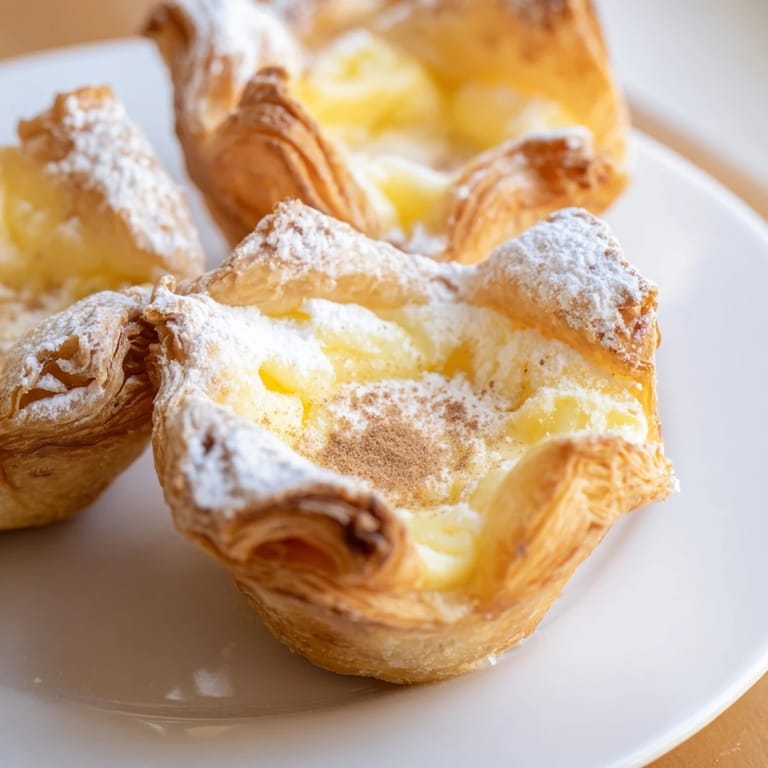
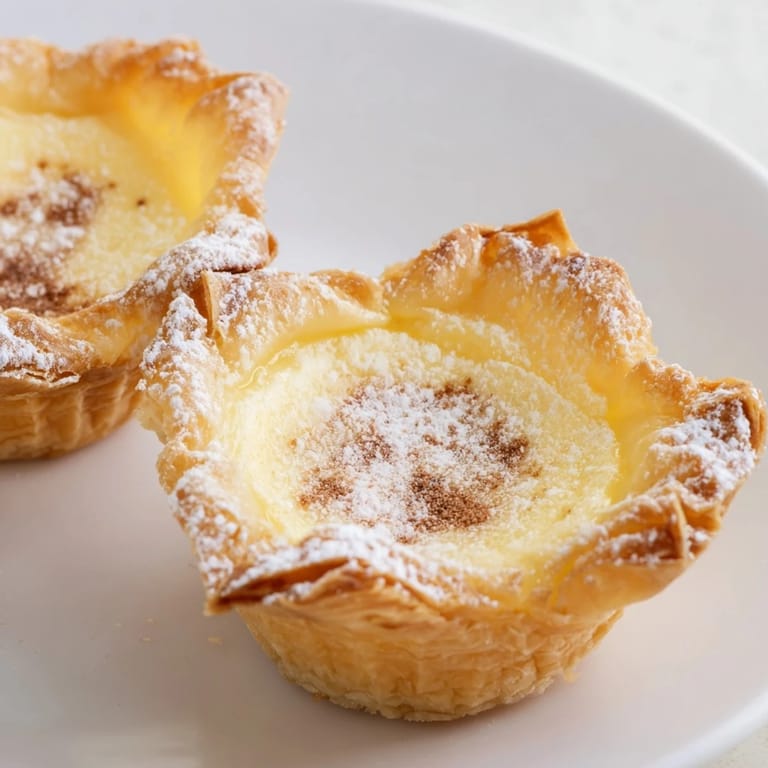
- Remove from the oven and let them cool for a few minutes so you don't burn your mouth, then dust generously with cinnamon and powdered sugar. Serve warm or at room temperature.
 Pin it
 One evening I made these for a friend who'd been having a rough week, and watching her face light up as she took that first bite reminded me why I love to cook. Food doesn't need to be complicated to be meaningful—sometimes a simple, delicious tart says more than words ever could.
The Soul of Phyllo
Phyllo pastry feels intimidating because it looks so delicate, but it's actually forgiving once you understand what it needs: butter and gentle hands. The first time I worked with it, I was terrified of tearing the sheets, but I quickly learned that small tears don't matter once they're layered and baked. Phyllo's thin, papery texture is what gives these tarts their characteristic shatter—that sound when you bite into one is half the pleasure. If you find yourself with broken or imperfect sheets, simply layer them as best you can and butter generously; imperfection bakes into character.
Custard as Comfort
A proper custard is one of the most rewarding things to master in the kitchen because it teaches you to trust your instincts and your senses. The moment you see it begin to coat the back of a spoon, you know you've arrived at the right point—no timer, no guessing. I've learned that patience here pays off; rushing the heat or skipping the constant whisking is how batches go wrong. The cornstarch is your ally, preventing the eggs from scrambling while keeping the texture silky. Once you nail custard for these tarts, you'll find yourself making it for cream pies, puddings, and breakfast bowls.
Serving, Storage, and Celebrations
These tarts are best served slightly warm, when the phyllo is crispest and the custard is still soft enough to feel indulgent. A cup of strong espresso or a glass of chilled white port elevates them into something almost luxurious, turning a simple dessert into a moment. If you've made them ahead, leftovers keep beautifully in the refrigerator for a few days, though I rarely find any left to store.
- Reheat cold tarts in a 160°C (320°F) oven for about 5 minutes to restore the phyllo's crispness without drying out the custard.
- Add a pinch of lemon zest to the custard for brightness, or a tiny scrape of nutmeg if you want to experiment.
- Double the recipe without hesitation—these freeze beautifully and taste just as good when thawed and warmed.
 Pin it
 There's something deeply satisfying about setting a warm Portuguese egg tart in front of someone and watching that moment of anticipation before they bite in. It's simple, it's elegant, and it tastes like you've been practicing in a Lisbon kitchen for years.
Frequently Asked Questions
- → What type of pastry is used for the shells?
Flaky phyllo pastry sheets are brushed with melted butter, stacked, and molded into cups for a crisp, delicate shell.
- → How is the custard thickened?
Milk and cornstarch are whisked together and cooked with egg yolks, cream, sugar, vanilla, and cinnamon until the custard thickens.
- → Can I make these tarts ahead of time?
Yes, you can bake the tarts in advance and store them chilled; reheat briefly in the oven to restore crispness.
- → What is the best way to serve these tarts?
Serve slightly warm with a dusting of cinnamon and powdered sugar for optimal texture and flavor balance.
- → Are these suitable for vegetarians?
Yes, they include eggs and dairy but contain no meat products, making them suitable for a vegetarian diet.