 Save
Save There was something about the way my friend gasped when she walked into that dinner party that made me realize plating could be more than just feeding people—it could be a conversation. I'd been experimenting with color gradients in fruit for weeks, playing around on my kitchen counter while listening to music, when it hit me: what if I used a pomegranate as an actual anchor, a ruby heart everything else orbited around? The first time I pulled it off, the whole table went quiet before anyone even tasted anything. That's when I knew I'd stumbled onto something special.
My neighbor brought her new partner over one summer evening, and I threw this together at the last minute because my fridge was overflowing with berry season abundance. Watching them both lean in, phones out, trying to capture the colors before eating—that's when I realized this platter does something rare: it makes people slow down. Nobody scrolls through dinner when there's this much visual magic happening on the table.
Ingredients
- 1 large pomegranate, halved: This is your anchor, the jeweled centerpiece that everything else builds around—choose one with thick, glossy skin and a deep ruby color that catches the light.
- 1 cup dark cherries, pitted: They're small enough to nestle between other fruits and their deep burgundy is where your color story really begins.
- 1 cup red grapes: These stay firm and glossy even after sitting out, making them perfect for structure and visual continuity.
- 1 cup strawberries, hulled: Slice some in half to show off that gorgeous pink interior and create visual variety.
- 1 cup raspberries: Handle these gently—they're delicate but their dusty pink tone is essential for the gradient.
- 1 cup watermelon, cubed: Cut into half-inch cubes so they fit neatly between other elements without overwhelming the arrangement.
- 1 cup pink grapefruit segments: The slight transparency and pale rosy hue bridge the gap between hot pink and the white fruits beautifully.
- 1 cup dragon fruit, cubed: This pale speckled pink is your secret weapon for the outer ring—it feels almost ethereal next to the deeper reds.
- 1 cup apple slices (pink or blush varieties): Toss these lightly with lemon juice the moment you slice them to keep them from browning and looking tired.
- 1 cup pear slices: Same treatment as the apples—a quick lemon bath keeps them looking fresh and adds a subtle brightness to the platter.
- Fresh mint leaves: Scatter a few for aromatic hits and to add unexpected green that makes all those pinks and reds pop even harder.
- Edible rose petals (optional): If you can find them, a few scattered petals elevate this from impressive to unforgettable.
Tired of Takeout? 🥡
Get 10 meals you can make faster than delivery arrives. Seriously.
One email. No spam. Unsubscribe anytime.
Instructions
- Start with your centerpiece:
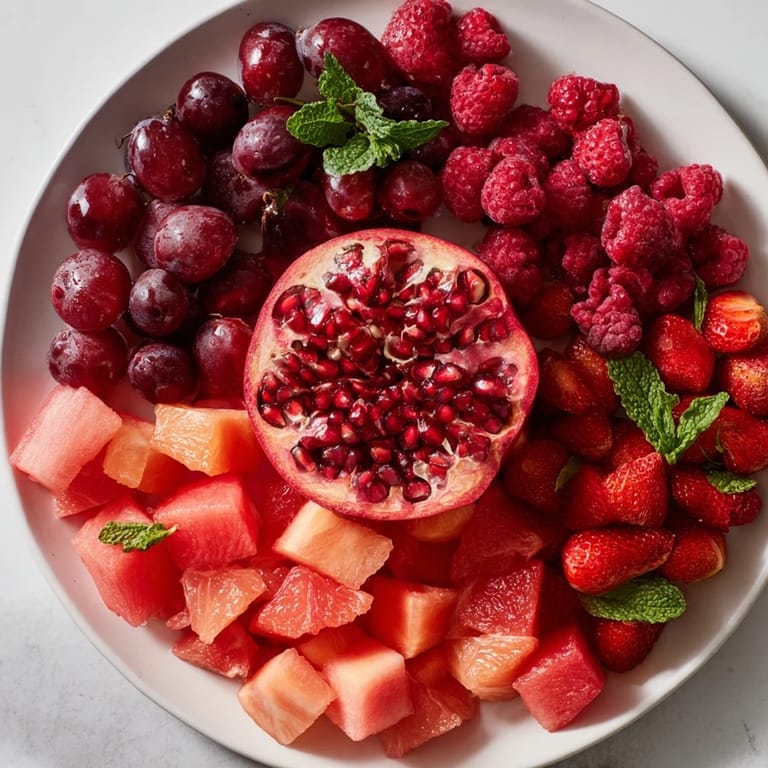
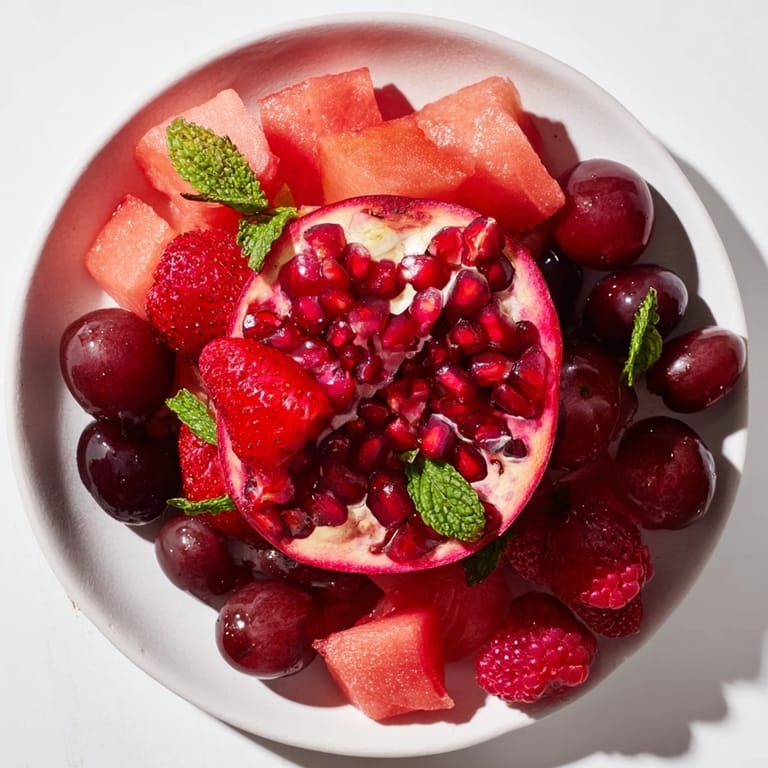
- Place that pomegranate halves cut-side up dead center on your platter, positioning them so the ruby seeds catch light. This isn't just decoration—it's the emotional anchor everything radiates from.
- Build your first color ring:
- Arrange your deep red fruits (cherries, red grapes, halved strawberries) in a loose crescent immediately around the pomegranate. Let them overlap slightly and nestle into each other so there's no visible platter underneath.
- Layer in the pink transition:
- Move outward and add your medium pink fruits (raspberries, watermelon cubes, grapefruit segments) so they sit adjacent to the reds, creating a seamless shift in tone. This is where the color magic really happens.
- Finish with your pale outer ring:
- Place your lightest fruits (dragon fruit, apple slices, pear slices) around the very edge so your eye naturally moves from deep jewel tones to almost-white in one beautiful gradient. Step back and look for any gaps that feel jarring.
- Add your finishing touches:
- Scatter mint leaves and rose petals across the arrangement in a way that feels organic, not planned. They should feel like happy accidents, not a calculated design.
- Serve with intention:
- Bring it straight to the table, or cover loosely with plastic wrap and refrigerate—it'll hold beautifully for several hours and actually gets more gorgeous as the fruits settle and compress slightly.
 Pin it
 I made this for my mom's birthday last spring, and she actually didn't want to cut into it for almost an hour—she just kept walking around the table, looking at it from different angles, telling stories about why each color meant something to her. That's when I realized this platter isn't just food; it's a moment people want to inhabit for a little longer.
Timing and Seasonality
The beauty of this platter is how it bends with the seasons. In summer, lean into cherries, berries, and bright watermelon when they're screaming with flavor. Come fall and winter, ripe pears, pomegranates, and pink grapefruit take the lead without anyone noticing the swap. I've learned to shop what's actually at its peak rather than hunting for specific fruits out of season—the color gradient still works, and everything tastes infinitely better.
The Art of Color Layering
This platter taught me that color isn't just visual—it's psychological. When you move someone's eye gradually from deep burgundy to almost white, their brain registers it as intentional design, even if you threw it together in twenty minutes. The pomegranate in the center gives your hand something to work around, so you're never staring at a blank platter wondering where to start. It's architecture disguised as fruit.
Pairing and Presentation
Serve this alongside something that lets the fruit breathe—sparkling water with a splash of something floral, a crisp rosé that echoes the color story, or just let it stand alone because honestly, it doesn't need company. The best part is watching people photograph it before they eat it, which sounds shallow until you realize you've actually made something worth remembering.
- Chill everything except the pomegranate for crispness and a subtle temperature play between cool fruit and the pomegranate's natural room temperature.
- If you're serving this at a party, assemble it no more than two hours before so everything stays firm and dewy-looking rather than weeping juice.
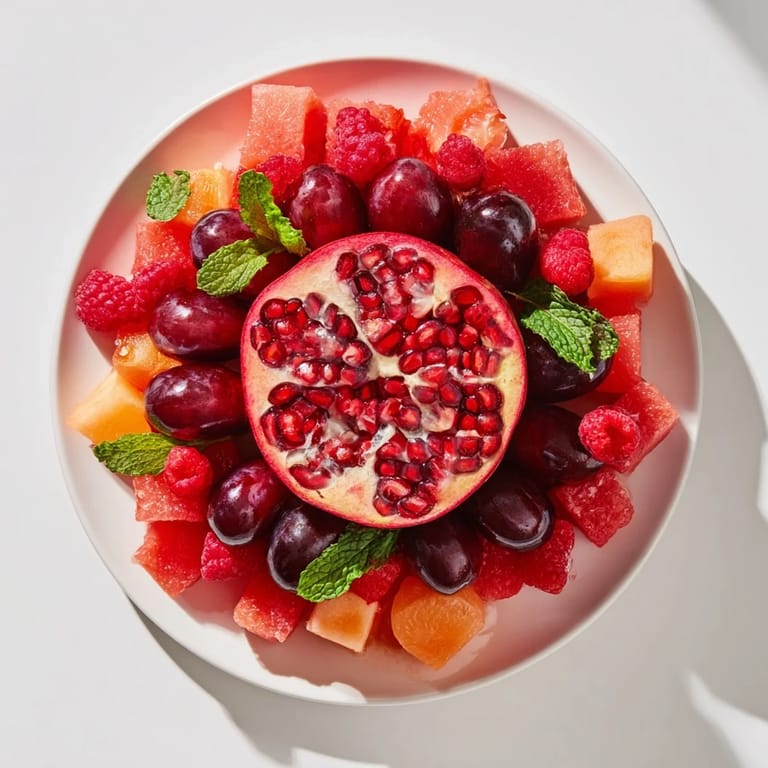
- Leave the halved pomegranates whole as your centerpiece rather than scattering individual seeds—it keeps the visual anchor intact and gives people something to cluster around.
 Pin it
 This recipe taught me that sometimes the most memorable meals aren't about complicated techniques or exotic ingredients—they're about slowing down enough to notice how gorgeous an ordinary pomegranate and some everyday fruit can be when you arrange them with intention. That moment still matters to me.
Frequently Asked Questions
- → How do I best arrange the fruits for a smooth color transition?
Layer fruits starting with the halved pomegranate in the center, then position deep red fruits close by. Next, place pink fruits adjacent, followed by pale pink and white fruits on the outer edge to create a gradual color flow.
- → Can I substitute any fruits based on availability?
Yes, fruits like red currants, pomegranate seeds, lychees, or peaches can replace similar colored fruits to maintain the visual gradient and freshness.
- → How can I prevent browning of the apple and pear slices?
Lightly drizzle lime juice over the apple and pear slices to reduce oxidation and keep them looking fresh.
- → Are there recommended garnishes to enhance the platter?
Fresh mint leaves and edible rose petals provide added color contrast and a subtle, refreshing aroma that complements the fruit display.
- → What tools are needed to prepare this platter?
A sharp paring knife, cutting board, large serving platter, and small bowls for organizing fruits before arranging are helpful for a smooth preparation.