 Save
Save My neighbor knocked on my door with a housewarming gift and a sheepish grin, admitting she'd already eaten half the store-bought appetizers she'd brought. That's when I realized a proper charcuterie board wasn't just about the food—it was an invitation to slow down, gather, and taste things intentionally. Now whenever I build one, I think about that moment and how a thoughtfully arranged platter somehow makes people linger longer and talk more freely.
Last spring, I made this for my partner's colleagues during a casual lunch meeting at our place, and I watched the conversation shift the moment people saw the board. Someone actually paused mid-sentence to admire the arrangement, and suddenly everyone was moving slower, choosing thoughtfully, asking about the cheeses. It became less about efficiency and more about connection, which is exactly what a good board does.
Ingredients
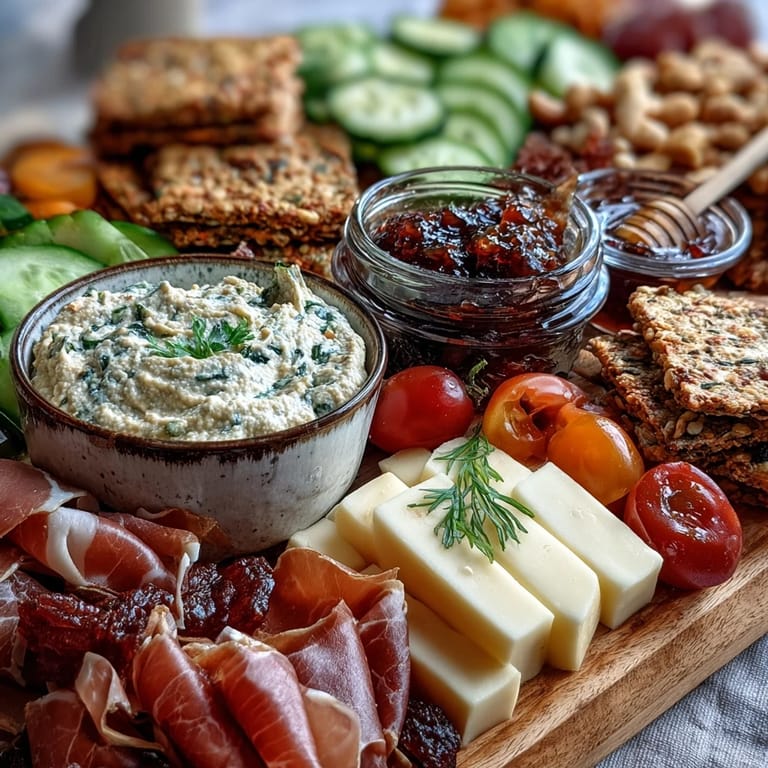
- Prosciutto, salami, and chorizo: Buy these sliced from a good deli counter where you can actually taste before committing—each brings wildly different energy to the board.
- Brie, aged cheddar, and goat cheese: The trio works because they hit different textures and intensities; brie is soft and buttery, cheddar is sharp and crumbly, goat cheese is tangy and creamy.
- Fresh baguette and assorted crackers: Slice the baguette just before serving so it stays crispy, and choose crackers that vary in flavor and texture rather than reaching for plain ones.
- Grapes, cherry tomatoes, cucumbers, and carrots: These vegetables aren't just filler—they clean the palate between bites of rich meats and cheeses, so choose the freshest ones you can find.
- Olives, Marcona almonds, dried apricots, and fig jam: These are your flavor pivots, the unexpected moments that make people go back for another combination they hadn't considered.
- Plain Greek yogurt: Use full-fat Greek yogurt for creaminess and tang; the protein base makes this dip feel substantial rather than like a thin condiment.
- Fresh dill, chives, and lemon juice: These brighten the yogurt dip with freshness that cuts through the richness of everything else on the board.
- Canned chickpeas, jarred roasted red pepper, tahini, and olive oil: Quality jarred peppers save time without sacrificing flavor, and tahini adds nutty depth that makes the hummus crave-worthy.
Tired of Takeout? 🥡
Get 10 meals you can make faster than delivery arrives. Seriously.
One email. No spam. Unsubscribe anytime.
Instructions
- Blend the herbed yogurt dip:
- Combine Greek yogurt with fresh dill, chives, minced garlic, and lemon juice in a bowl, tasting as you go and adjusting salt and pepper until it sings. Refrigerate this while you work on everything else so the flavors get a chance to meld.
- Pulse the roasted red pepper hummus:
- Add drained chickpeas, roasted red pepper, tahini, garlic, and olive oil to your food processor and blend until creamy, adding a splash of water if it's too thick. Transfer it to a serving bowl and let it settle while you prep the board.
- Arrange the foundation:
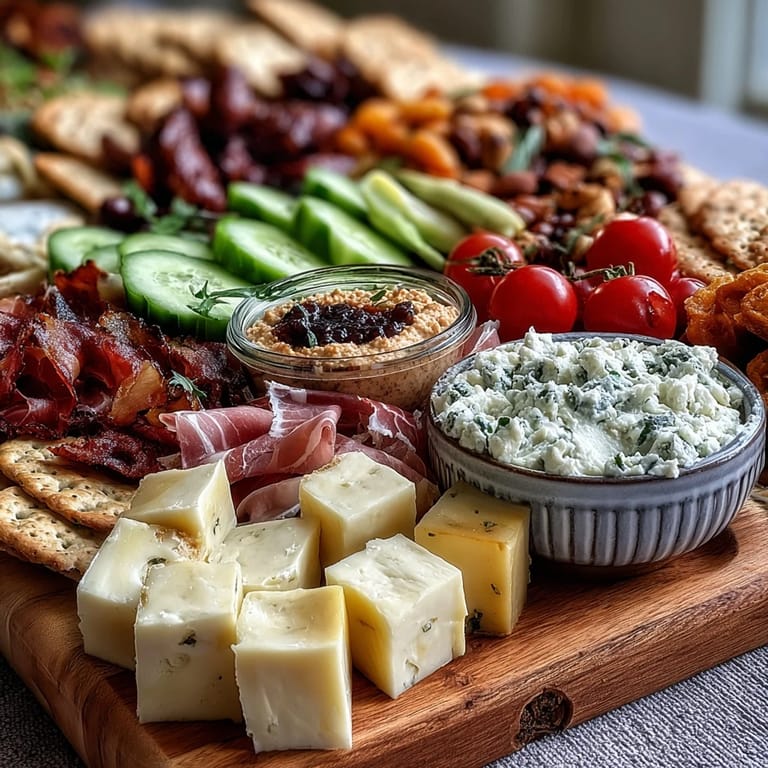
- Start with meats and cheeses spread across your board with a little breathing room between them, creating natural sections rather than cramming everything together. Think of it like a landscape where each element has its own space to exist.
- Build around the edges:
- Tuck baguette slices, crackers, and breadsticks into gaps and along the perimeter, angling them so they're easy to grab without toppling the whole structure. Leave room to breathe—overcrowding makes the board feel chaotic rather than inviting.
- Fill the middle with color and texture:
- Scatter grapes, cherry tomatoes, cucumber slices, and baby carrots across the open spaces, then add olives, almonds, and dried apricots where there are gaps. This is where you create visual interest and give people pathways to explore.
- Add the sweet and savory accents:
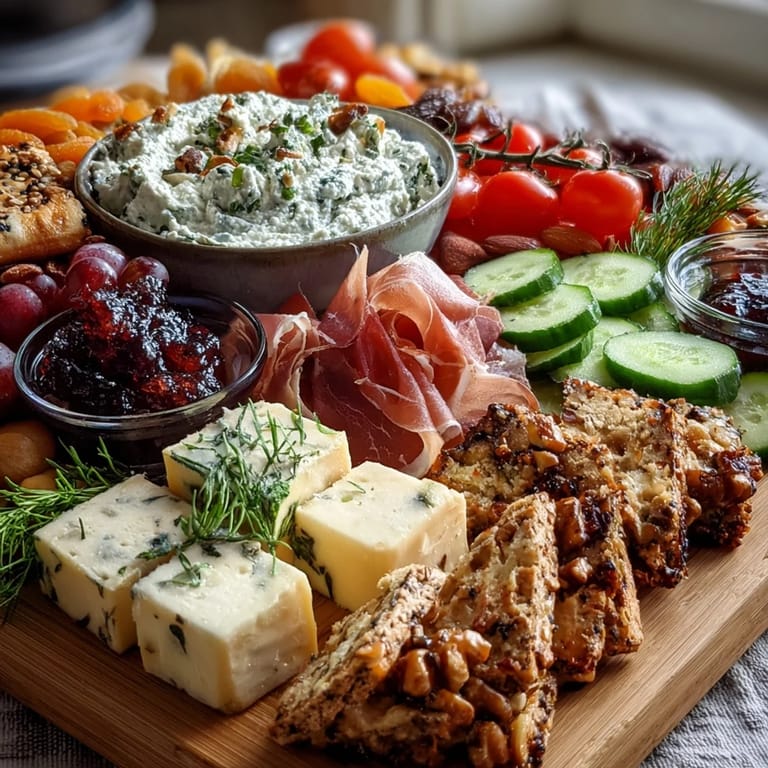
- Nestle small bowls of fig jam and honey onto the board, positioning them where they'll catch the light and draw people's eyes. These little moments of richness are what make someone try a combination they wouldn't have thought of.
- Crown it with dips:
- Position your yogurt dip and hummus bowls where they're accessible but don't dominate the board—ideally at opposite ends so people move around the whole thing. Garnish with a sprinkle of fresh herbs if you have them, then step back and let people discover.
 Pin it
 There's a particular joy in watching someone stand before a charcuterie board and actually deliberate over their next bite, holding a piece of cheddar in one hand and a fig in the other, considering the combinations like they're solving a delicious puzzle. That's the moment when you know it's not just food anymore—it's an experience.
The Art of Arrangement
I learned the hard way that cramming everything onto the board makes it harder for guests to navigate, and some items inevitably get forgotten in the back corners. The better approach is to think of your board as a map with distinct neighborhoods—a meat section, a cheese zone, a produce area—so people know where to look and can create their own flavor journeys. Odd numbers and asymmetry make it look more collected and less like you're selling something at a market stand.
Timing and Temperature
The board comes together fastest if you do your prep work in stages: make the dips the night before or morning of, slice your breads and harder vegetables a couple hours ahead, and leave the delicate herbs and soft cheeses for the final 30 minutes. Keep everything cool until the last moment, and if it's warm outside, work quickly or even chill your serving board beforehand so nothing starts melting before your guests arrive. I once forgot this step and watched the brie practically transform into sculpture while people were still arriving, which taught me that temperature control is just as important as taste.
Pairing and Serving
The beauty of a board like this is that it invites people to make their own discoveries rather than eating in a prescribed order, so don't be shy about setting it somewhere people can naturally gather and graze. A crisp white wine, sparkling water, or even a light beer brings out different notes in the cheeses and meats, and I always serve water too because the salty elements will have people thirsty.
- Set out small plates or napkins nearby so guests don't feel awkward holding food in their hands for long conversations.
- Have backup dips ready in the kitchen—people tend to cluster around the hummus and yogurt dip, so keep refills on hand.
- Remove the board from the table about 15 minutes after people stop eating, before it starts looking picked-over and sad.
 Pin it
 A charcuterie board is really just an excuse to gather people and slow down for a moment, and the food is almost secondary to that intention. When you build one with care, you're saying something wordless but powerful about hospitality.
Frequently Asked Questions
- → What meats are ideal for this board?
Prosciutto, salami, and chorizo slices provide a variety of flavors and textures that pair well with cheeses and fresh produce.
- → How can the dips be prepared ahead of time?
Both the herbed Greek yogurt dip and roasted red pepper hummus can be made several hours in advance and refrigerated to allow flavors to meld.
- → What are good bread options to include?
Consider sliced baguette, assorted crackers, and breadsticks to add crunch and variety around the meats and cheeses.
- → Can this board be adapted for dietary preferences?
Yes, substitute or add vegetarian items like marinated artichokes or gluten-free breads and crackers to accommodate different diets.
- → What fresh produce complements the selection best?
Seedless grapes, cherry tomatoes, cucumber slices, and baby carrots add freshness and balance to the rich elements.