 Save
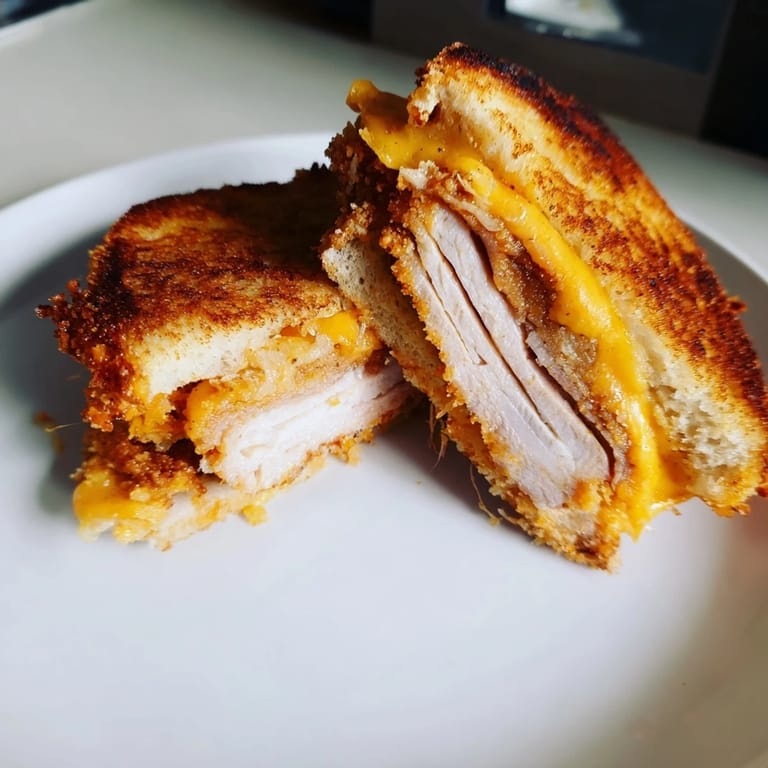
Save My sister called me on a Tuesday afternoon asking if I could make something that would surprise her kids—something messy and fun that felt like a celebration disguised as lunch. I had just pulled a package of pork chops from the freezer and caught sight of a block of sharp cheddar in the fridge, and suddenly this crispy panko pork chop grilled cheese arrived fully formed in my mind. The first batch came off the griddle with the cheese practically singing as it melted, and I knew I'd discovered something that would become a regular request.
I remember my nephew biting into his sandwich and the panko crust making this satisfying crunch right before the cheese oozed out the sides. He looked at me like I'd invented something revolutionary, and honestly, in that moment at his kitchen table, it felt like I had.
Ingredients
- Boneless pork chops (2, about 1 lb total): Choose ones about 3/4-inch thick so they cook through without drying out; thinner cuts get tough, thicker ones take too long.
- All-purpose flour (1/2 cup): This is your first line of defense, helping the egg adhere and creating a delicate base layer under the panko.
- Large eggs (2): Beaten into a slurry, these act as the glue that lets the panko crust cling and crisp up beautifully.
- Panko breadcrumbs (1 cup): The secret to that shatteringly crisp exterior; regular breadcrumbs get dense, but panko stays light and golden.
- Garlic powder and smoked paprika (1/2 teaspoon each): These season the crust itself, so every bite tastes intentional, not just breaded.
- Salt and black pepper (1/2 teaspoon salt, 1/4 teaspoon pepper): Season the pork directly first, then the breadcrumb mixture amplifies the flavor layering.
- Vegetable oil (for frying): Use enough to reach 1/4-inch up the sides of the skillet; this isn't a deep fry, but it's not a pan fry either—it's the sweet spot.
- Sturdy white or sourdough bread (8 slices): Thick-sliced bread won't collapse under the weight of cheese and hot pork; it holds everything together like it means it.
- Sharp cheddar cheese (8 slices): Sharp is crucial here because mild cheese gets lost between the bread and pork; you want it to announce itself.
- Unsalted butter, softened (4 tablespoons): Softened butter spreads without tearing the bread and toasts it to a deep golden brown.
- Mayonnaise (2 tablespoons, optional): A thin layer on the outside creates an extra-crispy crust through a chef's trick I learned years ago.
Tired of Takeout? 🥡
Get 10 meals you can make faster than delivery arrives. Seriously.
One email. No spam. Unsubscribe anytime.
Instructions
- Pat and season the pork:
- Dry your pork chops completely with paper towels—moisture is the enemy of browning. Season both sides generously with salt and pepper and let them sit while you set up your breading station.
- Build your breading assembly line:
- Three shallow bowls work best: flour in the first, beaten eggs in the second, and panko mixed with garlic powder and paprika in the third. Having everything ready means the breading happens quickly and sticks properly.
- Bread each chop with intention:
- Flour first (it catches everything), then egg bath, then panko—and here's the move that changes everything: press the breadcrumbs onto the surface with your fingers so they adhere instead of just sitting on top. You'll feel them grip.
- Heat the oil to the right temperature:
- Medium-high heat with about 1/4-inch of oil means the pork will fry in roughly 3–4 minutes per side without burning the outside while the inside stays raw. A tiny piece of panko dropped in should sizzle immediately.
- Fry until golden and cooked through:
- Watch for the color to shift to a deep golden brown, then flip once. The internal temperature should reach 145°F when you check with a thermometer—this ensures the pork is safely cooked but still tender.
- Rest the pork before slicing:
- Five minutes lets the juices redistribute so when you slice, the meat stays moist instead of running all over your cutting board. Slice thinly—about 1/4-inch pieces work best for layering.
- Butter your bread strategically:
- Spread softened butter on one side of each bread slice; this is the outside face that touches the griddle. Keep the other side clean for your cheese and pork layers.
- Layer with cheese-pork-cheese precision:
- Unbuttered side facing up: cheese slice, then your sliced pork (be generous), then another cheese slice, then the second bread slice with buttered side facing out. This sandwich should feel substantial when you pick it up.
- Optional mayo crust hack:
- If you're using mayo, spread a whisper-thin layer on the outside of the buttered bread. It fries faster than butter and creates an extra-crispy shell that's almost magical.
- Heat your griddle to medium:
- Not too hot or the bread burns before the cheese melts; medium heat is your friend here. You want about 3–4 minutes per side.
- Grill with gentle pressure:
- Place sandwiches on the griddle and use a spatula to press very lightly—this helps the bread make even contact and the cheese melt faster without squishing everything flat.
- Watch for the color shift:
- Golden brown edges signal it's time to flip. The second side usually cooks a minute faster since the cheese is already warm, so stay present.
- Let it rest before cutting:
- Two minutes of resting lets the cheese set just enough that it won't pour out when you cut, but it's still molten and perfect inside.
 Pin it
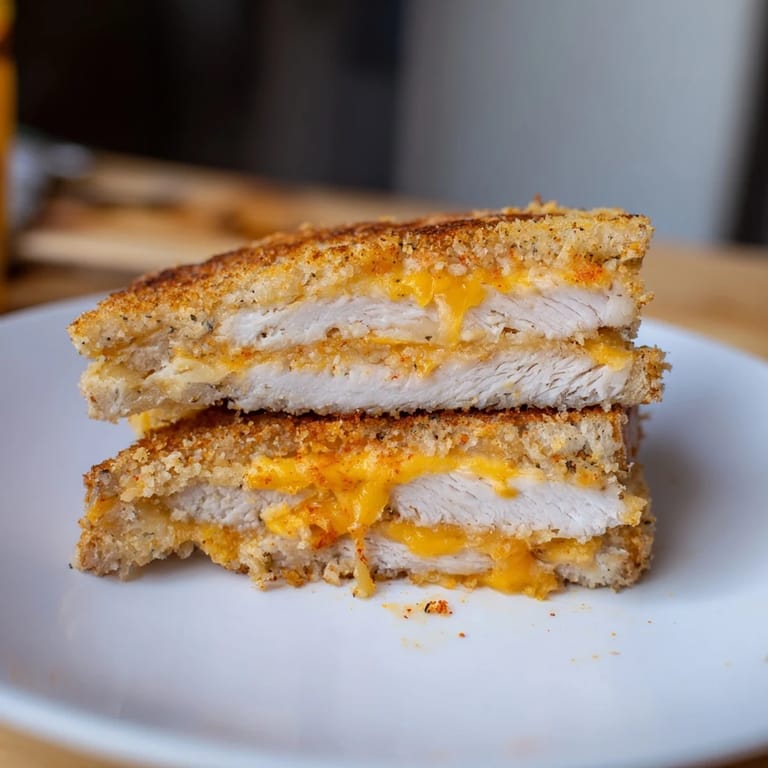
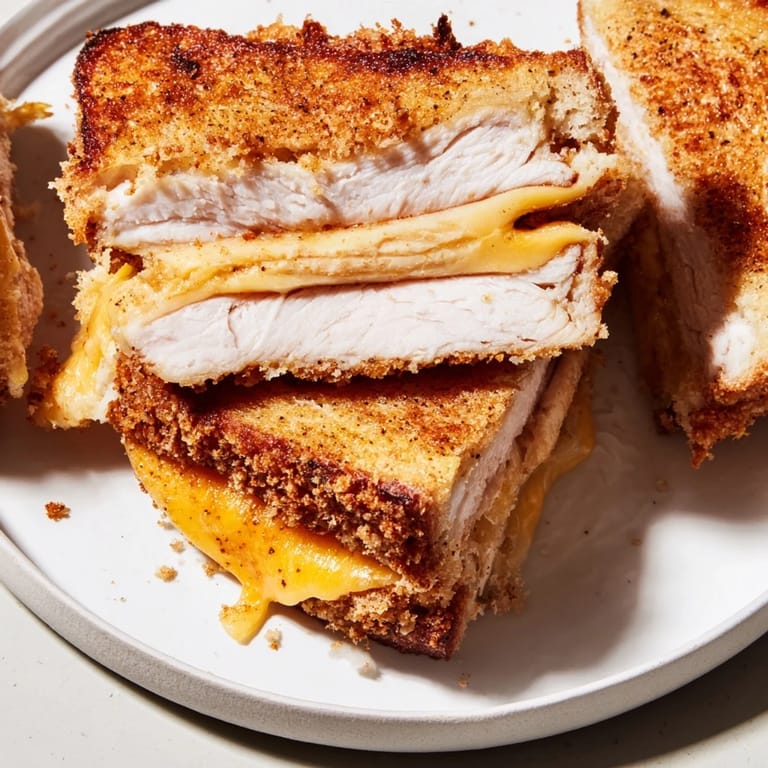
 There's a moment when you bite through that golden, buttery bread and it cracks just slightly, and then the panko-crusted pork gives way to tenderness, and the cheese is still warm enough to stretch between bread and bite. That's when everyone looks up from their plate with the same expression—a mix of surprise and satisfaction that reminds you why cooking for people matters.
Why This Works as Comfort Food
This sandwich taps into something primal about wanting your food to be exciting in multiple textures at once. The crunch of panko, the softness of the bread, the creamy melt of cheese, and the juicy pork all happening in the same bite keeps your mouth interested from start to finish. It's familiar enough to feel safe—it's a grilled cheese, after all—but unexpected enough to feel a little bit special.
Building Flavor Layers
The genius here is that you're not relying on one flavor to carry the entire sandwich. The panko crust gets seasoned with garlic powder and smoked paprika, the pork is seasoned before breading, the cheese is sharp and insistent, and the butter on the bread adds its own toasted richness. Every element contributes instead of waiting around hoping you'll notice it.
Variations and Customizations
I've made these in a hundred different ways depending on what was in the fridge and what kind of day it was. Sometimes I add a thin slice of tomato that I blot dry first, sometimes a tiny smear of Dijon mustard on the unbuttered bread side adds a sharp undertone that wakes everything up. You could swap the sharp cheddar for Swiss if you prefer something milder, or use provolone for a slightly nuttier flavor. The sandwich is forgiving enough to adapt but structured enough that it holds together with whatever changes you make.
- Add crispy bacon between the cheese and pork for another layer of texture and smokiness.
- Try a thin slice of tomato if you dry it well first so the bread doesn't get soggy.
- A tiny dollop of whole grain mustard adds sophisticated bite if you're in the mood.
 Pin it
 This sandwich has a way of turning an ordinary lunch into something worth talking about. Make it when you want to feed someone well, or when you want to feel a little bit proud of your own cooking.
Frequently Asked Questions
- → How do I ensure the pork chops stay crispy?
Press the panko breadcrumbs firmly onto the pork chops after dredging and fry them in hot oil until golden brown without overcrowding the pan.
- → Can I substitute cheddar cheese with other types?
Yes, Swiss or provolone cheese work well for a different but equally delicious flavor profile.
- → What type of bread works best for grilling this sandwich?
Sturdy white or sourdough bread holds up well, providing a crisp exterior and soft interior when grilled.
- → Is mayonnaise necessary for the sandwich?
Mayonnaise is optional but adds a nice extra crispness when spread thinly on the bread’s exterior before grilling.
- → How long should I let the pork chops rest before slicing?
Allow the pork chops to rest for about 5 minutes after frying to retain their juices and ensure tender slices.
- → What sides complement this sandwich well?
Tomato soup or a crisp green salad pair wonderfully to balance the sandwich’s rich flavors.