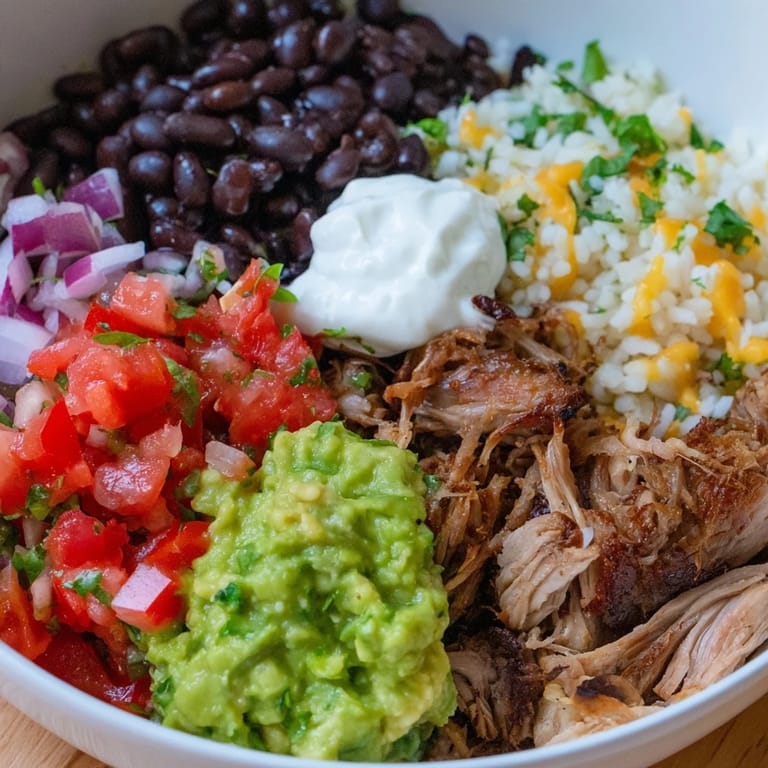
 Save
Save There's a moment at every casual lunch spot where you're standing in line, watching bowls get assembled with such casual precision, and you realize you're going to spend twenty dollars on something you could absolutely make better at home. That was my turning point with burrito bowls. One afternoon, while reheating a perfectly mediocre takeout version, I thought about the magic that happens when you layer flavors just right—the warm carnitas, the brightness of cilantro lime rice, the richness of that creamy queso. I decided right then that I'd crack this code, starting with the carnitas and working backward from there.
I made this for my friend Marcus on a random Tuesday when he mentioned craving that specific chain restaurant bowl, and he literally sat there in silence for a moment after the first bite—not in a judgmental way, but in that way where you realize something's genuinely good. Watching him layer everything exactly how he wanted it, totally customizing the ratios, I understood why bowls are so appealing. They're not just food; they're a moment of control in an otherwise chaotic lunch break.
Ingredients
- Pork shoulder (2 lbs): The fattier cut is your friend here—it breaks down into impossibly tender shreds and keeps the meat juicy even after hours of cooking.
- Olive oil: Just for browning the pork; regular oil works fine if you don't have it on hand.
- Spices (cumin, oregano, smoked paprika): These create the backbone flavor that makes people ask what restaurant you ordered from.
- Orange and lime juice: The citrus is what lifts everything—it's subtle but absolutely essential, not a substitute for anything else.
- Chicken broth: Keeps the carnitas moist during that long, slow cook.
- Long grain white rice: Skip short grain or brown rice here; the texture matters for this specific dish.
- Fresh cilantro: Add it to the rice while it's still warm so it releases its flavor properly.
- Black beans: Canned and drained is totally fine and saves you hours.
- Monterey Jack and cheddar cheese blend: The combination gives you better melt and flavor than either alone.
- Cornstarch: This is the secret to queso that doesn't break or separate when it sits.
- Fresh tomatoes: During winter, really ripe cherry tomatoes beat mediocre large tomatoes every time.
- Ripe avocados: Buy them a day early if they're not perfect; you need that soft, creamy texture.
- Sour cream: The cooling element that balances everything spicy and rich.
Tired of Takeout? 🥡
Get 10 meals you can make faster than delivery arrives. Seriously.
One email. No spam. Unsubscribe anytime.
Instructions
- Brown and season the pork:
- Pat your pork chunks dry, then season generously with salt, pepper, cumin, oregano, and smoked paprika. Heat oil in your Dutch oven until it shimmers, then work in batches so the meat actually browns instead of steaming—this takes maybe 15 minutes total but creates so much flavor.
- Build the braising liquid:
- Once the pork is golden, add minced garlic and quartered onion, let them wake up in the oil for a minute, then pour in the orange juice, lime juice, and chicken broth. You'll hear it sizzle—that's good.
- Low and slow cooking:
- Cover your pot and set it to low heat for 2 hours, which feels impossibly long until you lift the lid and realize the pork literally falls apart when you touch it with a fork. Shred it right in the pot, then simmer uncovered for 10 minutes so the liquid reduces and coats the meat.
- Prepare the cilantro lime rice:
- Rinse your rice under cold water until the water runs clear—this removes starch and prevents mushiness. Combine with water, oil, and salt in a saucepan, bring to a boil, then cover and reduce heat immediately for exactly 18 minutes.
- Fluff and brighten the rice:
- Let it sit covered for 5 minutes after cooking, then fluff with a fork and immediately stir in fresh cilantro and lime juice while it's still warm so the flavors sink in.
- Warm the beans:
- In a separate small saucepan, combine drained black beans with cumin, garlic powder, salt, and pepper, warming them over medium heat while everything else comes together.
- Make the queso:
- Melt butter, stir in cornstarch to create a paste, then slowly whisk in milk while stirring constantly to avoid lumps. Once it thickens slightly, add your cheeses and minced jalapeño, stirring until completely smooth and glossy—this takes maybe 5 minutes total.
- Quick salsa assembly:
- Dice your tomatoes and red onion, remove the seeds from a jalapeño and mince it, then combine everything with cilantro, lime juice, and a pinch of salt in a bowl. Taste and adjust seasoning—this is where personal preference really matters.
- Make guacamole:
- Cut your avocados, scoop the flesh into a bowl, and mash to your preferred texture—I like mine slightly chunky. Fold in red onion, diced tomato, lime juice, cilantro, salt, and pepper, being gentle so you keep some texture.
- Layer and serve:
- In each bowl, start with warm cilantro lime rice as your base, then add beans, carnitas, queso drizzled across the top, fresh salsa, a dollop of sour cream, and a generous spoonful of guacamole on top. Serve immediately while everything's still warm.
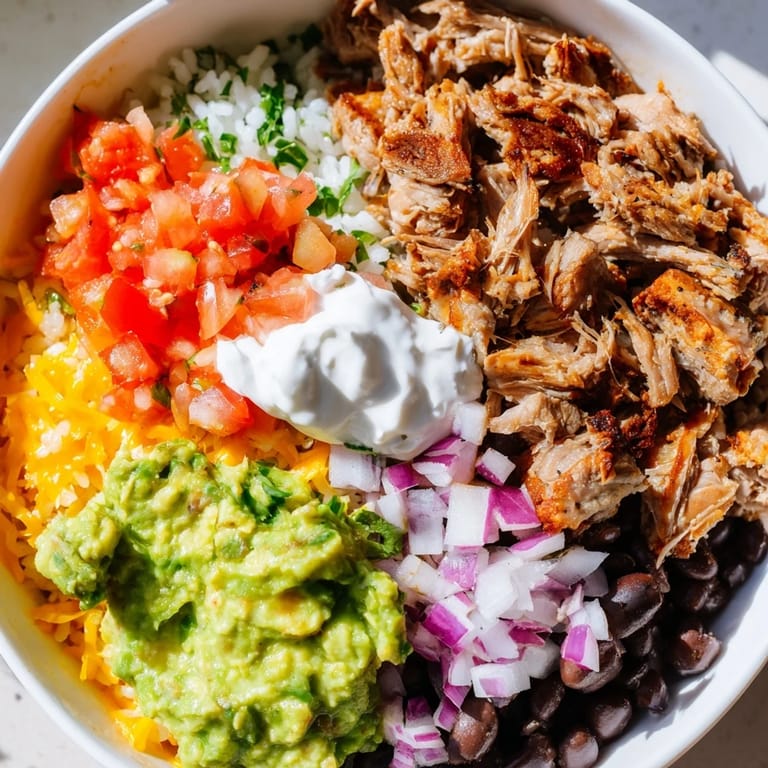 Pin it
 I remember my sister coming home after a brutal day at work, and I handed her a bowl without any fanfare, and she actually teared up a little—not because it was fancy, but because someone had taken the time to make something thoughtful with layers and care. That's when food stops being just ingredients and becomes something that says, I was thinking about you.
Why the Carnitas Matter Most
If I'm being honest, the carnitas are what separates this from a regular burrito bowl you could assemble from sad grocery store components. Two hours sounds intimidating, but it's almost entirely hands-off, and the reward is meat so tender and flavorful that people genuinely don't believe you didn't order it. The low-and-slow method breaks down the fat into the meat, creating this incredible melt-in-your-mouth texture that fast cooking can never achieve. Once you've made carnitas this way, you'll find yourself making them just to have on hand for tacos, nachos, or quiet midnight snacks straight from the container.
Building Flavor Without Cutting Corners
There's a temptation to use bottled lime juice or store-bought guacamole to save time, and I'm not going to lie and say it'll ruin everything—but fresh citrus and freshly mashed avocado create a brightness and texture that pre-made versions just can't touch. The cilantro lime rice especially needs that squeeze of fresh lime juice added at the end while it's still steaming, because the warmth opens up the flavor in a way cold lime juice never does. These aren't difficult steps; they're genuinely just better and worth the ninety seconds they add to your process.
Timing and Temperature Strategy
The key to serving this successfully is understanding that you'll have multiple components at different stages, and that's actually fine if you plan for it. Start your carnitas first since they need the longest time, begin the rice about 45 minutes before you want to serve, and make everything else in the last 15 minutes while components are finishing up. Nothing needs to be perfect simultaneously; the queso can sit on low heat, the beans can sit at room temperature, and the fresh components can wait in bowls. When you're ready to assemble, everything comes together in maybe three minutes.
- Start carnitas first, rice in the middle of cooking, everything else toward the end.
- Keep queso over low heat if you finish before serving, stirring occasionally.
- Assemble bowls only when you're ready to eat so textures stay intact.
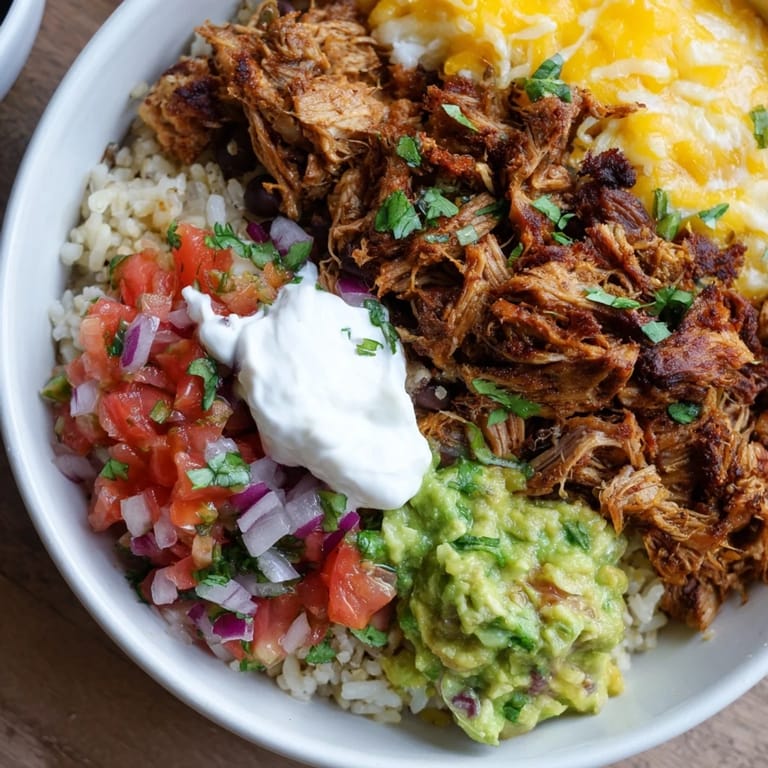 Pin it
 Building a burrito bowl at home is honestly about reclaiming that moment of customization and care that makes fast-casual restaurants feel special. Once you've made this once, you'll understand why—and you'll likely keep making it.
Frequently Asked Questions
- → How do I achieve tender carnitas?
Slow cooking pork shoulder in seasoned broth for two hours allows the meat to shred easily and stay juicy.
- → What makes the cilantro lime rice flavorful?
Fluffing cooked rice with fresh cilantro and lime juice adds bright, zesty notes complementing the savory proteins.
- → Can I substitute black beans with other types?
Pinto beans or kidney beans can be used as alternatives, offering similar texture and flavor profiles.
- → How is the queso sauce thickened?
Cornstarch is cooked with butter before whisking in milk and cheese, creating a creamy, smooth queso.
- → What enhances the freshness of the salsa and guacamole?
Fresh lime juice, chopped cilantro, and diced jalapeño balance the richness with bright acidity and mild heat.